

Are you struggling with these common challenges when managing corporate assets and researching RFID systems?
Inventory checks require item-by-item verification—time-consuming, labor-intensive, and error-prone. Assets scattered across multiple locations make finding them feel like searching for a needle in a haystack. Discrepancies between records and physical assets, unclear accountability, and multi-site management turn into a tangled mess… But fear not! Choosing the right RFID asset management system can eliminate these pain points once and for all, delivering peace of mind and efficiency. Today, we’ll break down the core value of RFID systems using plain language, based on real enterprise scenarios. No jargon—just clear insights to help you quickly determine if it’s worth investing in and implementing! First, let’s highlight the core: An RFID asset management system fundamentally replaces manual labor with automation, precisely addressing the five major pain points of traditional asset management. It helps businesses save manpower, time, and costs, making it especially suitable for companies with large-scale asset control needs!
Pain Point 1:Manual inventory is inefficient and error-prone RFID: Batch rapid inventory, precise and labor-saving without overtime
Traditional asset inventory relies entirely on manual item-by-item verification and handwritten registration—anyone who’s done it knows the agony!
For large enterprises, a single inventory often takes days or even weeks. Not only is it time-consuming, but it’s also prone to omissions, errors, and duplicate entries. Subsequent verification and corrections require additional manpower and time, leaving staff exhausted and bent over after the inventory. RFID systems, however, take inventory to a whole new level—supporting batch identification at long distances without requiring close manual contact with assets. Thousands of items can be counted in minutes with near-perfect accuracy, completely eliminating the inefficiencies and errors of manual counting. This enables efficient inventory execution, putting an end to late-night overtime shifts just to count assets.
Pain Point 2: Difficulty locating assets due to unclear positioning RFID: Real-time visibility eliminates idle assets and loss.
Assets in many enterprises are scattered across multiple areas such as office zones, warehouses, and workshops. Manually tracking asset locations is prone to errors.
Either idle assets go unmanaged, leading to waste; or when urgently needed, they remain unfound after searching every area. Worse still, risks of asset loss or unauthorized use can arise, causing significant losses.
The RFID system perfectly resolves this issue: It enables real-time asset location tracking. A single click in the backend system pinpoints the asset’s exact location. Additionally, it allows for setting movement alerts. If an asset is moved without authorization, an immediate notification is triggered. This approach eliminates asset loss and idleness at the source, ensuring every asset is traceable and accountable.
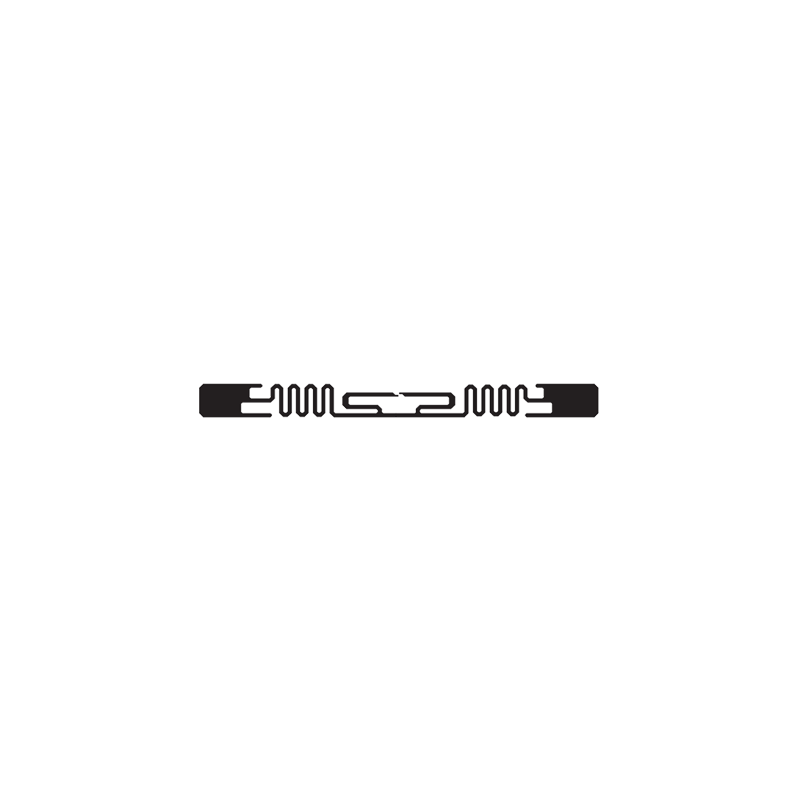
Advanced UHF Solution for RFID Asset Management ALN-9640 Label
Pain Point 3: Discrepancies Between Books and Actual Inventory Make Reconciliation Difficult RFID: Full-cycle visibility ensures precise alignment between books and actual inventory with zero deviation.
In traditional asset management, the issuance, return, maintenance, and disposal of assets rely entirely on manual record-keeping, resulting in significant delays in information updates.
Common scenarios include “assets recorded on paper but already scrapped in reality” or “idle assets not registered, resulting in wasted resources.” This discrepancy between book records and physical assets has long been a headache for finance and asset management teams. The RFID system automatically logs the entire asset lifecycle, updating asset status in real time. From procurement and warehousing to disposal, it enables end-to-end visual management without manual updates, ensuring accurate and reliable asset information and completely resolving the disconnect between book records and physical assets.
Pain Point 4: Unclear Responsibility Leads to Disputes RFID Solution: Traceable issuance and return processes reduce losses and eliminate disputes.
Asset issuance and return rely entirely on manual registration, making it easy for omissions or errors to occur.
When assets become damaged or lost, it’s nearly impossible to identify responsible parties, often leading to disputes that go unresolved. Companies end up bearing unnecessary losses. The RFID system directly links assets to specific users, automatically recording the operator and time during borrowing and return, ensuring clear accountability. It also enables borrowing duration alerts to prevent long-term personal occupation of assets, effectively reducing asset depreciation and liability disputes.

UHF Handheld Reader
Pain Point 5: Disorganized Multi-Site Management RFID: Collaborative Synchronization, Maximizing Asset Value
For enterprises with multiple branches and warehouses, the most challenging aspect of cross-regional asset transfers and sharing is the lack of timely information communication.
This often leads to chaotic transfers and unclear asset ownership, resulting in many assets lying idle with extremely low utilization rates—a waste of corporate resources. The RFID system supports cross-site data synchronization, enabling real-time sharing of asset information across all regions. This facilitates unified management and precise scheduling, allowing assets to circulate efficiently between sites and maximize their value. No more headaches over cross-regional control.
Final Summary: Choose the Right RFID Solution to Streamline Asset Management
For enterprises, the core value of an RFID asset management system lies in replacing cumbersome manual processes with automated identification. This precisely addresses five major pain points: slow inventory checks, difficulty locating items, unclear management, unclear accountability, and poor collaboration.