

Industrial laundries, hospitals, hotels, uniform rental companies, and textile service providers handle thousands of garments and linens every day. Every item may pass through sorting, washing, drying, ironing, sterilization, packing, and redistribution. When these processes rely only on manual counts or visible labels, lost items, billing errors, and incomplete service records can become expensive.
An ABS RFID Laundry Tag provides a durable digital identity for reusable textiles and laundry assets. Its protective housing can help shield the RFID inlay from water, detergent, impact, and repeated handling. However, buyers must understand an important distinction: a laundry tag that survives hot washing is not automatically the same as an industrial RFID tag designed for continuous exposure to extreme temperatures.
This guide explains how ABS laundry tags relate to high temperature RFID tags, what performance factors B2B buyers should evaluate, and how to select a tag for heat, steam, chemicals, pressure, and repeated industrial cycles.

High Temperature RFID Tags
What Is an ABS RFID Laundry Tag?
An ABS RFID laundry tag is an RFID transponder protected by a housing made from acrylonitrile butadiene styrene, commonly called ABS. Inside the housing are an RFID chip and antenna. The chip stores a unique identifier, while the antenna communicates with a compatible RFID reader.
ABS is widely used in industrial products because it is rigid, impact-resistant, lightweight, and economical. In laundry applications, the housing helps protect the electronic components from physical contact, moisture, detergent, and mechanical stress. Depending on the product design, the tag may be sewn into a pocket, attached with a fastener, inserted into an item, or mounted on a reusable laundry asset.
RFID laundry tags allow each garment, linen, mop, mat, bag, or uniform to carry a unique digital identity. The system can record when the item is received, sorted, washed, repaired, packed, delivered, or retired. This supports automated counting, inventory visibility, customer billing, loss control, and lifecycle management.
What Are High Temperature RFID Tags?
High temperature RFID tags are engineered to maintain their structure and RFID performance during exposure to elevated temperatures. They are commonly used in automotive painting, metal processing, heat treatment, electronics manufacturing, sterilization, industrial ovens, mold tracking, tool management, and other harsh production environments.
These tags may use high-performance polymers, ceramic, printed circuit boards, stainless steel, specialized adhesives, or encapsulation materials selected for thermal stability. Their construction depends on the required temperature, exposure duration, mounting surface, read distance, and chemical environment.
Temperature ratings must always be read carefully. A tag may have one rating for continuous operating temperature and a higher rating for short peak exposure. A product that tolerates a brief high-temperature cycle may not survive continuous operation at that same temperature. Reliable selection therefore requires both a temperature value and an exposure profile.
Is an ABS RFID Laundry Tag a High Temperature RFID Tag?
An ABS RFID laundry tag can be heat-resistant for normal industrial laundry processes, but it should not automatically be classified as an extreme high temperature RFID tag. ABS has useful mechanical properties, yet its thermal limits are generally lower than those of engineered high-temperature polymers, ceramics, or metal-encapsulated transponders.
The answer depends on the actual tag design and verified specification. Industrial washing may involve hot water, steam, drying, ironing, and short heat peaks. A properly designed laundry tag may survive these cycles. A paint oven, furnace, autoclave, or metal heat-treatment line can impose much more demanding conditions.
B2B buyers should avoid selecting a tag based only on the phrase “high temperature.” Ask for the continuous operating range, peak temperature, peak duration, number of validated cycles, pressure limits, chemical resistance, and mounting method. These details determine whether an ABS tag is suitable or whether a specialized high temperature RFID tag is required.
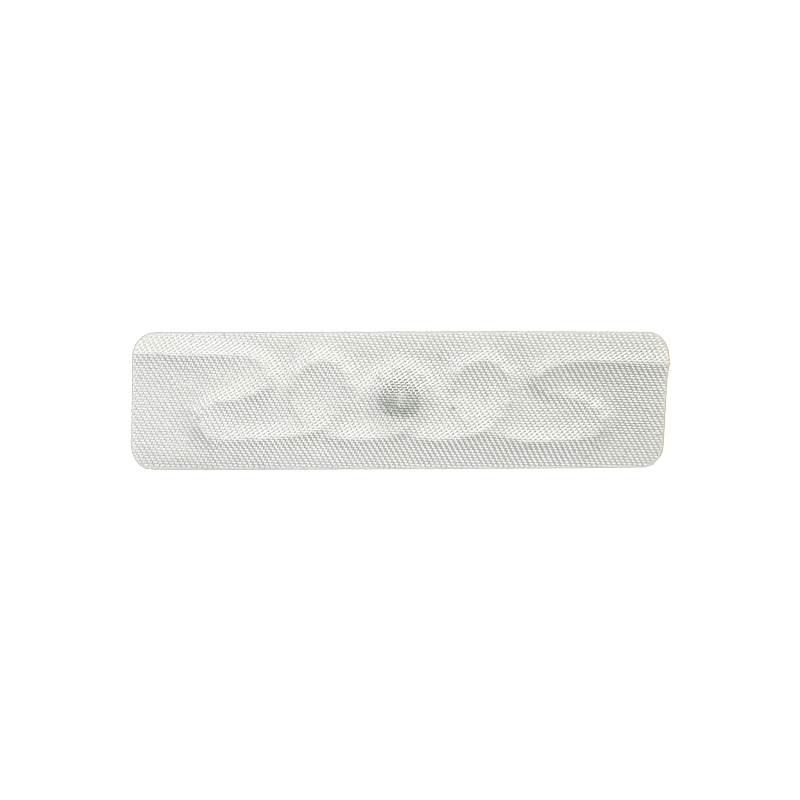
Laundry RFID Tag
Why Temperature Duration Matters
Heat resistance is a combination of temperature and time. A tag may tolerate a high peak for several seconds but deform or lose performance if exposed for an hour. Repeated thermal cycling can also create fatigue even when each individual cycle is within the stated limit.
Industrial laundry operations often include several different thermal stages. Washing temperature may be moderate, while tumble drying, tunnel finishing, ironing, or sterilization can create higher short-term exposure. The tag must survive the complete process, not only the wash bath.
For industrial manufacturing, the exposure may be more severe. A tag mounted on a metal carrier in a paint line may pass through chemical cleaning, coating, and a curing oven. The correct tag must withstand temperature, chemicals, vibration, and metal interference throughout the process.
Key Performance Requirements for Laundry RFID Tags
Wash-Cycle Durability
A commercial laundry tag should be tested over repeated wash cycles. One successful wash does not prove long-term reliability. Buyers should request cycle-life data that reflects the intended washing temperature, detergent, drying method, and mechanical action.
Water and Chemical Resistance
The housing and seal must protect the inlay from water and chemicals. Industrial detergents, bleach, alkali, disinfectants, and solvents may affect plastics, adhesives, or seals differently. Compatibility testing is essential when the process uses aggressive chemistry.
Mechanical Strength
Laundry items experience bending, compression, impact, extraction force, and contact with machinery. A rigid ABS housing may provide strong impact protection, but its shape and attachment method must not damage the textile or create discomfort for the user.
Heat and Steam Resistance
The tag must withstand washing, drying, finishing, and any sterilization stage. Steam adds moisture and pressure to the thermal load, so a dry-heat rating alone may not be sufficient for steam-based processes.
RFID Read Performance
Durability is only useful if the tag remains readable. Buyers should evaluate frequency, protocol, chip, memory, read distance, orientation, reader power, textile stacking, and the number of tags being read at once. UHF RFID is common for bulk laundry counting because multiple items can be identified rapidly.
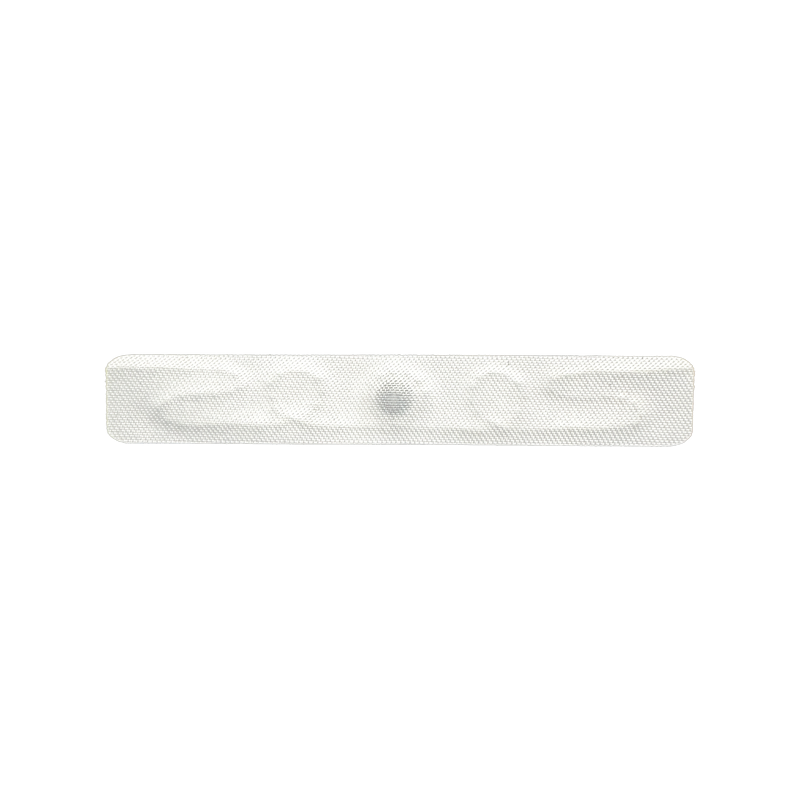
RFID Laundry Tag Manufacturer
ABS Housing Compared with Other Tag Materials
ABS offers a practical balance of cost, rigidity, impact resistance, and manufacturability. It can be appropriate for reusable bins, laundry assets, uniforms, and applications where temperatures remain within the validated range.
Silicone laundry tags are flexible and can be sewn or heat-sealed into textiles. PPS and other engineering plastics are often selected when higher heat and chemical resistance are needed. Ceramic RFID tags can perform well in very high temperatures and compact applications, but they are rigid and may be brittle. PCB tags offer robust performance and design flexibility, while stainless-steel encapsulated tags are used in severe industrial environments.
No material is universally best. The correct choice depends on heat, time, pressure, chemicals, flexibility, mounting, read performance, cost, and worker or customer comfort.
Common Applications
Hotels use RFID laundry tags to track sheets, towels, robes, and uniforms across properties and service providers. Hospitals use them to manage gowns, bedding, surgical textiles, and isolation garments while supporting hygiene and inventory controls. Industrial laundries use RFID to automate receiving, sorting, washing records, packing, and customer billing.
Uniform rental companies can assign each garment to a wearer, department, or customer. Cleanroom operations can track specialized garments through controlled wash and inspection cycles. Fitness centers, spas, restaurants, and food-processing facilities can use RFID to manage reusable textiles and workwear.
High temperature RFID tags extend beyond laundry. They identify carriers in paint shops, molds in production, tools near ovens, parts during heat treatment, and assets exposed to sterilization or harsh chemicals.
How RFID Improves Industrial Laundry Management
RFID replaces anonymous bulk counting with item-level records. When tagged textiles enter a reading zone, the system can identify many items in seconds. This reduces manual barcode scanning and helps operators compare received quantities with customer records.
During sorting, RFID can direct items to the correct process, customer, or delivery route. After washing, the system can verify packing quantities and flag missing or incorrect items. Lifecycle data can show how many cycles each textile has completed and identify items that require inspection or replacement.
For B2B service providers, better data supports transparent billing and service-level reporting. Customers can understand inventory usage, loss rates, circulation time, and replacement needs. These records also help laundries plan purchasing and optimize par levels.
How to Select the Right Tag
Start by documenting the full process. Record wash temperature, drying temperature, ironing or finishing temperature, steam exposure, pressure, detergent chemistry, cycle duration, and expected number of cycles. Include exceptional processes such as sterilization or rework.
Next, define the item and attachment method. A tag for a towel may need different dimensions and flexibility than a tag for a rigid laundry cart. Consider whether the tag will be sewn, heat-sealed, inserted, riveted, screwed, or bonded.
Then test RFID performance under realistic conditions. Stack wet and dry textiles, test full carts or bags, evaluate different tag orientations, and confirm read accuracy with the intended readers and antennas. A catalog read range measured in open air may not represent a dense textile load.
Finally, run a pilot. Process tagged items through repeated real cycles and inspect both physical condition and read performance. A controlled pilot is the best way to validate an ABS RFID Laundry Tag or a high temperature RFID tag before full deployment.
Questions to Ask an RFID Supplier
Ask for the tag’s continuous and peak temperature ratings, the maximum duration at peak temperature, verified wash-cycle life, supported RFID standard, chip model, memory, read range, ingress protection, chemical resistance, dimensions, attachment options, and test method.
Also ask whether the supplier can provide samples, encoding, UID association, custom molding, laser marking, printing, packaging, and application support. For mission-critical operations, request evidence from testing that resembles your actual process.
A trustworthy supplier should explain the limitations as clearly as the benefits. If the application exceeds the capability of ABS, the supplier should recommend a more suitable high-temperature material rather than treating every durable tag as interchangeable.
Implementation Risks to Avoid
One common mistake is choosing a tag from a maximum temperature number without checking duration. Another is testing a dry tag when the real process combines heat, steam, detergent, and pressure. Poor attachment can also cause tag loss even when the housing survives.
Reader configuration matters as well. Excessive reader power can capture tags outside the intended zone, while weak coverage can miss items inside dense carts. Software should manage duplicate reads, customer ownership, cycle records, and exception handling.
Finally, do not skip user and maintenance training. Operators need clear procedures for attaching tags, handling damaged items, reviewing exceptions, and replacing failed tags. Process discipline protects the value of the technology.
Conclusion
An ABS RFID Laundry Tag can provide durable item-level identification for industrial laundry, hospitality, healthcare, uniforms, and reusable textile services. Its ABS housing offers useful protection against impact, water, chemicals, and repeated handling when the product is properly designed and validated.
However, hot laundry service and extreme industrial heat are not the same requirement. High temperature RFID tags use materials and structures selected for specific continuous or peak thermal exposure. The safest B2B approach is to define the entire process, compare verified specifications, test real items, and select the tag based on temperature, duration, chemistry, pressure, mounting, and read performance.
FAQ
What is an ABS RFID Laundry Tag?
It is an RFID transponder protected by a rigid ABS plastic housing and designed to identify reusable textiles or laundry assets. The tag contains an RFID chip and antenna that communicate with a compatible reader.
Can an ABS RFID laundry tag withstand high temperatures?
It may withstand the heat found in validated washing and drying cycles, but performance depends on the specific design. Always check continuous temperature, peak temperature, exposure duration, steam, chemicals, and tested cycle life.
What is the difference between a laundry RFID tag and a high temperature RFID tag?
A laundry tag is optimized for repeated washing, water, detergent, drying, and mechanical stress. A high temperature RFID tag is engineered for defined elevated-temperature industrial processes and may use ceramic, PPS, PCB, metal, or other specialized materials.
Which RFID frequency is used for laundry tracking?
UHF RFID is widely used for industrial laundry because it supports rapid bulk reading. The correct frequency and protocol should match the region, readers, workflow, and required read distance.
How many wash cycles can an RFID laundry tag survive?
Cycle life varies by tag construction and process conditions. Buyers should rely on supplier test data and run a pilot using their actual temperature, detergent, drying, pressure, and attachment method.
Can RFID laundry tags be read in bulk?
Yes. A well-designed UHF RFID system can identify many tagged garments or linens in carts, bags, or reading stations. Accuracy depends on reader setup, tag orientation, load density, and environmental conditions.
How should an ABS RFID Laundry Tag be tested?
Test it on the real textile or asset through repeated complete cycles, including washing, drying, finishing, sterilization if applicable, transport, and bulk RFID reading. Inspect both physical integrity and read performance.