

Radio Frequency Identification (RFID) technology, as a non-contact automatic identification technology, has been widely adopted across various fields such as logistics, retail, healthcare, and transportation. By utilizing radio waves to read and write data, it offers distinct advantages and disadvantages of RFID when compared to traditional identification methods like barcodes. While its unique capabilities drive efficiency and innovation, the technology also presents certain challenges and limitations that must be carefully considered. The following is a detailed analysis of the advantages and disadvantages of RFID technology.

1. Advantages of RFID technology
1.1 Strong applicability and good environmental adaptability
RFID technology relies on electromagnetic wave communication to complete identification without physical contact or visible light sources. It can penetrate non-metallic materials such as paper, wood, and plastic, and even work stably in harsh environments such as dust and fog. This makes RFID significantly advantageous in complex scenarios such as warehousing, production lines, and outdoor asset management.

UHF Chip Object management RFID
1.2 High recognition efficiency, supporting batch processing
RFID systems have extremely fast read and write speeds, with a single identification process typically taking less than 100 milliseconds. High frequency and ultra-high frequency readers can also simultaneously read multiple tag information, achieving rapid inventory of bulk items and greatly improving the efficiency of logistics and inventory management.
1.3 Large information capacity, supporting dynamic updates
Compared with traditional barcodes, RFID tags can store a larger amount of data (up to several megabytes), and the information can be repeatedly erased and updated. This feature makes it of great value in scenarios that require real-time data updates, such as supply chain tracking and product lifecycle management.
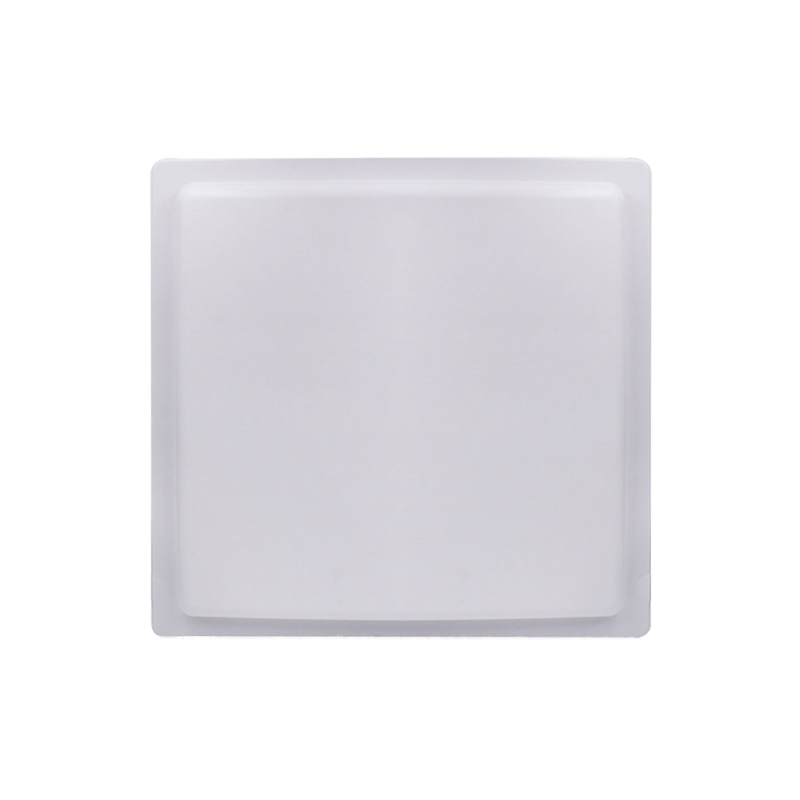
12dBi Circular Linear RFD UHF Reader Antenna
1.4 Uniqueness and Traceability
Each RFID tag has a globally unique identification code that can be linked to a specific item. Through this feature, enterprises can achieve precise tracking and traceability of individual products, effectively enhancing anti-counterfeiting capabilities and circulation transparency.
1.5 Durability and Reusability
RFID tags usually have characteristics such as waterproof, anti magnetic, and high temperature resistance, with a long service life and can be reused. When properly protected, its stability and durability are much higher than paper barcodes, reducing material costs for long-term use.
1.6 Convenient integration and widespread use of terminals
With the popularization of NFC (Near Field Communication) technology in smartphones, users can directly read RFID tags through common devices such as mobile phones, reducing the dependence on dedicated reading and writing devices and promoting the application of technology on the consumer end.
1.7 High security
RFID systems can support encryption and password protection, making them more difficult to forge or copy compared to traditional barcodes, which helps improve data security and is suitable for scenarios such as ticketing, access control, and payment.

UHF Handheld Reader
2. Disadvantages of RFID technology
2.1 Technical maturity still has limitations
RFID technology, especially in the ultra-high frequency range, is prone to signal interference when encountering metal or liquid environments, resulting in identification blind spots. At present, the relevant solutions are still not mature enough, which limits their comprehensive promotion in certain industrial scenarios.
2.2 Relatively high cost
The unit price of RFID tags is tens of times higher than that of ordinary barcodes, and large-scale deployment will significantly increase costs. Although prices have gradually decreased with the development of technology, cost remains an important limiting factor for low value goods or applications with limited budgets.
2.3 Existence of security and privacy risks
RFID tag information may be illegally read or tampered with within a certain distance, and if effective encryption mechanisms are not used, it can lead to data leakage or forgery risks. Personal privacy protection has also become an issue that needs to be taken seriously in the promotion of the consumer sector.
2.4 Technical standards have not been fully unified yet
At present, RFID technology has multiple standards in different frequencies, protocols, and data formats, and there is insufficient interoperability between industries, which poses certain difficulties for system integration and cross domain applications.
2.5 High requirements for infrastructure
A complete RFID system requires the deployment of readers, antennas, middleware, and backend management systems, with high initial investment and maintenance complexity, which may pose implementation barriers for small and medium-sized enterprises.
3. Summary
Overall, RFID technology has significant value in improving industry automation and informatization levels due to its outstanding advantages such as non-contact recognition, efficient batch processing, and strong traceability. However, issues such as cost, technological maturity, security, and standardization also constrain its further popularization. In the future, with technological iteration, cost reduction, and gradual improvement of industry standards, RFID is expected to be deeply applied in more fields and integrated with technologies such as the Internet of Things and big data to promote the sustainable development of digitalization.