

1. Project background
At present, like hotels, amusement parks, large factories, hospitals and other places to work every morning there are a large number of uniforms need to be dealt with, employees need to queue up to the clothing room to receive uniforms, just like to the supermarket shopping checkout, need to be registered one by one to receive, and then after work one by one to register the return of the number of people in the queue sometimes up to dozens of people, each person to spend a few minutes. Moreover, at present, the management of uniforms basically adopts manual registration, which is not only very inefficient, but also often leads to errors and losses.
Every day, the uniforms sent to the laundry factory need to be handed over to the laundry factory. The staff of the uniform management room will hand over the dirty uniforms to the employees of the laundry factory, and both sides will sign for the uniforms one by one after sorting and counting and checking. When the laundry plant sends back the clean uniforms, the laundry plant staff and the uniform management room staff will check the type and quantity of the clean uniforms one by one, and both parties will sign after checking. Every 300 pieces of uniforms per day will need about 1 hour of handover time, the handover process can not check the quality of laundry, but also no way to talk about how to improve the quality of laundry to increase the life of uniforms and how to effectively reduce inventory and other scientific and modern uniform management. Especially with people’s awareness of disease prevention and treatment is increasing, the number of sick clothes handover counting work is a very difficult task.

For high-level hotels, hospitals and other health requirements of high conditions of the unit, the need for employees to regularly wash uniforms, for the lack of regular washing employees need to be urged, the current manual management methods can not monitor whether the staff regularly wash, but also can not be based on the staff’s attendance situation of scientific and dynamic adjustment of the frequency of washing of the staff uniforms.
The use of uniforms for crime cases are also increasing, how to ensure that the loss of the unit’s uniforms will not be used by people with bad intentions has also become a very important issue for many enterprises and institutions.
Ultra-high frequency (UHF) Apparel RFID Tags due to its long-distance instantaneous one-time large number of read characteristics, has been widely used in various industries. At present, the world has a number of hotels, hospitals, amusement parks have adopted the label to manage their uniforms, not only effectively improve the efficiency of uniform management but also greatly reduce the uniform management of labor costs.
2.System Composition
The system consists of the following parts:
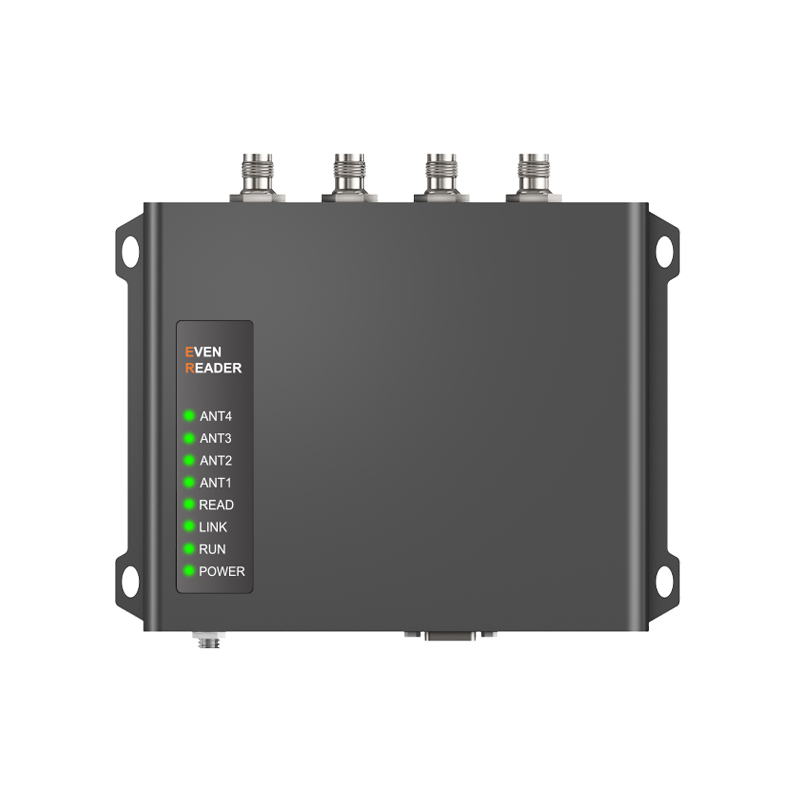
UHF RFID reader: in line with the EPC global C1G2 standard
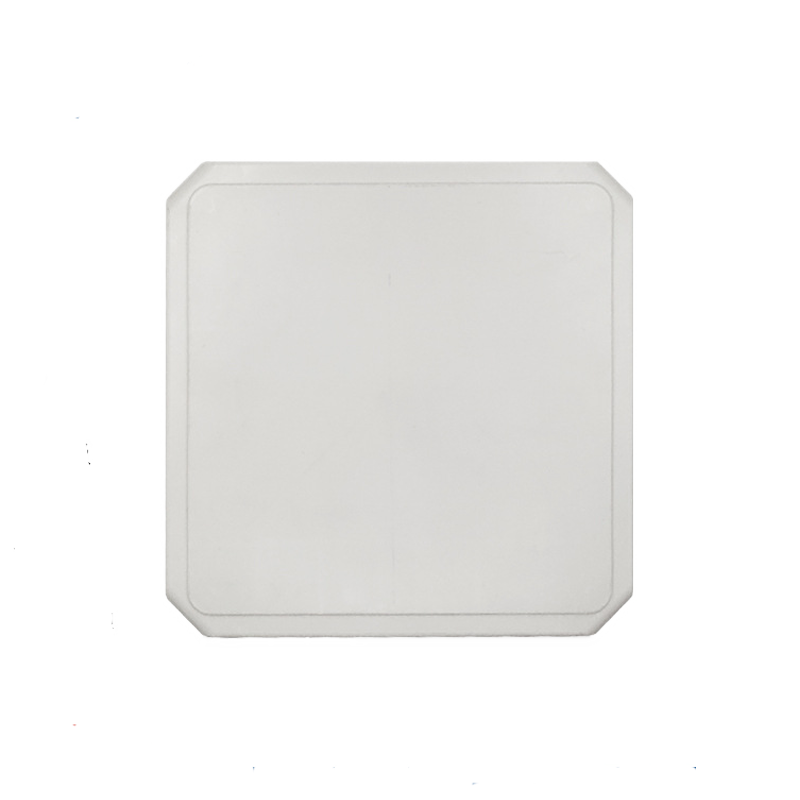
UHF RFID antenna: circularly polarized external ultra-high-frequency (UHF) RFID antenna
Electronic tags: water-resistant labels
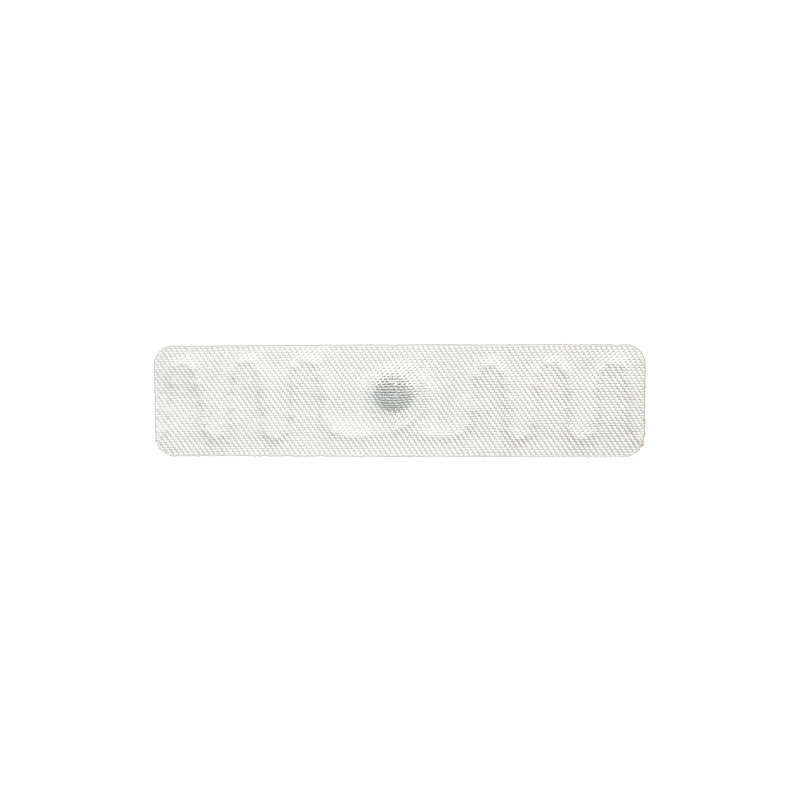
Custom RFID laundry tags
Server: for the collection of back-end data, processing
Software: Uniform management software, database software
3.Success Stories
U.S. Hotel Deploys Automated UHF RFID Uniform Management System
In Northeast Ohio, the Hard Rock Hotel under the entertainment venue Rocksino Northfield Park implemented, UHF (UHF) RFID uniform management system, the Hard Rock would like to automate the hotel’s uniforms of more than 6,000 employees to control and manage. Hard Rock wanted to automate the control and management of the hotel’s uniforms for over 6,000 employees.
Rocksino Northfield Park is a 200,000-square-foot gaming and entertainment venue that opened in December 2013 and features Video Lottery Terminals (VLTs), entertainment venues, four food and beverage venues, and horse racing.
This ultra-high frequency (UHF) RFID uniform management system utilizes rubber-encapsulated EPC Gen2 RFID tags attached to service personnel’s uniform property. Each tag has an ID number linked to a specific type of data for the item in question, as well as a cleaning record.
If clothing is being cleaned or is in use, the system can communicate and record the location of each piece of uniform for real-time inventory control. The UHF RFID uniform management system also records all uniform usage and laundry cycles, and forecasting changeover requests allows for accurate financial budgeting.
Hard Rock’s Rocksino Northfield Park is a gaming, entertainment, and dining destination with more than 750 staff members. The Unified Management System eliminates lost costs due to unaccounted for assets and reduces staff and laundry errors.
IMPLEMENTATION AT A HOTEL
Uniform management at a hotel had been based on manual check-in, with uniforms being distributed to some hundreds of staff each day. Every morning at work, you have to go to the clothing room to line up for uniforms, sometimes the number of people in line up to dozens of people, each person to spend 3 minutes, like shopping in the supermarket checkout general, you need to manually register one by one to borrow.
In order to improve production efficiency, the hotel introduced the ultra-high frequency (UHF) RFID uniform management system, the hotel for each piece of uniform tagged, and through the chip to the information automatically uploaded to the server, when a group of uniforms through the reader to check, to achieve an instant read all the clothes of the model, size, color and other information without having to scan the bar code one by one as in the past. In addition, due to the use of labels for clothing management, the hotel has also adopted a clothing self-service system to improve efficiency. Hotel in the clothing room set up outside the self-service system, when employees receive clothing, just walk to the front of the instrument, brush the staff card, and then put a few pieces of uniforms to the UHF RFID reader before the rapid confirmation of lending, the system greatly saves the staff to lend uniforms time. At the same time, if an employee takes the wrong uniform, the system can also automatically remind the employee according to the clothing style and size recorded in the employee card. After adopting this system, the system has improved efficiency by more than 50%.
4. Project features
- Because the interface of the tag adopts the EPC global C1G2 specification, and the specification as a de facto global standard has been widely popularized and applied. Therefore, its versatility allows users to use the existing ultra-high frequency (UHF) RFID read-write device to read and write the tag, without having to re-procure special read-write device. Thus can help customers maximize the control of equipment investment.
- Because the ultra-high-frequency (UHF) RFID reader can instantly read hundreds of tags at a time (Thingmagic ultra-high-frequency RFID reader M6/Astra, embedded in the M6e ultra-high-frequency (UHF) RFID module, read speed up to 750 tags / sec, the world’s smallest volume of the fastest read ultra-high-frequency (UHF) RFID module). And can read tags across the packaging, packing uniforms can be read through the ultra-high frequency (UHF) RFID reader to the tag information without opening, so in the uniform handover process greatly improves the efficiency of the work. Previously required several hours of handover work can be shortened to a few minutes.
- Statistics, inquiries about the number of times each uniform washed, such as arranging a reasonable recycling scrap time, and to achieve timely and reasonable arrangements for ordering, to achieve efficient management of inventory and uniform life cycle.
- You can query the department to which each uniform belongs, staff information. This function can be effectively used for uniform anti-theft, to improve the awareness of the staff to keep personal uniforms.
- Ultra-High Frequency (UHF) RFID uniform management system, processing speed, accuracy and safety. Improve the efficiency of issuing uniforms, receiving clothes, taking clothes management, improve the efficiency of inventory, in and out of the warehouse management, and reduce the human error that is easy to occur in manual management.