

Drugs Available with RFID Traceability is an important part and vital link of drug regulation – the establishment and improvement of drug traceability system realizes the traceability of the source and destination of drugs, emergency recall and emergency deployment, providing the necessary guarantee for the people’s safe use of drugs.
In 2016, China proposed to improve the food and drug traceability system, and released the relevant policy – by recognizing the one-dimensional code of drug electronic supervision to realize drug traceability. Meanwhile, in recent years, other countries around the world are also launching corresponding policies and various identification technologies (such as 1D barcode, 2D matrix code, OCR Text Recognition and RFID Recognition) Enhanced Serialization of Medicines to Stop RFID Counterfeit drugs

Europe’s medicines serialization management system is capable of identifying all medicines packages and can identify medicines at any point in the manufacturing and distribution chain. When medicines are placed in the first packaging unit (primary packaging), they have a manufacturer’s batch number. This number must accompany the pharmaceutical package throughout its entire life cycle, enabling identification of all major packaging units, from transparent and conventional pharmaceutical packaging available in pharmacies (secondary packaging), to combinations of multiple packages (tertiary packaging), to complete cardboard boxes, and even to the trays that carry the medicinal product.
Together with a pharmaceutical manufacturer, Turck has developed a solution that sets a precedent for pharmaceutical serialization management in Europe. The pilot project is an excellent example of serialization of pharmaceutical products. It encompasses technology that goes beyond identification via barcodes or RFID tags to include the transmission and management of data. The data is not only available at the various sites of the system, but can also be extended to the entire production process and distribution chain through open data cloud services.

For data binding at the front end, Turck develops and manufactures equipment that prints, pastes, checks and reads the required codes and labels on different packaging units. The principle is to communicate through existing supply chain systems to inform the production and packaging process. When this function is used for production, drug packages are tagged with RFID tags with appropriate serial numbers. In addition, the device can provide QR codes and text printing for the boxes containing the same information.
Before a drug package can be tagged with an RFID label, the individual packages of the drug product must be combined into larger packaging units (a process that maintains their identifiability) to ensure end-to-end traceability of the individual packages. This is the precise application scenario where RFID technology can be used to identify all the packages in a carton, even if the carton is closed. One particular advantage of RFID over barcode technology is that in batch read mode, RFID can identify the entire contents of a carton with up to 500 individual tags. To do this, the packer simply places the carton in the opening of the device and the reading operation is automatically initiated. The device has a total of 10 RFID antennas that detect all the tags in the carton. The antennas move around inside the device to eliminate the possibility of missed reads. Next, the device prints the barcode and serial number tags: the tags are attached to the outside of the carton for subsequent identification and transportation.

Long Distance RFID Reader Built in 12 dBi Antenna

The perfect combination of RFID technology with powerful optical sensors and barcode recognition is realized. Both technologies (recognition by barcode and QR code, or by OCR text recognition and RFID) have their own advantages. The performance and process reliability of this system solution is based on the clever combination of both recognition systems. All data is centralized in one place, bypassing data synchronization errors and the disadvantages of asynchronous solutions. If you look at the costs of RFID identification versus barcode identification and consider only the cost of labels and label printing, RFID would be about 10 times more expensive than barcode printing. But in fact, by accounting for all project costs (including labor costs and equipment costs), RFID is more cost-effective, which has been proved in the pilot project. the advantages of RFID in terms of speed and process reliability are very obvious, recognition is not only faster, but also can read 500 tags at the same time, and do not need to open the carton. In addition, since most users at the end of the logistics chain are not equipped with RFID reading devices, optical identification technology will also be used in this process.
With China’s accelerated promotion of intelligent supervision of drugs, RFID technology will also play a vital role in China’s pharmaceutical industry. RFID drug tracking as a rapid, real-time, accurate collection and processing of information, high-tech, is the basis of information standardization, will give the pharmaceutical industry production, warehousing, processing and transportation and other aspects of the efficiency of the great enhancement. It is believed that RFID-based automation products will help China’s rapid development of intelligent drug supervision.
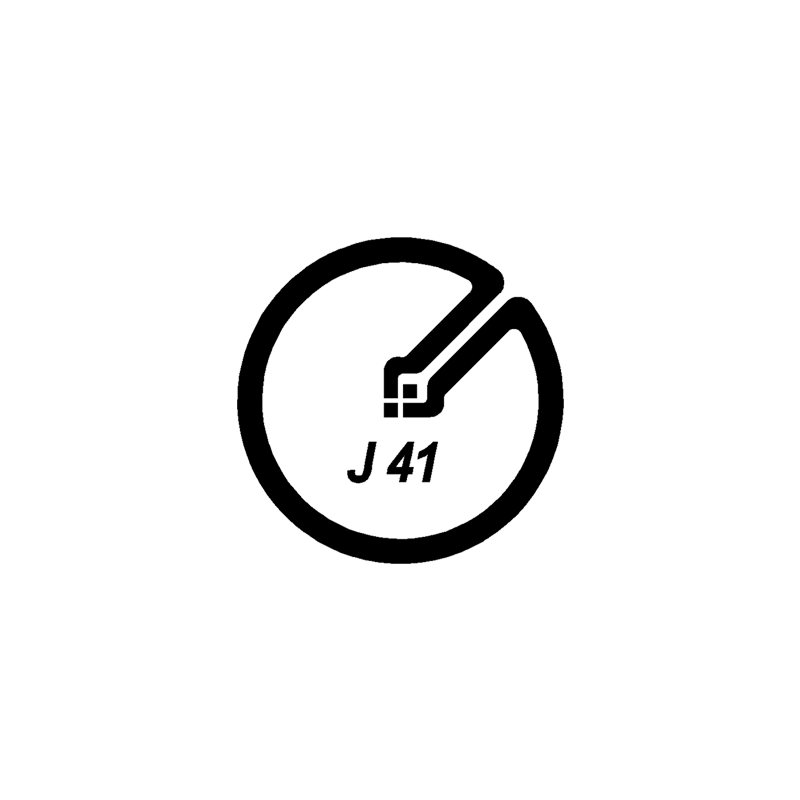
Medical Device RFID Chips
Frequently Asked Questions
1.How does RFID improve drug traceability compared to barcodes?
RFID enables real-time, automated tracking without line-of-sight scanning, stores more data (e.g., batch numbers, expiry dates), and allows bulk reading of multiple items simultaneously – significantly improving supply chain efficiency and accuracy over barcodes.
2.What types of drugs benefit most from RFID traceability?
High-value drugs (e.g., biologics, specialty medicines), temperature-sensitive medications requiring cold chain monitoring, and frequently counterfeited products (e.g., opioids, vaccines) benefit most due to enhanced security and compliance tracking.
3.Can RFID prevent counterfeit drugs effectively?
Yes. RFID tags with encrypted serialization provide unique digital identities that are extremely hard to replicate. When combined with blockchain systems, they create an immutable record from manufacturer to patient.
4.What are the cost challenges of implementing RFID drug tracking?
While RFID tags cost more than barcodes (typically 0.10−0.10−0.50 per tag), they reduce long-term expenses by cutting counterfeit losses (~$200B annually), improving recall precision, and automating inventory management.
5.How does RFID comply with pharmaceutical regulations like DSCSA?
RFID systems meet DSCSA’s 2023 serialization mandate by providing item-level electronic pedigrees, tamper-evident packaging integration, and interoperable data formats (GS1 standards) for end-to-end traceability.