

Radio Frequency Identification (RFID) technology, also known as Radio Frequency Identification, is a communication technology that can identify specific targets and read/write related data through radio signals without the need for mechanical or optical contact between the identification system and the specific targets.
In terms of radio frequency, it is usually microwave, 1-100GHz, suitable for short-range identification communication.
RFID readers are also divided into mobile and fixed types. Currently, RFID technology is widely used, such as in libraries, access control systems, food safety traceability, etc.
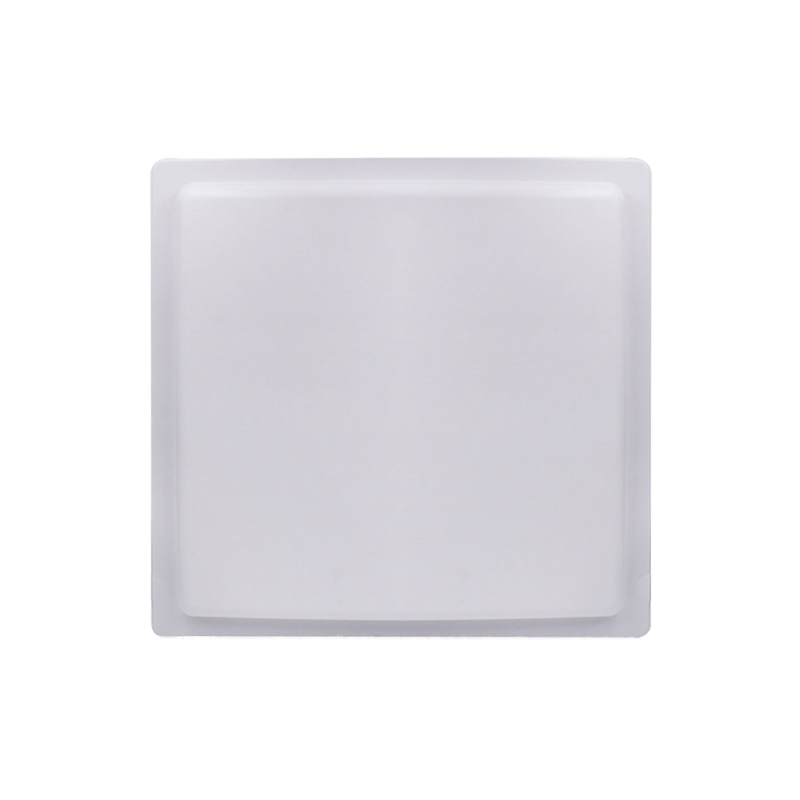
12dBi Circular Linear RFD UHF Reader Antenna
Radio Frequency Identification (RFID) is a wireless communication technology that can identify specific targets and read/write related data through radio signals, without the need to establish mechanical or optical contact between the identification system and the specific targets.
The radio signal is transmitted through an electromagnetic field tuned to radio frequency, which sends data from tags attached to items to automatically identify and track them. Some tags can obtain energy from the electromagnetic field emitted by the recognizer during recognition, without the need for batteries; Some tags also have their own power source and can actively emit radio waves (electromagnetic fields tuned to radio frequencies). The tag contains electronically stored information that can be recognized within a few meters. Unlike barcodes, RF tags do not need to be within the line of sight of the recognizer and can also be embedded within the tracked object.
Many industries have utilized radio frequency identification technology. Attach the label to a car in production so that the factory can track its progress on the production line. The warehouse can track the location of drugs. Radio frequency tags can also be attached to livestock and pets, facilitating active identification of livestock and pets (active identification means preventing multiple livestock from using the same identity). RFID identification cards can allow employees to enter locked parts of buildings, and the RFID responders on cars can also be used to collect fees for toll roads and parking lots.
Some radio frequency tags are attached to clothing, personal belongings, and even implanted in the human body. Due to the possibility that this technology may read personal information without the individual’s permission, there is also a risk of privacy infringement.
1.Application Cases of RFID Technology
Applications of RFID technology that allows any object of interest (OOI) to be identified. The use of RFID tags with unique identification codes not only allows for simple attachment of tags to physical objects, but also makes it easy to embed tags into objects (OOIs) for identification. RFID is a wireless radio frequency technology that transmits through an antenna between a tag and a reader. Through this method, it is easy to obtain label related information on the object of interest (OOI).
When the circuit in the RFID tag has sufficient energy, signal transmission and connection will begin within the range of the reader. This method is different from other static identification techniques as it is a LOUD ID technique. This feature makes certain inventory management and positioning issues very simple, which is why RFID can be fully applied in tracking, tracing, and inventory management functions.
When using RFID to solve specific problems or improve specific solutions, it refers to the use of RFID application systems, including hardware components such as tags, antennas, and readers; And software application systems. RFID tags enable the object of interest (OOI) to have a recognizable identity. Antennas and readers provide the ability to identify RFID tags and necessary information (in physical/virtual locations), while application software is responsible for properly utilizing the ID information and related detection status. Like any other technology, it must be perfectly integrated with other integrated solutions to make sense. Therefore, special consideration must be given to the management after program changes in order to achieve the best results. In recent years, RFID technology has made significant progress and achieved many successful cases. Although this technology can be applied to point-to-point tracking and visibility, it has not had a significant impact on the logistics industry as the technology used in this industry has become increasingly mature. Although according to the law of supply and demand, its cost factor will gradually decrease; Mutual communication will also be established by various global standard organizations, but more importantly, changes in business models, government policies, and social acceptance are necessary to achieve global tracking and identification. The above non information technology related issues are quite complex, and they belong to issues outside the scope of information technology, which is also the biggest crux of the entire problem. Prior to this, RFID technology will continue its current development direction, successfully achieving good control in limited applications and close cooperative relationships, as well as information exchange. Since 2006, Cyberport, a high-end and advanced smart composite office building located in Hong Kong, has been using RFID+3G facility management solutions developed by the e-commerce solution company EBSL. EBSL also assisted in the overall layout of the University of Hong Kong in early 2009, introducing RFID into over one million books, allowing students to borrow and return books on their own, and eliminating the tedious rental and inventory problems of library staff, thereby providing more services.
In addition, there are also many RFID application cases in the retail industry, including the Schmidt Electronics Group Smart Retail System (SRS) and mirrors installed in Meien’s Italian fashion boutique, which can be used to provide more information on clothing matching to savvy buyers; Furthermore, there is power logistics, which is a logistics solution under PCCW. The RFID sales management system has been implemented in a leading home appliance and lighting company, providing customers with a simple order management model and improving operational efficiency and customer satisfaction. PCCW and Hong Kong’s Nuance Watson’s Mobile Discovery Kiosk, as well as EBSL’s Grand Buy Department Store E-Sample SoluTIon, are intelligent sales/marketing management automation service devices that can help businesses increase their sales or marketing capabilities. The GS1 Hong Kong has just launched the ezTRACK standard as the basis for an information exchange platform, providing consumers with a complete supply chain information query and confirmation including products.
The Hong Kong government has always been very supportive of RFID application research. The Hong Kong Logistics and Supply Chain Management Application Technology Research and Development Center (LSCM), established in 2006, focuses on the important applications of RFID in the field of logistics and supply chain management. The development of ET I’s RAE Middle ware is sponsored by the LSCM Fund and commercialized by EBSL.
Food safety is related to every citizen and is not only a globally important issue, but also a priority for governments around the world. In Hong Kong, most of the food is imported from the mainland, and both governments have implemented many measures to ensure the quality of food supply. Since 2008, the Institute of Electronic Business Technology (ETI) at the University of Hong Kong has been collaborating with the Shenzhen Entry Exit Inspection and Quarantine Bureau (SZ CIQ) and the Dongguan Entry Exit Inspection and Quarantine Bureau (GD CIQ) to establish a food safety information platform capable of managing the transportation of vegetables and pigs from Guangdong/Shenzhen to Hong Kong. CIQ will collect and use this information to improve internal management and accelerate transit inspections and customs clearance procedures; At the same time, ETI will provide food safety related services, from querying transportation information related to ordered goods, to providing recycling services for packaged vegetables and products that supermarket customers want to purchase. It will also provide a feedback mechanism for users to respond to food safety anomalies.
This plan is very important because it will develop ways to extract and collect data from farms, vegetable distribution centers, food processing centers, and logistics carriers, and understand the effectiveness of using RFID technology in the process. The key to completing the plan is to include the target audience for data release and the method of transmission. The value of this system is beyond doubt, but the feasibility, cost-effectiveness, and acceptance of the method by the government and industry are the main issues of this plan. Although the plan initially focused only on vegetables and pigs from Guangdong/Shenzhen to Hong Kong, it can be extended to any food in all provinces of China and other countries. Once the query and tracking of food safety are proven successful, it will be scalable to combine with other sensing technologies to provide food quality management services for the industry, which is the next phase plan in 2010. RFID technology has come a long way and is essentially a validated low-cost technology that can be effectively used in many tracking solutions. I believe that it will be widely applied in the next 5 years.
RFID directly inherits the concept of radar and has developed a vibrant new AIDC technology – RFID technology. Harry in 1948. Stockman’s publication “Communication Using Reflected Power” laid the theoretical foundation for radio frequency identification (RFID).

The development history of RFID technology. In the mid-20th century, the theoretical and applied research of radio technology was one of the most important achievements in the development of science and technology. The development of RFID technology can be divided into the following 10-year periods:
From 1941 to 1950. The improvement and application of radar gave birth to RFID technology, which laid the theoretical foundation for RFID technology in 1948.
1951-1960. The early exploration stage of RFID technology mainly focused on laboratory experimental research.
1961-1970. The theory of RFID technology has been developed and some application attempts have begun. The application fields of RFID are quite extensive
- Logistics: Tracking of goods during the logistics process, automatic collection of information, warehousing applications, port applications, postal services, express delivery
- Retail: Real time statistics of product sales data, replenishment, anti-theft measures
- Manufacturing industry: real-time monitoring of production data, quality tracking, automated production
- Clothing industry: automated production, warehouse management, brand management, item management, channel management
- Medical: Medical device management, patient identification, infant anti-theft
- Identity recognition: various electronic documents such as electronic passport, ID card, student ID card, etc.
- Anti counterfeiting: anti-counterfeiting of valuable items (cigarettes, alcohol, drugs), anti-counterfeiting of tickets, etc
- Asset management: various types of assets (valuable or highly similar in quantity or hazardous materials, etc.)
- Transportation: non-stop highways, taxi management, bus hub management, railway locomotive recognition, etc
- Food: Fruits, vegetables, fresh produce, freshness management of food, etc
- Animal identification: training and management of identification for animals, livestock, pets, etc
- Library: Bookstore, library, publishing house and other applications 13. Automobile: Manufacturing, anti-theft, positioning, car keys
- Aviation: Manufacturing, passenger tickets, luggage and package tracking
- Military: RFID identification and tracking of ammunition, firearms, supplies, personnel, trucks, etc
2.Application in animal husbandry
2.1 Install electronic ID cards for cows
The first step in RFID based cattle breeding and tracking is to install electronic ID cards on the cattle, creating a permanent digital file for each cow that uniquely identifies its attributes. The basic methods for installing electronic tags on animals include collar style, ear tag style, injectable style, and pill style electronic tags.

RFID Chip in Ear
2.2 RFID based cattle farm management system
Write livestock information into the chip, including: livestock owner – owner name, gender, animal type, characteristics, immunization status, vaccine type, manufacturer, production batch number, vaccination method, dosage, immunization quantity, and name of immunization personnel. The owner needs a handheld data collector to obtain relevant information about the livestock. According to the regulations of the Ministry of Agriculture of China, the cattle coding format is: 2- XXX (county-level administrative region code) – XXX (identification sequence number). Other countries need to modify according to their local codes. The specific operation process is as follows: In the daily management of animal husbandry, the animal owner only needs to carry a wireless handheld terminal to read the ear tag of the animal to be followed, and the relevant information of the animal can be displayed on the handheld terminal. The livestock owner can feel that this information is processed accordingly for their daily diet, medical history, reproductive history, immunization records, etc. Quick and convenient, saving a lot of time. There is no need to search through the original acquisition and preparation file cards. At the same time, data can be transmitted to the backend computer to establish livestock records. Record detailed information of each livestock through computer expertise. Don’t worry about unclear records or lost file cards. At the same time, departments and relevant leaders can access real-time information on any pasture, pen, or livestock through the internet, achieving information transparency.
2.3 RFID based precision feeding subsystem for dairy cows
The digitalization of precision farming is based on a database system, which enables users of various business units to obtain and update data, store and manage data, extract and analyze information in a distributed network environment. Through the mechanism of digital agriculture basic data warehouse, basic data sharing and information mining are formed. Abstracting the knowledge and experience of precision breeding experts, establishing a data model to guide dairy farming, and adjusting the model using feedback formed in breeding practice. The logical structure of the digital system for fine dairy farming is divided into three layers: data layer, service layer, and application layer. The data layer consists of a digital agriculture basic data warehouse (including meta databases, image databases, and comprehensive feed nutrient databases), a sensor information database (including wireless RF sensor data, video surveillance data, etc.), an expert model library, and other database groups. The service layer consists of a digital agriculture precision breeding support platform and an information sharing and exchange platform, including computer network systems, communication systems, monitoring systems, display systems, and operating systems. The application layer mainly includes various application systems, which act as clients to call database server information and services.
3. RFID based meat tracking system
RFID technology can be applied to the entire process of food production in animal husbandry, including feeding, epidemic prevention and sterilization, product processing, food circulation, and other aspects. It fully introduces standardized technical regulations and quality supervision measures, and establishes a “farm to table” food supply chain tracking and traceability system.
- The government takes the lead in building a meat food regulatory platform, realizing information access and sharing among related enterprises and departments in various links of the supply chain, and achieving end-to-end monitoring from the production source to the retail link.
- In the process of cattle breeding, RFID technology and supporting auxiliary means are used to achieve full tracking of the feeding process, integrate with the backend livestock production management system, and connect with the industry regulatory department’s livestock quarantine and inspection system. At the same time, relevant information is input into the meat food supervision platform.
- In the beef transportation process, RFID technology and supporting auxiliary means are used to deploy entrance monitoring systems at different transportation nodes to monitor the entire transportation process and provide activities such as pig quarantine inspection and transportation disinfection. At the same time, relevant information is input into the meat food supervision platform. (4) . The cow slaughter process, through
RFID technology and supporting auxiliary means are used to verify and confirm the health status of cattle, integrate the back-end management system of slaughterhouses, and input relevant information into the meat food supervision platform. (5) . In the beef processing stage, RFID technology is used in conjunction with barcode technology to establish the correlation between cattle information and beef information. At the same time, the relevant information is inputted into the meat food supervision platform. (6) . In the wholesale and retail of beef, RFID technology is used to accelerate the efficiency of logistics, barcode technology is used to trace the source information, and market transaction management is strengthened. At the same time, relevant information is input into the meat food supervision platform.