

In modern management, the efficiency and accuracy of Asset Tracking RFID systems have become critical components for businesses to enhance operational performance. This is particularly true in sectors like logistics and warehousing, manufacturing and production, and medical equipment management, where real-time asset monitoring is paramount. As a mature automatic identification technology, RFID enables precise Asset Tracking RFID solutions through its ‘real-time traceability’ advantage. This article explores how RFID technology powers real-time asset tracking, covering technical principles, system architecture, and practical applications across industries.
1.What is RFID?
RFID, which stands for Radio Frequency Identification, is a technology that uses radio waves to transmit and identify data. In simple terms, an RFID system consists of two core components: tags and readers. Tags store unique identity information. When a reader emits a radio signal of a specific frequency, the tag is activated and returns its data, thereby completing the identification of the item.
2.Classification of RFID tags
RFID tags are primarily divided into two types: active tags and passive tags.
Active tags: These tags have built-in batteries and can actively transmit signals, enabling long-range identification. They are suitable for scenarios requiring long-distance tracking but are more expensive and larger in size.
Passive tags: These do not have batteries and rely on the wireless signals emitted by the reader for power. Their identification range typically spans from a few centimeters to several meters. They are cost-effective and compact, making them the most widely used type.
The Technical Foundation for Real-Time Tracking
To achieve “real-time traceability,” the key lies in how to promptly and accurately obtain asset location and status information and quickly transmit it to the management system. RFID technology can achieve this, primarily due to the following aspects:
2.1 Wireless automatic identification, reducing manual intervention
Traditional barcode identification requires manual scanning, while RFID readers can identify multiple tags simultaneously from a distance, enabling batch rapid reading. This significantly improves data collection efficiency and avoids errors and omissions caused by manual operations.

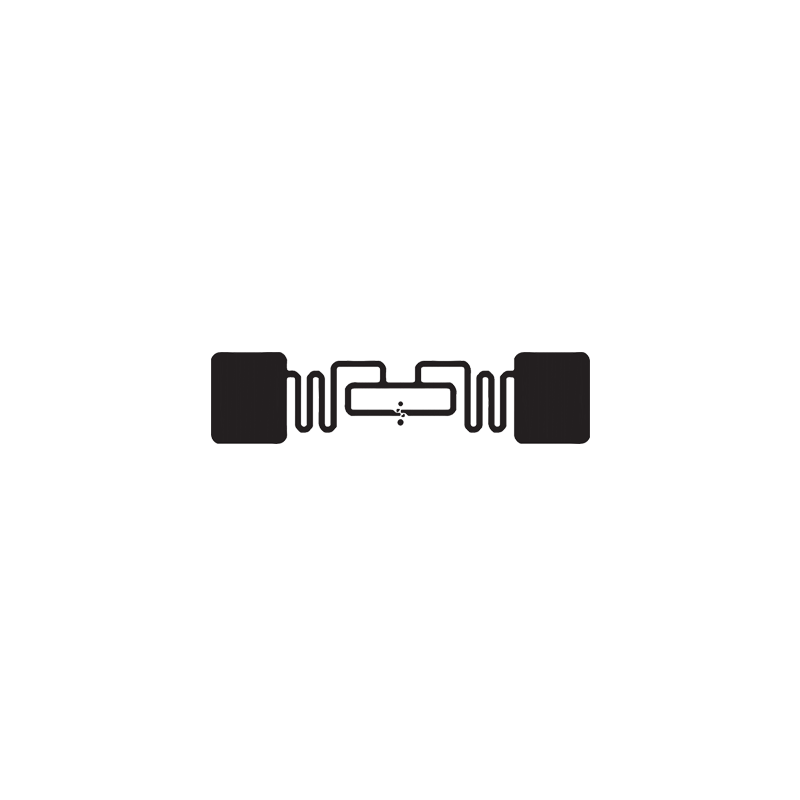
Alien ALN-9662 Short RFID White WET Inlay – High-Performance UHF RFID for Asset Tracking
2.3 Multi-point deployment to cover critical locations
By deploying multiple RFID readers at critical nodes in warehouses, factories, or logistics transportation (such as access points, shelves, and transport vehicles), the system can automatically capture asset information as it passes through these points. This allows the system to track the real-time movement of assets as they pass through each node, thereby forming a comprehensive asset flow trajectory.
3. Real-time data upload and processing
RFID readers are typically connected to a back-end management system. Once tag information is read, it is immediately transmitted to the database via wired or wireless networks. Combined with positioning technology and data analysis, this enables real-time updates and display of asset location and status.

Impinj E710 RFID Fixed Reader | High-Performance Asset Tracking & Inventory Management
4. Combining positioning technology for dynamic monitoring
In certain applications, RFID systems may integrate with other positioning technologies (such as UWB ultra-wideband positioning or Wi-Fi positioning) to enhance real-time positioning accuracy, enabling dynamic tracking of assets both indoors and outdoors. This integrated positioning solution is particularly well-suited for large warehouses and logistics centers, where it can meet the demands of (fine-grained management).
The Process of Real-Time Tracking
Taking warehouse management as an example, the process of achieving real-time asset tracking using RFID tags typically involves the following steps:
Tag binding to assets
Each asset is affixed with a corresponding RFID tag, which stores the asset’s unique ID and related information.
Reader deployment
RFID readers are installed at key locations such as warehouse entrances, exits, and shelf areas.
Asset movement scanning
When an asset passes through the reader’s detection range, the reader automatically captures the tag signal and identifies the asset information.
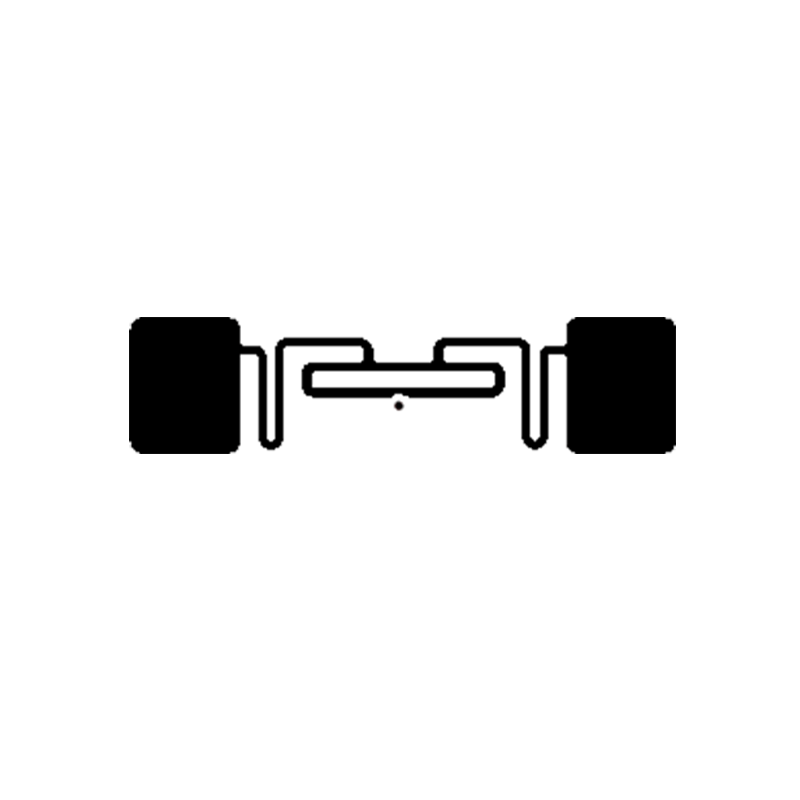
ALN-9962 Short Higgs 9 Clear Wet Inlay
Data transmission
The reader transmits the captured data in real-time to the central management system.
Data processing and display
The management system processes the data, updates the real-time location and status of assets, and allows managers to view real-time information via computers or mobile devices.
Alerts and management
The system can be configured with rules, such as triggering alerts automatically if an asset fails to pass through a specific node on time, helping managers address anomalies promptly.
Advantages of RFID real-time tracking
Enhanced management efficiency
Automated identification reduces manual operations, accelerates data collection speed, and improves accuracy.
Achieve dynamic asset monitoring
Asset movement trajectories are clearly visible, enabling managers to monitor asset locations in real time and prevent loss or misplacement.
Data Transparency and Traceability
Historical data can be queried, facilitating inventory checks, audits, and analysis.
Reduced Management Costs
Reduced manual inventory checks and error rates improve operational efficiency.
Application Scenario Examples
Warehouse Logistics
Access control readers are used to record real-time entry and exit of goods, while stacking area readers track the storage locations of goods.
Manufacturing and Production
Materials and finished products on production lines are labeled, and readers track their movement in real time to improve production management.
Medical Equipment Management
Hospitals label high-value equipment to enable equipment location and usage status monitoring, improving asset utilization.
Retail Theft Prevention and Inventory Management
Products are labeled with RFID tags for real-time inventory counting, preventing theft and improving sales efficiency.
Limitations and Challenges
Although RFID technology has obvious advantages in real-time asset tracking, there are still some limitations:
Cost Issues
Especially in large-scale applications, the investment in tags and readers is high.
Environmental Impact
Metal and liquid environments can interfere with RFID signals, affecting recognition performance.
Privacy and Security
Wireless communication poses risks of information leakage, requiring encryption and access controls.
Location Accuracy
Pure RFID location generally has limited accuracy and requires integration with other technologies to improve location performance.
5.Summary
RFID tags use wireless automatic identification technology, combined with multi-point reader deployment and real-time data transmission, to achieve “real-time traceability” of assets. Not only does this greatly improve the efficiency and transparency of asset management, but it also provides enterprises with more accurate data support and management tools. Although there are certain costs and environmental challenges, with technological advances and continuous innovation in application models, RFID asset tracking will play an increasingly important role in more industries.