

Barcode labels have been the default identification tool for decades, but RFID labels are becoming a serious upgrade path for manufacturers, retailers, logistics providers, healthcare suppliers, and warehouse operators. As companies push for faster inventory counts, better traceability, and fewer manual scanning errors, one practical question keeps coming up: how does a barcode label differ from an RFID label?
The short answer is that a barcode label stores visible printed data, while RFID labels use a small chip and antenna to communicate wirelessly with an RFID reader. That difference changes how items are scanned, how quickly data is captured, how much information can be stored, and how well the label supports automation. It also explains why many B2B buyers ask what is the rfid chip used for before choosing between barcode labels and RFID labels.
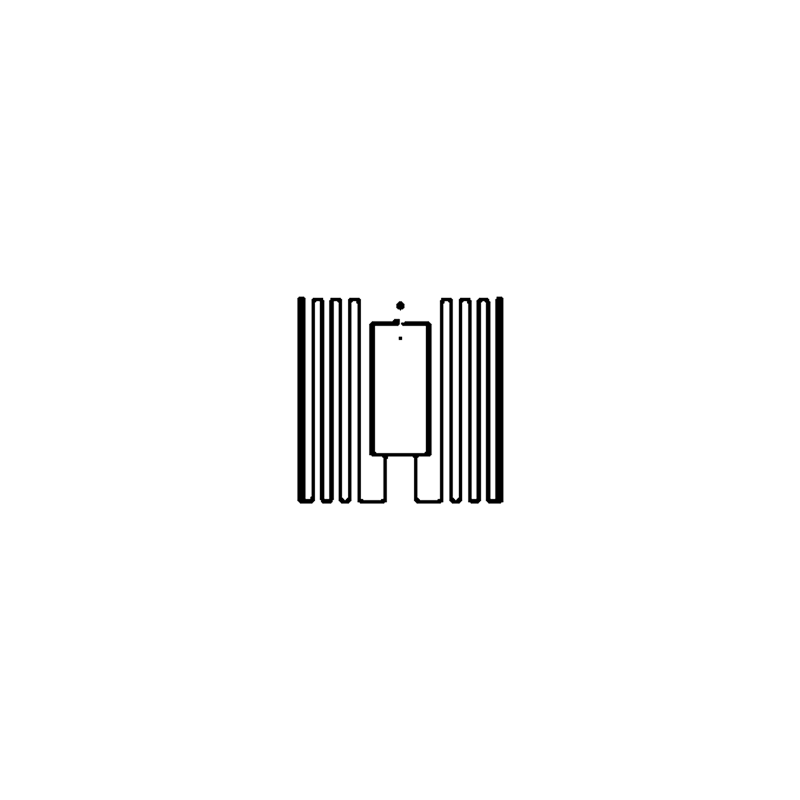
RFID Label
What Is a Barcode Label?
A barcode label is a printed label that contains machine-readable information in the form of black-and-white bars, squares, or patterns. Traditional one-dimensional barcodes, such as UPC or Code 128, store data in lines. Two-dimensional codes, such as QR codes and Data Matrix codes, can store more information in a compact pattern.
In a business environment, barcode labels are used on cartons, pallets, retail products, warehouse locations, documents, assets, and shipping packages. A barcode scanner or camera reads the printed symbol and sends the decoded data to inventory software, warehouse management software, point-of-sale systems, or enterprise platforms.
The main advantages of barcode labels are low cost, simple printing, broad compatibility, and easy visual verification. Almost every supply chain system can work with barcodes. For many low-cost or low-volume workflows, a barcode label is still a practical and efficient choice.
What Is an RFID Label?
An RFID label is a smart label that combines a printable face material with an RFID inlay. The inlay usually contains an RFID chip and an antenna. The chip stores a unique identifier or encoded data, while the antenna allows the label to communicate with an RFID reader through radio waves.
Unlike a barcode, an RFID label does not need to be visible to be scanned. If the tag is within the designed read range and the environment is suitable, the RFID reader can capture the label data wirelessly. In many cases, multiple RFID labels can be read at the same time, even when items are packed in cartons, stacked on pallets, or moving through a portal.
RFID labels are widely used for inventory management, apparel tracking, warehouse automation, logistics, asset tracking, healthcare supplies, library systems, anti-counterfeiting, and returnable transport items. For companies that need speed and traceability, RFID labels can provide a major operational advantage.
How Does a Barcode Label Differ from an RFID Label?
The biggest difference is the way each label is read. A barcode label must be scanned optically. The scanner needs a clear line of sight to the printed code, and each label is usually scanned one at a time. If the barcode is dirty, damaged, folded, covered, or poorly printed, scanning can fail.
An RFID label is read by radio frequency communication. The RFID reader sends a signal, the label antenna receives energy, and the chip responds with data. A properly designed RFID system can read labels without direct line of sight and can identify many items in seconds. This makes RFID especially useful for high-volume warehouses, fast-moving production lines, retail cycle counts, and logistics checkpoints.
Barcode labels are mainly passive visual identifiers. RFID labels are digital data carriers. A barcode points the system to a record. An RFID label can also point to a record, but it can support faster automated reads, serialized item-level identification, and in some chip types, rewritable memory or authentication features.
What Is the RFID Chip Used For?
The RFID chip is the part of the label that stores and manages the label data. In most UHF RFID labels, the chip stores an EPC, or Electronic Product Code, that uniquely identifies the item. Depending on the chip, it may also contain user memory, access passwords, kill passwords, security features, or authentication functions.
For B2B operations, the chip is used to connect a physical item to digital information. That information may include SKU, serial number, batch number, carton ID, pallet ID, production order, shipment record, asset ID, or inventory status. The chip does not need to store every business detail itself. Often, it stores a unique ID, and the database connects that ID to richer records.
This is why the question what is the rfid chip used for matters. The chip is not just a small electronic part inside the label. It is the digital identity of the item. Without the chip, an RFID label cannot identify itself, support serialized tracking, or communicate with an RFID reader.
Line-of-Sight and Scanning Speed
Barcode scanning depends on visibility. Workers must aim the scanner at the label, and the label must be positioned so the code can be read. This is manageable for simple workflows, but it becomes slow when teams need to count thousands of items, scan mixed cartons, or verify packed goods quickly.
RFID labels reduce that manual effort. A handheld RFID reader can scan multiple items while a worker walks through an aisle. Fixed RFID readers can be installed at dock doors, conveyor lines, packing stations, or warehouse gates. This allows companies to capture movement events automatically rather than relying only on individual manual scans.
The speed difference is one of the main reasons companies move from barcode labels to RFID labels. For inventory counts, RFID can reduce counting time from hours to minutes when the process and tag selection are properly designed.
Data Capacity and Item-Level Visibility
A barcode can carry a limited amount of printed data. More complex two-dimensional codes can hold more information, but the data remains visible, static, and dependent on optical scanning. If the label is reprinted, the visible code changes. If the label is damaged, the data may be unreadable.
An RFID label can store a unique digital identity in the chip. Many companies encode each RFID label with a serialized EPC, so every item has its own identity rather than only a shared SKU code. This supports item-level tracking, production traceability, return management, warranty control, and anti-counterfeiting workflows.
For example, two identical products may have the same barcode but different RFID identities. That distinction can be valuable when a company needs to know not only what product moved, but exactly which individual item moved.
Cost Differences
Barcode labels are usually cheaper than RFID labels. A barcode can be printed on a standard label with ordinary printing equipment. RFID labels cost more because they include an inlay, chip, antenna, quality testing, and sometimes encoding.
However, B2B buyers should compare total cost, not only label price. If RFID reduces labor hours, prevents shipping mistakes, improves inventory accuracy, lowers shrinkage, or supports compliance, the higher label cost may be justified. The business case is strongest when items are high-value, high-volume, difficult to count, or costly to misplace.
A barcode label may be the right choice when items are inexpensive, scanning volume is low, and line-of-sight scanning is acceptable. An RFID label may be the better choice when speed, automation, traceability, and serialized visibility create measurable value.
Durability and Environment
Both barcode labels and RFID labels must be matched to the application environment. Label face material, adhesive, printing method, temperature resistance, chemical exposure, moisture, abrasion, and surface material all affect performance.
Barcodes can fail when the printed code is scratched, stained, torn, wrinkled, or blocked. RFID labels can also fail if the tag is poorly selected for the surface or environment. Metal, liquid, dense materials, and tag placement can affect RFID performance. For metal assets, an on-metal RFID label or specialized structure may be required.
That is why professional RFID projects usually include sample testing. A label that works well on cardboard may not work well on foil packaging, liquid products, curved bottles, or metal tools. The right RFID label must be selected based on real product material and read conditions.
Security and Traceability
Barcode labels are easy to copy because the printed code is visible. For basic inventory workflows, this may be acceptable. For higher-value goods, authentication, or anti-counterfeiting, visible codes can be a limitation.
RFID labels can support stronger traceability because each chip can carry a unique identity. Some RFID chips also support password protection, locked memory, tamper-evident label constructions, or authentication features. These capabilities can help brands, manufacturers, and logistics providers improve chain-of-custody control.
Security still depends on the complete system. RFID should be combined with proper encoding, database rules, access control, reader configuration, and audit records. The label is only one part of the traceability architecture.
When Should a Business Use Barcode Labels?
Barcode labels are still a strong choice for many operations. They are suitable when cost must be extremely low, when individual scanning is acceptable, when the label is easy to see, and when the process does not require bulk reading or real-time visibility. Common examples include basic retail packaging, document tracking, simple warehouse bins, shipping labels, and low-cost consumables.
Barcodes are also useful as a backup identifier. Many RFID labels include both an RFID inlay and a printed barcode or QR code. This gives users the benefits of RFID automation while keeping a visible fallback for manual processes, customer requirements, or exception handling.
When Should a Business Use RFID Labels?
RFID labels are a better fit when companies need faster scanning, bulk reading, item-level serialization, hands-free identification, or stronger traceability. They are especially useful in apparel, logistics, manufacturing, healthcare, libraries, asset management, and warehouse automation.
RFID labels are also valuable when inventory accuracy affects revenue or service levels. Retailers can improve shelf availability. Manufacturers can track work-in-process. Warehouses can verify shipments more quickly. Healthcare teams can manage supplies and equipment more reliably. Logistics providers can reduce manual checkpoints and improve visibility across the supply chain.
Can Barcode and RFID Labels Work Together?
Yes. Many companies use hybrid labels that include both a printed barcode and an RFID inlay. This is often the most practical migration strategy. Existing barcode systems can continue to operate while RFID is added to improve automation and data capture.
A hybrid approach also supports different users. Warehouse teams may use RFID readers for bulk counts, while customers, carriers, or service teams may still use barcode scanners or cameras. For many B2B deployments, barcode and RFID are complementary rather than competitive.
Conclusion
A barcode label and an RFID label both identify items, but they work in very different ways. A barcode label depends on visible optical scanning. An RFID label uses a chip and antenna to communicate wirelessly with an RFID reader. This difference affects read speed, automation potential, data capacity, traceability, cost, and system design.
For businesses asking what is the rfid chip used for, the answer is straightforward: the chip gives the label a digital identity. It stores the data that allows the item to be identified, tracked, verified, and connected to business systems. Barcode labels remain useful for simple, low-cost identification, while RFID labels are better suited for operations that need faster, smarter, and more automated visibility.
FAQ
How does a barcode label differ from an RFID label?
A barcode label is scanned visually with a barcode scanner or camera, while an RFID label is read wirelessly by radio frequency communication. RFID labels can often be read without line of sight and can support bulk scanning.
What is the RFID chip used for?
The RFID chip stores the label’s unique digital identity and may also store user memory, passwords, or security data. It allows the RFID label to communicate with a reader and connect the physical item to digital records.
Is an RFID label better than a barcode label?
RFID is better when speed, automation, bulk reading, item-level tracking, and traceability are important. Barcodes are better when cost is the main priority and manual line-of-sight scanning is acceptable.
Can an RFID label also have a barcode?
Yes. Many RFID labels include printed barcodes, QR codes, human-readable numbers, and an RFID inlay. This hybrid design supports both RFID automation and manual scanning workflows.
Do RFID labels need line of sight?
In most applications, RFID labels do not need direct line of sight. However, read performance depends on tag type, reader setup, item material, packaging, and the surrounding environment.
Are RFID labels more expensive than barcode labels?
Yes, RFID labels usually cost more because they contain a chip and antenna. The higher cost can be justified when RFID reduces labor, improves accuracy, prevents errors, or supports traceability requirements.
What industries use RFID labels?
RFID labels are used in retail, apparel, logistics, warehousing, manufacturing, healthcare, libraries, asset tracking, automotive, electronics, and other B2B sectors that require fast and accurate item identification.