

In the digital age of the Internet of Things, RFID (Radio Frequency Identification) and NFC (Near Field Communication), as two key wireless identification technologies, are driving the popularization of “one thing, one code” applications. They may seem similar, but each has its own strengths. This article will unveil the mystery of both from technical principles, core differences to practical application scenarios!
1.Technical Comparison: Core Differences between RFID and NFC
1.1 Basic Principles
RFID: Non contact data exchange is achieved through radio waves, consisting of tags, readers, and backend systems. Tags are divided into two categories: passive (relying on reader/writer power supply) and active (with built-in battery), covering multiple frequency bands such as low frequency (125kHz), high frequency (13.56MHz), and ultra-high frequency (860-960MHz).
NFC: Essentially an extension of high-frequency RFID, with a fixed operating frequency of 13.56MHz, supporting bidirectional communication (readers and tags can play interchangeable roles). The biggest feature is short communication distance (≤ 10cm), higher security, and seamless compatibility with devices such as smartphones.
1.2 Summary of Core Differences
Features RFID NFC
Communication distance: Long distance (up to tens of meters), extremely short distance (0-10cm)
Multiple frequency bands available, fixed 13.56MHz
Interaction direction unidirectional (tag → reader/writer) bidirectional (data exchange between devices)
The cost of passive tags is low, and the cost of chips is high
Typical applications include warehousing and logistics, asset management, mobile payments, and intelligent access control
2.Application of technology in the scenario of one object, one code

‘One item, one code’ achieves full lifecycle management by assigning a unique digital identity to each item. The following are implementation cases of RFID and NFC in different fields:

RFID Handheld Reader
3.Large scale application of RFID
3.1 Retail and Logistics
RFID tags have strong batch reading capabilities and are suitable for high-speed and large-scale scenarios. For example:
- Clothing tags: Brands such as Zara use ultra-high frequency RFID to achieve instant inventory counting, reducing out of stock rates by 50%.
- Logistics package: JD Logistics tracks the flow of packages through RFID, increasing sorting efficiency by 30%.
- One item, one code anti-counterfeiting: Maotai wine bottles are equipped with RFID chips, and consumers can scan the code to verify their authenticity.
Medical and Industrial
- Medical device management: Hospitals use RFID tags to record device locations and disinfection cycles to avoid cross infection.
- Automotive parts traceability: Tesla codes each part to accurately locate the source of quality issues.
3.2 Precise Interaction of NFC
Intelligent device interaction
- Anti counterfeiting and traceability: High end cosmetics (such as Est é e Lauder) embed NFC chips in their packaging, allowing users to view production batches and ingredient information with just a touch of their mobile phone.
- Membership marketing: Starbucks launches NFC membership cards, where users can earn points by touching POS machines and receive coupons.
- Digital art: NFT artwork combined with NFC tags, collectors can verify ownership by touching the frame.
- Real case analysis of RFID and NFC (one object, one code scenario)

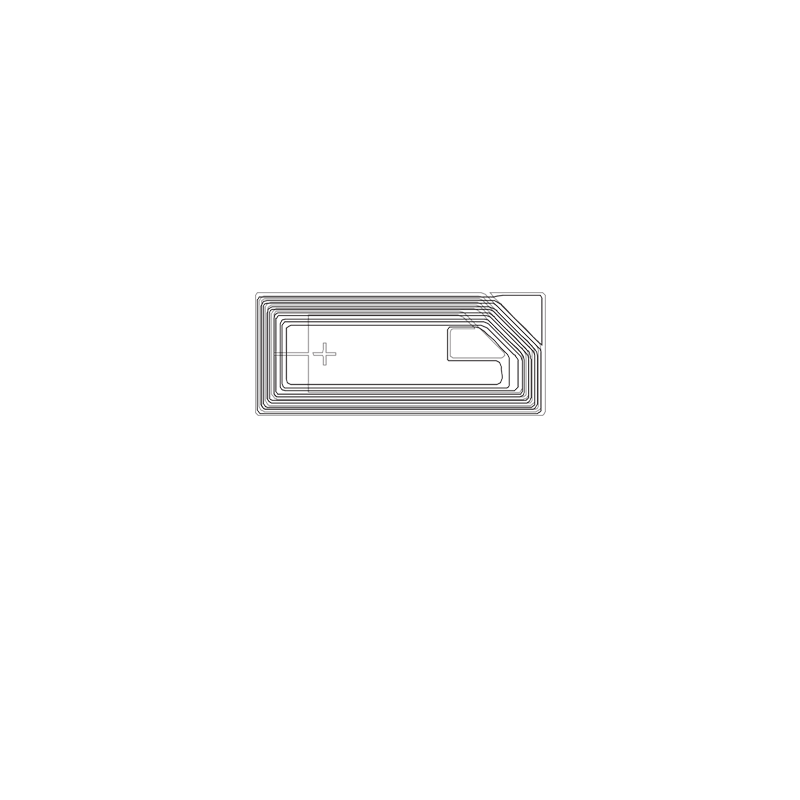
Customized NFC Tags – Premium NFC Solutions from Trusted NFC Supplier
4.RFID scale application cases
4.1 Efficient Management of Retail and Logistics
Zara inventory management: By using ultra-high frequency RFID tags to achieve batch scanning of clothing tags, hundreds of items can be read at a time, reducing inventory counting time by 90% and reducing out of stock rates by 50%.
JD Logistics Tracking: Logistics packages are embedded with RFID tags, and the sorting center processes over 100000 packages per hour with an accuracy rate of 99.9%. The package flow can be traced throughout the entire process.
Maotai anti-counterfeiting traceability: Each bottle of Maotai liquor is equipped with a unique RFID chip, which allows consumers to scan the code to verify its authenticity. At the same time, production batches and warehouse logistics information are recorded, and over 100000 counterfeit goods are intercepted annually.
4.2 Industrial and Medical Precision
Tesla parts traceability: Each car part is bound with an RFID tag, and the matching is automatically verified in the production process, increasing the efficiency of quality problem traceability by 70%.
Medical device management: Hospitals use high-temperature resistant RFID tags to label surgical instruments, automatically record disinfection cycles and usage times, avoid cross infection risks, and improve management efficiency by 40%.
5.NFC precise interaction case
5.1 Consumer anti-counterfeiting and marketing
Wuliangye NFC anti-counterfeiting: Consumers can touch the NFC tag of a wine bottle with their mobile phone, verify its authenticity within 3 seconds, and simultaneously push brand stories and promotional activities, reaching over 5 million users annually.
Starbucks member marketing: NFC membership card linked to mobile phone, touch POS machine to automatically accumulate points and push coupons, user repurchase rate increased by 25%.
5.2 Smart Life and Payment
Apple Pay contactless payment: based on NFC technology to achieve “touch and touch” payment, supported by over 100 million POS machines worldwide, with a transaction success rate of 99.5%.
Xiaomi Smart Door Lock: Users can unlock through NFC function on their mobile phones, replacing traditional keys and supporting multi permission hierarchical management. It has been installed in over 20 million households.


NFC Labels Price – Affordable Pricing from a Reliable Supplier
6.Collaborative application innovation cases
Reader/writer+intelligent warehousing: A certain automobile manufacturer has deployed ultra-high frequency RFID readers in its warehouse, combined with NFC handheld terminals, to achieve automatic registration of parts entering the warehouse and intelligent verification of parts leaving the warehouse. The inventory accuracy has been improved to 99.8%.
UR tags+clothing management: clothing brand UR sews RFID tags into collars, and NFC screens are synchronously deployed in store fitting rooms. Consumers can touch the tags to view dressing suggestions, increasing the unit price by 18%.
Case Summary and Value Extraction
Technical core value, typical scenario, data effect
RFID batch recognition, full process traceability of logistics, industrial and medical efficiency increased by 30% -90%, and error rate decreased by 50%
NFC secure interaction, consumer reach anti-counterfeiting, payment, and smart home user interaction rate increase by 20% -50%
Collaborative application data closed-loop, scenario complementary warehousing retail linkage, and comprehensive cost reduction of 15% -30% in IoT operation and maintenance
- Senseless payment: Apple Pay and Alipay “touch and touch” payment rely on NFC technology.
- Smart Home: Xiaomi door locks are linked to mobile phones through NFC, replacing traditional keys.
7. Future trend: Technology complementarity rather than substitution
Although RFID and NFC have a competitive relationship, more scenarios require collaborative applications:
Storage+Retail Loop: The warehouse uses RFID to manage inventory, and the store uses NFC to achieve consumer interaction.
Industrial Internet of Things: RFID tracks component flow, NFC is used for data reading during device maintenance.
Smart City: RFID management for shared bike deployment, NFC support for users to scan codes to unlock.
Selection suggestion:
Long distance and large-scale identification is required (such as logistics) → Select RFID.
Emphasize secure interaction and consumer reach (such as anti-counterfeiting, payment) → Choose NFC.
Limited budget and simple requirements → Passive RFID tags offer higher cost-effectiveness.
8.Conclusion
From anti-counterfeiting of a bottle of wine to the intelligence of a warehouse, RFID and NFC are reshaping the way “one item, one code” is implemented. There is no absolute superiority or inferiority in the choice of technology, the key is to match the core requirements of the business scenario. In the future, with the integration of 5G and the Internet of Things, these two technologies will unleash greater commercial value!