

RFID English full name is Radio Frequency Identification, radio frequency identification, also known as electronic tags, wireless radio frequency identification, inductive electronic chip, proximity card, proximity card, non-contact card, electronic bar code.
RFID radio frequency recognition is a kind of non-contact automatic diagnosis technology, it through the radio frequency signal automatic diagnosis target object and obtains the related data, the recognition work does not need the human intervention, may work in each kind of bad environment.
RFID technology can recognize high-speed movement of objects and can identify multiple tags at the same time, the operation is fast and convenient. Short-range radio frequency products are not afraid of grease, dust pollution and other harsh environments, can be used in such environments to replace the bar code, for example, used in factories to track objects on the assembly line. Long distance radio frequency products are mostly used in transportation, recognition distance can reach tens of meters, such as automatic toll collection or identification of vehicle identity.

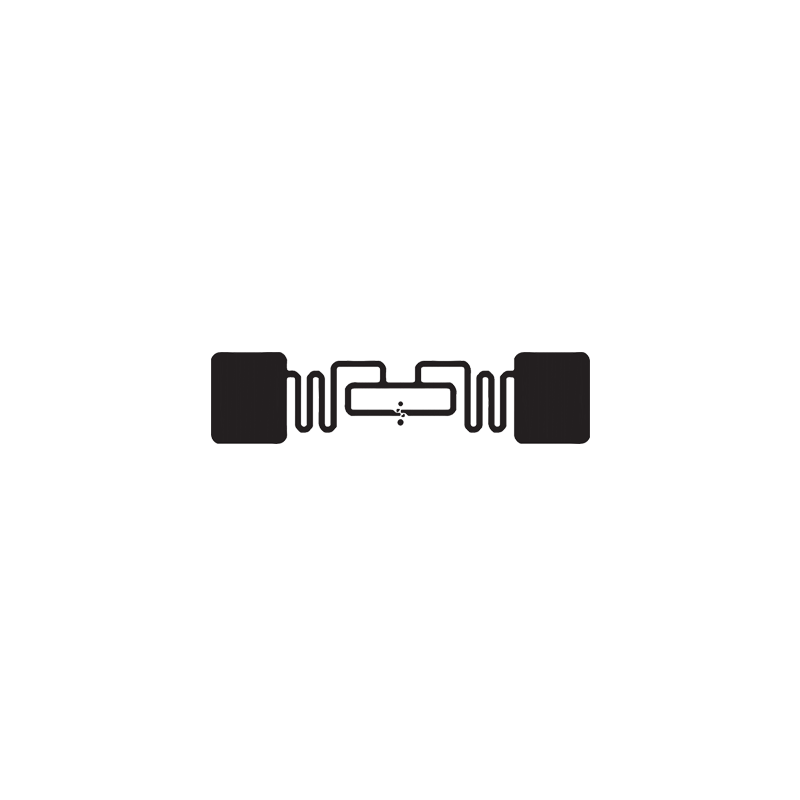
Alien ALN-9662 Short RFID White WET Inlay – High-Performance UHF RFID for Asset Tracking
1.The basic principle of RFID system
1.1 The basic principle
from the electronic label to the reader between the communication and the energy induction method, the system can be generally divided into two categories, namely the inductive coupling (Inductive Coupling) system and the electromagnetic backscattering coupling (Backscatter Coupling) system. Inductive coupling through the space high frequency alternating magnetic field coupling, based on the law of electromagnetic induction; electromagnetic backscatter coupling, that is, the radar principle model, the electromagnetic wave launched out of the target after encountering the reflection, while carrying back to the target information, based on the law of spatial propagation of electromagnetic waves.


ALN-9954 G Higgs 9 RFID Tags
1.2 Inductively coupled RFID system
RFID inductive coupling method corresponds to the ISO/IEC 14443 protocol. Inductively coupled electronic tags by an electronic data carrier, usually by a single microchip and used as an antenna with a large area of the coil and other components.
The inductive coupling method electronic label almost all is the passive work, in the RFID label the micro chip work all the energy required by the reader sends the induction electromagnetic energy to provide. The high-frequency strong electromagnetic field is generated by the reader’s antenna coil, and traverses the coil cross-section and the coil’s surrounding space, in order to make the nearby electronic label produce the electromagnetic induction.

The working principle diagram of inductively coupled RFID system
2. Electromagnetic backscatter RFID system
2.1 Backscatter modulation
Radar technology provides the theoretical and application basis for RFID backscatter coupling method. When an electromagnetic wave encounters a spatial target, part of its energy is absorbed by the target, and the other part is scattered in various directions with different intensities. In the scattered energy, a small part of the reflection back to the transmitting antenna, and is received by the antenna (so the transmitting antenna is also the receiving antenna), the received signal amplification and processing, you can get the target information.
When electromagnetic waves are emitted from the antenna into the surrounding space, they encounter different targets. Part of the electromagnetic wave energy reaching the target (free space attenuation) is absorbed by the target, and the other part is scattered in various directions with different intensities. Part of the reflected energy eventually returns to the transmitting antenna and is called the echo. In radar technology, this reflected wave can be used to measure the distance and position of a target.
For RFID system, can use electromagnetic backscatter coupling mode of operation, the use of electromagnetic wave reflection to complete the data transmission from the electronic tag to the reader. This way of working is mainly used in 915MHz, 2.45GNz or higher frequency system.
2.1 RFID backscatter coupling way
A target reflects the electromagnetic wave frequency by the reflection cross-section to determine. The size of the reflected cross-section is related to a series of parameters, such as the size, shape and material of the target, the wavelength and polarization direction of the electromagnetic wave. Because the target’s reflection performance is usually with the frequency increase and enhancement, so RFID backscatter coupling method using UHF and UHF, transponders and read-write distance is more than 1 m. Read-write, transponder (electronic tags) and antenna constitute a transceiver communication system.

Principle of RFID backscatter coupling method
3 Surface acoustic wave tag identification principle
3.1 Surface acoustic wave devices
Surface Acoustic Wave (Surface Acoustic Wave, SAW) devices based on the piezoelectric effect and the surface elasticity associated with the low-speed propagation of acoustic waves. SAW devices are small in size, light in weight, high in operating frequency, relative bandwidth, and can be used and the integrated circuit process with the same planar processing process. integrated circuit process, simple fabrication, high re-accessibility and design flexibility.
SAW devices have a wide range of applications, such as filters in communication equipment. In RFID applications, surface acoustic wave transponder operating frequency is currently mainly 2.45GHz.

Basic structure of surface acoustic wave transponder
4. Principle of surface acoustic wave RFID
SAW tag consists of a fork-finger transducer and a number of reflectors, and the transducer’s two buses are connected to the antenna of the electronic tag. The reader’s antenna periodically sends out high-frequency interrogation pulses, and within the receiving range of the electronic tag antenna, the received high-frequency pulses are transformed into acoustic surface waves through the fork-finger transducer and propagate on the crystal surface. The reflector composition to the incident surface wave partial reflection, and returns to the fork finger transducer, the fork finger transducer again will reflect the pulse string to turn into the high frequency electricity pulse string. Due to the low propagation rate of surface acoustic waves, the effective reflected pulse train returns to the reader only after a subtle delay time.

Propagation of surface acoustic waves
4.1 Key technologies of surface acoustic wave RFID system
- tag encoding capacity and distance
- Transponder and reader-writer cooperation
- Application of small, low-cost and suitable for the items to be recognized tag antennae
- Encapsulation
As the tag attached items and the use of the environment are very different, so its packaging structure has its own characteristics, they all must meet the following requirements:
- Ensure that the piezoelectric chip in the working life of the external environment during the stress and its changes, do not cause performance deterioration.
- At least can not affect or very little impact on the tag antenna of the high-frequency electromagnetic wave receiving effect.
- Fixed to be recognized in a simple way, firmly attached, without obvious damage to the object.
- Appearance is beautiful, for to be recognized for the harmony of the object, and to meet the safety and protection of the environment and other requirements.
4.2 The advantage of the surface acoustic wave RFID
Because the SAW device itself works in the radio frequency wave band, the passive and the anti-electromagnetic interference ability is strong, so the SAW technology realizes the electronic label to have the certain unique advantage, is to the integrated circuit (IC) technology’s supplement.
The main features of surface acoustic wave RFID are:
- large and reliable reading range, up to several meters;
- can be used on metal and liquid products;
- tag chip and antenna matching is simple, low production process costs;
- not only can identify stationary objects, but also can identify high-speed moving objects with speed up to 300km/h.
- can be used in harsh environments such as high temperature difference (-100℃~300℃) and strong electromagnetic interference.