

In recent years, RFID technology has become one of the most effective tools for animal tracking and identification. From livestock management and pet identification to wildlife conservation, RFID systems help monitor animals accurately, efficiently, and safely. But many people still ask: How is RFID used for animal tracking, and how does RFID technology work?
This article explains the basics of RFID technology, how it functions in animal tracking systems, and why it is widely used across different industries.
1.What Is RFID Technology?
RFID stands for Radio Frequency Identification. It is a wireless technology that uses radio waves to identify and track objects, animals, or people automatically.
An RFID system typically includes three main components:
- RFID Tag – Attached to or implanted in the animal
- RFID Reader – Scans and collects data from the tag
- Software System – Stores and processes tracking information
Unlike traditional barcode systems, RFID does not require direct line-of-sight scanning. This makes it ideal for tracking moving animals in farms, shelters, veterinary clinics, and wildlife environments.
2.How Does RFID Technology Work?
Understanding how RFID technology works is essential for understanding animal tracking applications.
The process is simple:
2.1 RFID Tag Stores Animal Information
Each animal receives an RFID tag containing a unique identification number. The tag may be:
- Ear tags for cattle, sheep, or pigs
- Injectable microchips for pets
- Leg bands for birds
- Collar tags for wildlife tracking
The stored information can include:
- Animal ID number
- Breed and age
- Vaccination records
- Ownership details
- Health history
- Location information
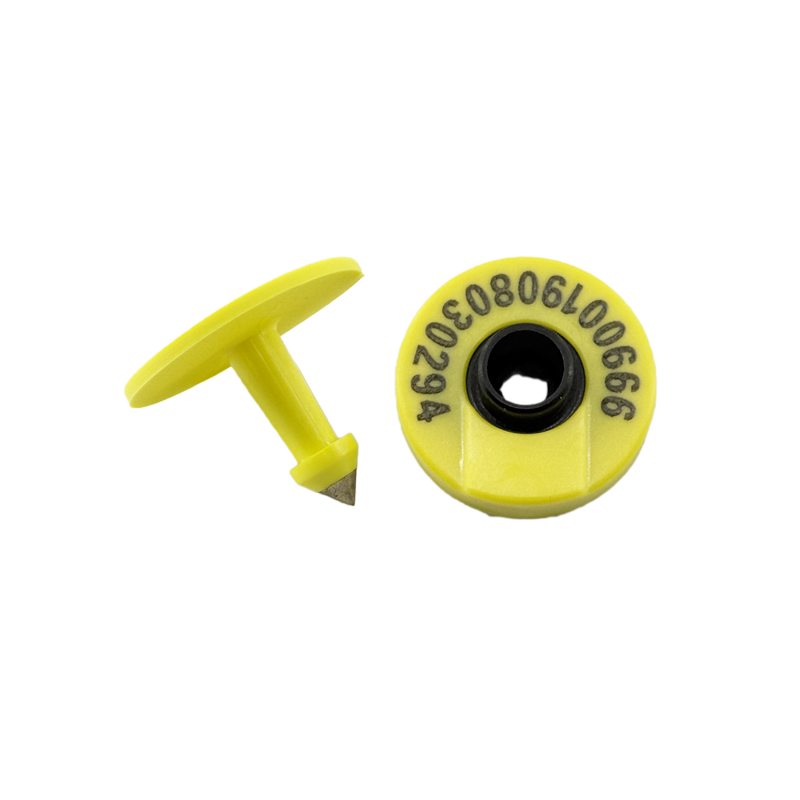
RFID Ear Tag Manufacturer
2.2 RFID Reader Sends Radio Signals
When the animal passes near an RFID reader, the reader emits radio waves that activate the RFID tag.
Depending on the system type, the reading distance may range from a few centimeters to several meters.
There are three common RFID frequency types:
| RFID Type | Frequency | Typical Use |
| LF (Low Frequency) | 125–134.2 kHz | Pet microchips, livestock |
| HF (High Frequency) | 13.56 MHz | Short-range identification |
| UHF (Ultra High Frequency) | 860–960 MHz | Long-range livestock tracking |
LF RFID is the most commonly used for animal identification because it performs well around water and living tissue.
2.3 The Reader Captures Tag Data
Once activated, the RFID tag transmits its stored information back to the reader.
The reader instantly sends this data to a connected computer or cloud-based management system.
This allows farmers, veterinarians, or researchers to identify animals quickly without manual paperwork.
3.How Is RFID Used for Animal Tracking?
RFID technology is widely used in multiple animal tracking applications.
3.1 Livestock Management
Farmers use RFID ear tags to monitor cattle, sheep, pigs, and goats throughout their lifecycle.
RFID helps with:
- Animal identification
- Breeding management
- Vaccination tracking
- Disease control
- Feeding management
- Automated weighing systems
- Transportation records
Large farms benefit from faster inventory counting and reduced labor costs.

RFID Ear Tags for Cattle
3.2 Pet Identification
Many pets today are implanted with RFID microchips.
If a lost pet is found, veterinary clinics or shelters can scan the chip and retrieve owner information immediately.
Benefits include:
- Permanent identification
- Faster pet recovery
- Reduced theft risk
- Accurate medical records
Unlike collars or name tags, implanted RFID chips cannot easily fall off or be removed.
3.3 Wildlife Conservation
Researchers and conservation organizations use RFID technology to study wildlife behavior and migration patterns.
RFID tags can help monitor:
- Endangered species
- Bird migration
- Marine animals
- Breeding activity
- Habitat movement
Because RFID systems minimize direct human contact, they reduce stress on animals during monitoring.
3.4 Veterinary Clinics
Veterinary hospitals use RFID systems to improve animal care and record management.
RFID tracking helps clinics:
- Identify animals accurately
- Access medical history instantly
- Prevent treatment errors
- Manage medication schedules
- Improve operational efficiency
This reduces administrative mistakes and speeds up service.
4.Advantages of RFID Animal Tracking
RFID technology offers several important advantages compared to traditional tracking methods.
4.1 Faster Identification
Animals can be scanned within seconds without physical handling.
4.2 Improved Accuracy
RFID reduces manual entry errors and incorrect identification.
4.3 Better Traceability
Complete lifecycle records can be stored digitally.
4.4 Enhanced Disease Control
Authorities can trace infected animals quickly during outbreaks.
4.5 Durable and Long-Lasting
RFID tags are resistant to water, dirt, and harsh outdoor environments.
4.6 Reduced Labor Costs
Automated scanning saves time for farms and animal facilities.

UHF 860-960 MHz Livestock RFID Ear Tag
5.Passive vs Active RFID for Animal Tracking
There are two main types of RFID tags used in tracking systems.
5.1 Passive RFID Tags
- No internal battery
- Activated by reader signals
- Lower cost
- Smaller size
- Common for pets and livestock
5.2 Active RFID Tags
- Battery-powered
- Longer reading range
- Real-time tracking capability
- Higher cost
- Often used for wildlife research or large-scale monitoring
Most animal identification systems use passive RFID tags due to their affordability and long lifespan.
6.Challenges of RFID Animal Tracking
Although RFID technology is highly effective, some challenges still exist.
6.1 Initial System Cost
Installing readers and software systems may require investment.
6.2 Limited Reading Range
Passive RFID tags generally have shorter scanning distances.
6.3 Environmental Interference
Metal objects and certain environmental conditions may affect signal performance.
6.4 Data Management
Large farms or conservation projects require proper database management systems.
Despite these limitations, RFID remains one of the most reliable animal tracking technologies available today.
7.The Future of RFID in Animal Tracking
As technology continues to evolve, RFID systems are becoming smarter and more connected.
Future developments may include:
- Integration with GPS and IoT systems
- Real-time cloud monitoring
- AI-powered animal health analysis
- Automated feeding and behavior tracking
- Smart farming applications
These innovations will further improve animal welfare, operational efficiency, and data accuracy.
8.Conclusion
So, how is RFID used for animal tracking? RFID technology enables fast, accurate, and automated identification of animals across farming, veterinary care, pet recovery, and wildlife conservation.
Understanding how RFID technology works helps businesses and organizations choose the right tracking solution for their needs. By using RFID tags, readers, and management software, animal tracking becomes more efficient, reliable, and scalable than traditional identification methods.
As the demand for smart agriculture and digital animal management grows, RFID technology will continue to play a critical role in the future of animal tracking systems.