

Looking to achieve unprecedented visibility and efficiency in your logistics? This comprehensive guide will show you how to build a supply chain using RFID for tracking, transforming a complex network into a transparent, data-driven operation. We’ll demystify Radio Frequency Identification (RFID) technology, break down the core components of an RFID asset tracking system, and provide actionable steps—from selecting the right tags and readers to executing a successful phased implementation. Whether you aim to automate inventory counts, eliminate stockouts, or gain end-to-end traceability, this roadmap will help you plan, pilot, and scale a robust RFID solution that delivers a clear return on investment and a significant competitive edge.
1. What is RFID?
Radio Frequency Identification (RFID) is a technology that uses radio waves for non-contact automatic identification. The system consists of three main components:
- RFID Tags: Contain a microchip and antenna, storing unique item codes and data.
- RFID Readers: Emit radio frequency signals and receive tag responses.
- Backend System: Processes, stores, and analyzes the collected data.
Working Principle:
When an RFID tag enters the electromagnetic field generated by a reader, the tag’s antenna receives electromagnetic waves of a specific frequency, providing energy to activate the chip. The stored information is then transmitted via the antenna. The reader receives the signal, decodes it, and sends it to a computer system for processing.
Advantages over Barcodes:
- No line-of-sight required; enables batch reading.
- Longer reading distance (from centimeters to tens of meters).
- Data can be read/written, with greater information capacity.
- Stronger environmental adaptability, with higher resistance to contamination and durability.
2. What is an RFID Asset Tracking System?
An RFID asset tracking system is a solution that utilizes RFID technology to monitor items throughout the entire supply chain process. It achieves:
Core Functions:
- Real-time Location Tracking: Precisely know the real-time location of goods in warehouses and during transportation.
- Inventory Visibility Management: Automatically update inventory data for accurate stocktaking.
- Process Automation: Reduce manual operations and improve operational efficiency.
- Anti-counterfeiting & Theft Prevention: Prevent counterfeiting and loss of goods through unique identification.
- Temperature & Humidity Monitoring: Special tags monitor environmental conditions to ensure product quality.
System Components:
- Hardware Layer: Tags, readers, antennas, sensors.
- Network Layer: Wired/wireless transmission networks.
- Software Layer: Data collection middleware, management systems, analysis platforms.
- Integration Layer: Interfaces with enterprise systems like ERP, WMS, TMS.
3. How to Choose RFID Tags?
Tag selection requires comprehensive consideration of the following factors:
3.1 Tag Type Selection
| Tag Type | Power Source | Read Range | Cost | Typical Use Cases |
|---|---|---|---|---|
| Passive Tags | Reader-powered | Centimeters – 10m | Low | Warehouse Management, Retail Goods, Document Archives |
| Active Tags | Built-in Battery | Up to 100m | High | Vehicle Management, Container Tracking, High-Value Assets |
| Semi-Passive Tags | Battery for circuit | 10-50m | Medium | Cold Chain Logistics, Medical Equipment, Reusable Assets |
3.2 Frequency Selection
- Low Frequency (LF, 125-134kHz): Strong penetration, suitable for metal/liquid environments, but short read range (<1m).
- High Frequency (HF, 13.56MHz): High security, suitable for tickets, library management; read range around 1 meter.
- Ultra-High Frequency (UHF, 860-960MHz): Long read range (up to 15m), strong batch reading capability, preferred for supply chains.
3.3 Environmental Suitability
- Temperature Tolerance: Cold chain requires wide-temperature tags (-40°C to 85°C).
- Protection Rating: Outdoor use requires at least IP67 for water/dust resistance.
- Metal Compatibility: Metal surfaces require specialized on-metal tags.
- Chemical Resistance: Chemical industry needs acid/alkali corrosion-resistant tags.
3.4 Mounting Methods
- Adhesive Labels: Paper packaging, cartons.
- Epoxy Encapsulation: Tools, equipment.
- Rivets/Screw Fixation: Pallets, containers.
- Embedded Tags: Inside valuable instruments.
Selection Recommendations:
- Ordinary goods: UHF Gen2 paper labels, unit price $0.04-$0.12 (approx.)
- Reusable assets: Re-writable on-metal tags.
- Cold chain transport: Semi-passive tags with temperature sensors.
- Small metal items: Ceramic or flexible on-metal tags.
4. How to Choose RFID Readers?
4.1 Selection Based on Deployment Method
Fixed Readers
Use Cases: Warehouse entry/exit points, production line workstations, shelf areas.
Selection Points:
- Multi-port design (typically 4-8 ports) to connect multiple antennas.
- Support for industrial protocols (e.g., PROFINET, Ethernet/IP).
- Protection rating of IP65 or higher for industrial environments.
- Recommended Brands: Impinj R700, Zebra FX9600.

Fixed RFID Reader | High-Speed UHF Tag Scanning for Industrial & Warehouse Automation
Handheld Readers
Use Cases: Inventory counting, goods receipt, item finding, inspections.
Selection Points:
- Battery life > 8 hours.
- Support for multi-mode communication: Bluetooth, WiFi, 4G/5G.
- Drop-resistant design (withstands drops from 1.5m).
- Recommended Brands: Zebra RFD40, Chainway C72.

UHF Handheld Reader
Integrated Readers
- Use Cases: Retail stores, small warehouses, smart cabinets.
- Features: Integrated antenna, processor, and network interface for simple deployment.

4.2 Technical Parameter Considerations
Reading Performance:
- Tag read speed: >700 tags/second.
- Multi-tag identification: Supports dense mode reading.
- Anti-interference capability: Dynamic Q algorithm for complex environments.
Network & Interfaces:
- Wired interfaces: Gigabit Ethernet, RS232/485.
- Wireless connectivity: WiFi 6, Bluetooth 5.0, LoRa.
- Expansion interfaces: GPIO, USB.
Management & Configuration:
- Supports remote firmware upgrades.
- Configuration via Web interface or dedicated software.
- Logging and diagnostic functions.
4.3 Antenna Selection Guide
| Antenna Type | Gain | Beam Angle | Typical Use Cases |
|---|---|---|---|
| Omni-directional | 3-6dBi | 360° | Small warehouses, retail areas. |
| Directional | 8-12dBi | 30-70° | Conveyor belts, entry/exit points. |
| Circularly Polarized | 6-9dBi | 60-90° | Scenarios with unfixed tag orientation. |
| Linearly Polarized | 8-12dBi | 45-80° | Fixed tag orientation, requiring long distance. |
Antenna Installation Points:
- Height: Typically 2.5-4 meters, adjusted based on the read zone.
- Angle: Tilt 15-30 degrees to improve read effectiveness.
- Spacing: Maintain proper distance to avoid interference between antennas.
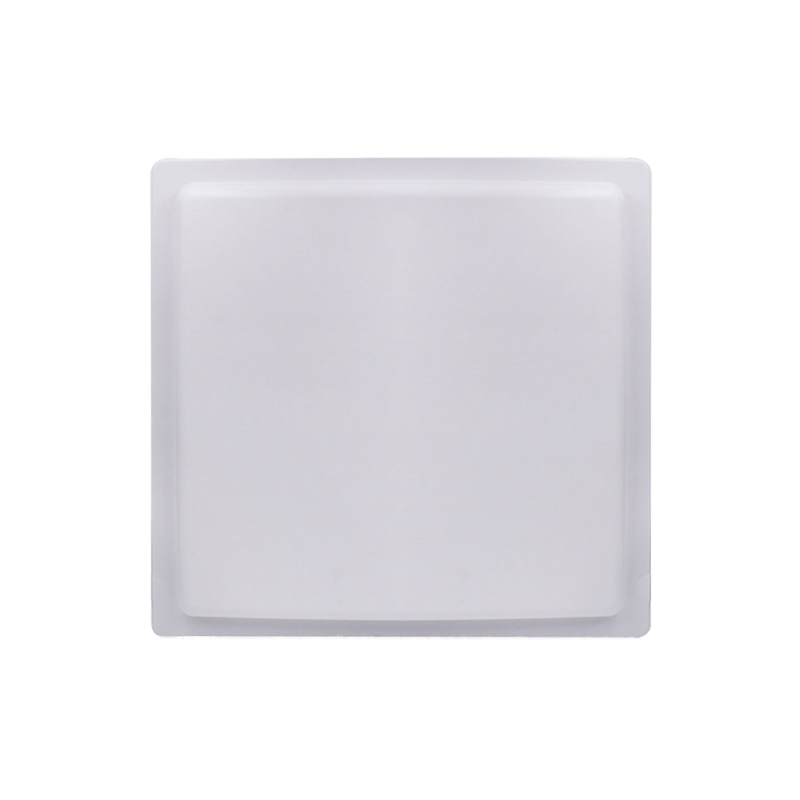
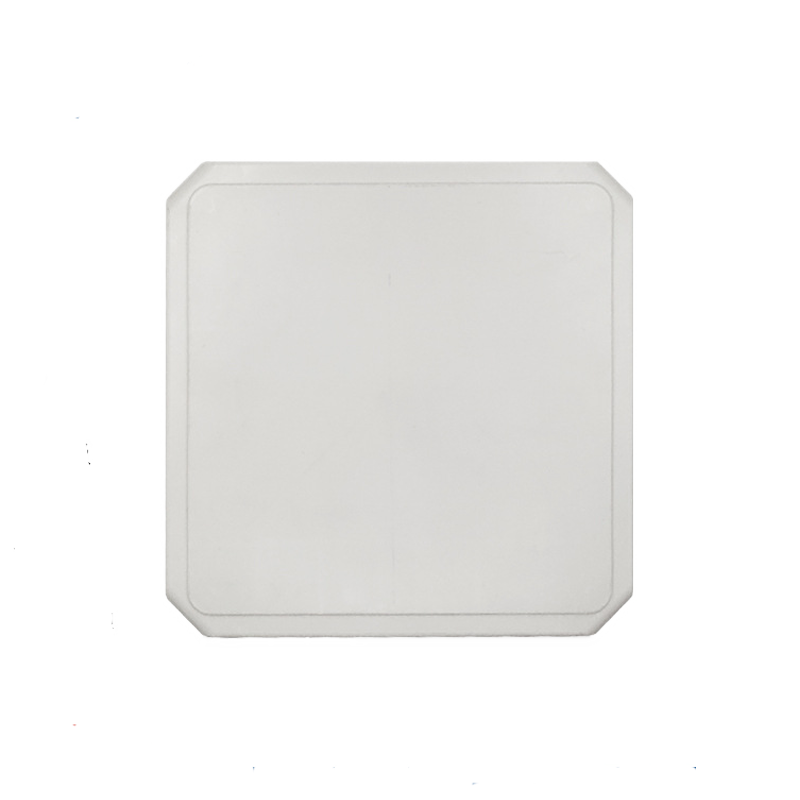
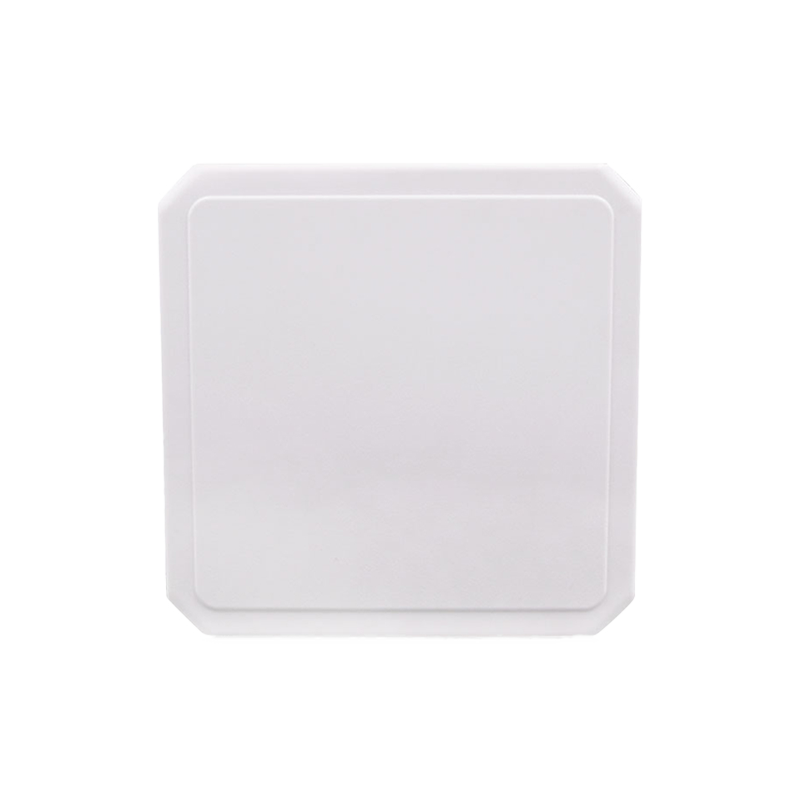
12dBi Circular Linear RFD UHF Reader Antenna
5. Implementation Steps for Building an RFID Supply Chain System
Phase 1: Planning & Design (1-2 Months)
5.1 Requirements Analysis
- Define tracking granularity: Item, case, pallet, or container level.
- Identify key nodes: Supplier → Production → Warehousing → Distribution → Retail.
- Define KPIs: Inventory accuracy, counting efficiency, order fulfillment time.
5.2 Process Mapping
- Map existing business processes.
- Identify RFID application points (tagging, reading, verification points).
- Redesign optimized processes.
5.3 Site Survey
- Electromagnetic environment testing.
- Installation location planning.
- Network coverage assessment.
Phase 2: Pilot Implementation (2-3 Months)
5.4 Tag Solution Validation
- Test tag performance on 3-5 representative items.
- Determine optimal tag placement and method.
- Establish tag encoding standards.
5.5 Infrastructure Deployment
- Install readers and antennas.
- Deploy network equipment.
- Set up test environment.
5.6 System Integration Development
- Develop middleware and data interfaces.
- Integrate with WMS/ERP systems.
- Customize reports and dashboards.
Phase 3: Full-scale Rollout (3-6 Months)
5.7 Phased Expansion
- Start with high-value goods.
- Gradually cover more product categories.
- Expand to more warehouses and stores.
5.8 Personnel Training
- Operators: Tag application, device usage.
- Managers: Data analysis, exception handling.
- IT Staff: System maintenance, troubleshooting.
5.9 Continuous Optimization
- Collect usage feedback.
- Adjust reader parameters.
- Optimize business processes.
6. Key Success Factors and Return on Investment
Key Success Factors
- Top Management Support: Secure commitment and resources from leadership.
- Vendor Selection: Choose solution providers with industry experience.
- Data Governance: Establish unified data standards and coding systems.
- Change Management: Effectively manage organizational change and user adaptation.
ROI Analysis
Typical Investment Breakdown:
- Hardware (tags, readers, network): 40-50%
- Software & Integration: 30-35%
- Implementation & Services: 15-25%
Expected Benefits:
Direct Economic Benefits
- Inventory accuracy improves from 95% to over 99.5%.
- Counting time reduced by 80%.
- Labor costs lowered by 30-50%.
Operational Improvements
- Order fulfillment time shortened by 25%.
- Stockout rate reduced by 60%.
- Asset utilization increased by 20%.
Strategic Value
- Enhanced supply chain transparency.
- Improved customer satisfaction.
- Strengthened data-driven decision-making capability.
Payback Period: Typically 12-18 months.
7. Future Development Trends
- AI Integration: Combining RFID data with machine learning for predictive analytics.
- IoT Convergence: Integrating RFID with sensor networks and GPS.
- Blockchain Applications: Creating immutable traceability records.
- Sustainable Tags: Using biodegradable materials and reusable designs.
- 5G Empowerment: Enabling ultra-low latency real-time tracking.
8. Conclusion
Building an intelligent supply chain system based on RFID is a systematic engineering project requiring comprehensive consideration from strategic planning and technology selection to process reengineering and organizational change. The right start involves choosing suitable tags and readers, but true success lies in integrating the technology into business processes, continuously optimizing, and ultimately achieving data-driven intelligent decision-making.
It is recommended that enterprises start with pilot projects, gradually accumulate experience, and roll out in phases. Collaborating with experienced solution providers and learning from industry best practices can significantly reduce implementation risks and accelerate value realization. In the era of digital supply chains, RFID technology is no longer an optional solution but an essential tool for enhancing competitiveness.