

Retailers are under pressure to know what is actually available in every store, warehouse, fitting room, back room, and fulfillment node. That is why many retail technology teams are asking how to choose rfid solution for retail operations instead of simply asking whether RFID works. The market has moved beyond early experiments. RFID in the retail industry is now a practical item-level visibility system that can improve stock accuracy, replenishment, loss analysis, store execution, and omnichannel fulfillment when it is selected and deployed correctly.
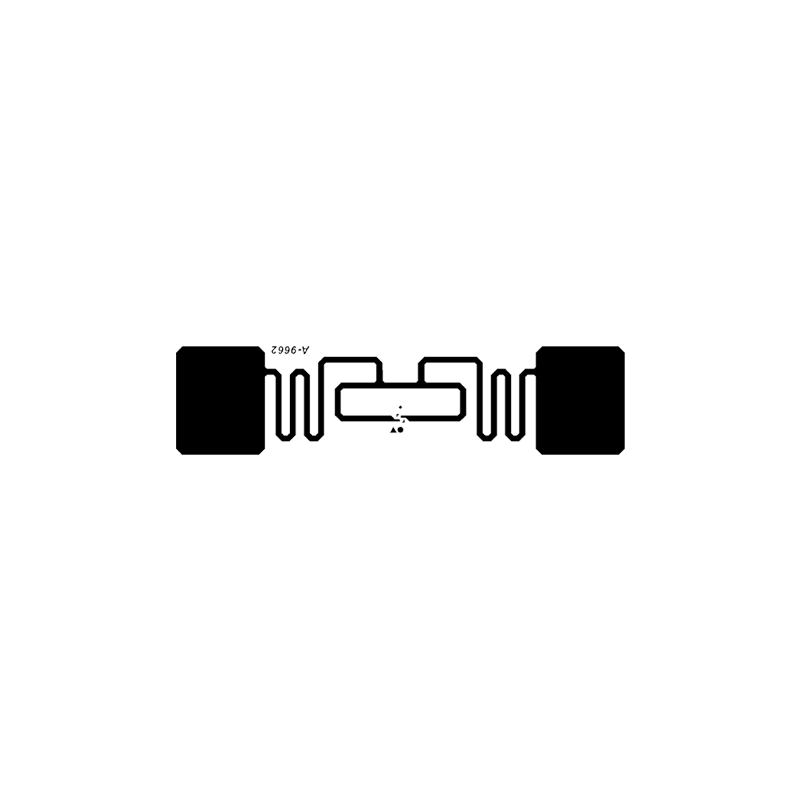
RFID Tags For Inventory
For B2B buyers, RFID should not be viewed as a tag purchase only. A retail RFID project includes tags, encoding, readers, antennas, software, data rules, store workflows, integration, and governance. The right solution depends on the retailer’s products, store format, inventory pain points, customer promise, and operating model. A fashion retailer, electronics chain, pharmacy, grocery operator, department store, and specialty retailer may all use RFID differently. The shared goal is the same: convert physical products into accurate digital inventory records that teams can trust.
What Is RFID in the Retail Industry?
RFID, or radio-frequency identification, uses radio waves to identify items that carry RFID tags. A retail RFID tag normally contains a small chip and antenna. The chip stores a unique identity, while the antenna allows the tag to communicate with an RFID reader. In most retail inventory applications, the tag is passive, meaning it has no battery. It wakes up when it receives energy from a reader and sends back its encoded identifier.
In retail, the tag may be applied as a hang tag, adhesive label, packaging label, brand label, care label, or product-integrated inlay. The identifier can be linked to SKU, size, color, batch, price group, purchase order, store location, or lifecycle status in the retailer’s software. This makes each product individually visible instead of only visible as a general SKU quantity.
The most common retail inventory deployments use UHF RFID because it supports longer read ranges and bulk reading. Store associates can scan hundreds of tagged items quickly with a handheld reader. Fixed readers can monitor receiving doors, stockroom exits, smart shelves, fitting room flows, or checkout areas depending on the project. The result is faster and more frequent inventory data collection compared with barcode-only processes.
How RFID Works in Retail Operations
A retail RFID workflow usually begins before the item reaches the store. Tags may be encoded by the product supplier, distribution center, or retailer. Each tag receives a unique number, often based on an EPC structure or a company-specific serialization rule. That number is associated with product master data in a central system so the retailer knows what each tag represents.
When products arrive at a distribution center or store, RFID readers can verify cartons and items against the shipment record. In the store, associates can use handheld readers to perform cycle counts, locate missing products, check display compliance, and confirm back-room inventory. At the sales floor, RFID data can support replenishment decisions by showing what is available to sell and what should be moved from stockroom to shelf.
For omnichannel operations, RFID becomes even more valuable. Buy-online-pick-up-in-store, ship-from-store, reserve-in-store, and store-to-store transfer all depend on accurate item availability. If the website shows a product as available but the store cannot find it, the customer experience suffers. RFID helps reduce that gap by improving the reliability of inventory records at the item level.
RFID is different from barcode scanning because it does not require direct line-of-sight and can read many tags at once. However, it is not magic. Read performance depends on tag type, placement, product material, store layout, reader power, antenna orientation, nearby metal or liquids, and software filtering. A strong retail RFID solution balances hardware performance with operational discipline.
Key Benefits of RFID for Retailers
The first major benefit is inventory accuracy. Retailers often make decisions based on system inventory that may differ from actual shelf or back-room inventory. Miscounts happen through receiving errors, misplaced items, shrinkage, returns, transfers, and manual scanning gaps. RFID makes it possible to count more often with less labor, allowing teams to correct inventory records before they affect sales or service.
The second benefit is better product availability. When stock accuracy improves, replenishment becomes more reliable. Associates can identify out-of-stock display areas, misplaced products, and items that are available in the back room but not on the sales floor. This is especially important in apparel, footwear, accessories, cosmetics, electronics, and other categories where customers expect exact size, color, or model availability.
The third benefit is faster store execution. Manual counting and barcode scanning take time. RFID cycle counts can be completed more frequently, which helps store managers use labor more efficiently. Instead of spending hours checking every item one by one, associates can scan zones, investigate exceptions, and focus on selling, fulfillment, merchandising, and customer service.
The fourth benefit is stronger omnichannel fulfillment. Retailers can only promise store inventory online if they trust the data. RFID improves confidence in item availability and can reduce canceled orders, substitution issues, and customer disappointment. It also helps stores find items quickly when preparing pickup or shipment orders.
The fifth benefit is loss visibility. RFID can help retailers understand where inventory discrepancies occur. While RFID is not a complete loss-prevention system by itself, item-level movement data can support shrink analysis, exception reporting, and process correction. When combined with existing security and operational controls, it provides a clearer view of product movement.
How to Choose RFID Solution for Retail Operations
The first step is to define the business problem. A retailer should identify whether the priority is inventory accuracy, faster cycle counts, receiving verification, omnichannel fulfillment, loss analysis, fitting room visibility, display compliance, or customer experience. The solution design should follow the use case. A project that tries to solve every problem at once may become too complex to measure.
The second step is to choose the right tag format. Apparel may use RFID hang tags, woven labels, care labels, or packaging labels. Cosmetics and small packaged goods may need compact labels. Electronics may require tag designs that perform near metal or dense packaging. Luxury goods may need discreet tags that support authentication or product lifecycle tracking. The tag should match the product, packaging, read zone, and brand presentation.
The third step is to validate read performance in real store conditions. Test products on shelves, racks, tables, drawers, stockroom bins, and shipping cartons. Include difficult materials such as foil packaging, liquids, dense stacks, and metal fixtures where relevant. A reader demo in a clean environment is useful, but the real test is how the system performs during actual retail workflows.
The fourth step is to evaluate reader strategy. Handheld readers are flexible and common for cycle counting, search, and exception handling. Fixed readers can support receiving, portals, smart cabinets, fitting rooms, checkout support, or automated zone monitoring. Many retailers start with handheld workflows and later add fixed read points where automation creates measurable value.
The fifth step is software integration. RFID data must connect to inventory, ERP, WMS, POS, order management, and store operations systems. If the RFID platform creates a separate data island, the business value is limited. The system should update inventory records, trigger tasks, support exception workflows, and provide reports that managers can act on.
For retailers comparing tag options, the RFID Tags For Inventory product page is a relevant internal reference because it focuses on item-level identification for inventory accuracy and operational visibility.
Retail RFID Selection Criteria for B2B Buyers
Retailers should evaluate tag readability, durability, attachment method, encoding model, print quality, supplier consistency, and cost at scale. The tag may be a small part of the total project budget, but it is attached to every item, so poor tag quality can create widespread operational problems. Consistent inlay performance and reliable encoding are essential.
They should also evaluate process fit. Who applies the tag? Is it source tagged by the supplier or tagged in a distribution center? Who validates encoding? How are exceptions handled? What happens when a tag is damaged or missing? How are returned items processed? These questions determine whether RFID becomes a smooth operating tool or an extra task for store teams.
Data governance is another selection factor. A retail RFID system should have clear rules for product identity, location, stock status, event history, and user permissions. Stores need simple workflows, while headquarters needs consistent data across regions and channels. If data rules are unclear, RFID may produce more information without improving decisions.
Scalability should be considered from the start. A pilot with one store and one category may be easy to manage manually, but a rollout across hundreds of stores requires standardized tagging, training, support, reporting, and integration. The best solution is not only the one that works in a pilot; it is the one that can be repeated reliably across the retail network.

Fixed RFID Reader | High-Speed UHF Tag Scanning for Industrial & Warehouse Automation
Common Retail RFID Use Cases
Cycle counting is one of the most common use cases. Store teams can count tagged items more quickly and keep inventory records closer to reality. Product location is another practical use case. Associates can search for a specific item, size, color, or model using a handheld reader, which helps with customer requests and online order fulfillment.
Receiving verification helps stores and warehouses confirm that shipments match expected items. This can reduce receiving errors and speed up inbound processing. Replenishment support helps identify items that should move from the back room to the sales floor. Return processing can use RFID to validate product identity and route items back into available stock more accurately.
Some retailers use RFID for customer experience features such as smart fitting rooms, interactive displays, or faster checkout support. These applications can be valuable, but they should be built on a reliable inventory foundation. If the core item data is not accurate, customer-facing experiences may fail to deliver consistent value.
Implementation Roadmap
A practical roadmap begins with a focused discovery phase. Identify the categories, stores, and processes where RFID can create measurable benefit. Collect baseline metrics such as inventory accuracy, cycle count time, out-of-stock rate, fulfillment cancellation rate, receiving errors, and shrink indicators. These metrics will help evaluate the pilot objectively.
Next, run a controlled pilot with representative products and store conditions. Test tag placement, reader workflows, associate training, software updates, and exception handling. Include busy store periods, back-room conditions, mixed product displays, and real replenishment tasks. The pilot should prove both technical read performance and operational usefulness.
After the pilot, refine the standard operating procedure. Decide how often stores should count, how exceptions should be resolved, which reports managers should review, and how RFID events should update inventory. Standardization is critical before scaling. A retailer should avoid rolling out technology faster than teams can adopt the process.
Finally, scale in waves. Start with categories and stores where value is clearest, then expand. Use training, support documentation, performance dashboards, and supplier quality checks to maintain consistency. As adoption grows, the retailer can add more advanced automation such as fixed readers, smart zones, or integrated analytics.
Risks and Mistakes to Avoid
One common mistake is selecting RFID tags before defining the business process. The tag must support the process, not the other way around. Another mistake is testing only a small ideal sample. Retail environments contain mixed materials, crowded shelves, changing displays, and human workflow variation. Testing must reflect that reality.
A third mistake is ignoring associate adoption. If store teams see RFID as extra work, usage will decline. The system should make tasks faster or clearer. Training should explain not only how to scan, but why the scan matters and how it affects inventory accuracy, fulfillment, and customer service.
A fourth mistake is treating RFID data as perfect without exception rules. Duplicate reads, missed reads, misplaced products, damaged tags, and system delays can happen. Good software filters noise, flags exceptions, and gives users a practical way to resolve issues. A reliable RFID solution combines automation with clear operational controls.
The Future of RFID in Retail
RFID in the retail industry is moving from a specialized inventory tool to part of the broader digital store infrastructure. As retailers integrate stores with ecommerce, distribution, returns, and customer service, accurate item-level data becomes more important. RFID can support that foundation by connecting physical products with digital operations.
The future is likely to include tighter integration with analytics, automated replenishment, loss prevention tools, self-checkout support, sustainability reporting, and product lifecycle services. However, the strongest results will still come from retailers that solve the basics first: accurate tagging, reliable reads, clean data, trained teams, and workflows that improve daily operations.
FAQ
What is RFID in retail?
RFID in retail is the use of radio-frequency tags and readers to identify products at item level. It helps retailers improve inventory accuracy, cycle counting, replenishment, receiving, fulfillment, and product visibility.
How does RFID work in a retail store?
Each product carries an RFID tag with a unique identifier. A handheld or fixed reader captures that identifier and sends it to retail software, where it is linked to SKU, location, stock status, or operational events.
How to choose RFID solution for retail operations?
Start with a measurable use case, choose tag formats that match your products, test read performance in real store conditions, select the right reader strategy, and make sure RFID data integrates with inventory and store systems.
Which retail products are best suited for RFID?
RFID is especially useful for apparel, footwear, accessories, cosmetics, electronics, specialty goods, and other categories where item-level inventory accuracy affects sales, replenishment, fulfillment, or loss control.
Is RFID better than barcode for retail inventory?
RFID can read many items quickly without direct line-of-sight, while barcodes require one-by-one visible scanning. Many retailers use both: barcodes for universal product identification and RFID for faster item-level inventory operations.
As RFID adoption continues to grow, SEIKO RFID TECHNOLOGY LTD. will continue providing reliable RFID tags, reader systems, and customized solutions to help businesses build smarter, more connected operations.