

If your team is asking How to Choose the Right RFID Label for Your Application, start with the object and the business process rather than a catalog read-range claim. A label that performs well on a dry cardboard carton may fail on a metal enclosure, a liquid-filled bottle, a curved package, or a garment moving through an overhead read zone.
The correct choice is a system decision. Frequency, antenna design, chip, label dimensions, face stock, adhesive, placement, reader type, regional regulations, software, and operating environment all influence the result. Buyers should define the required business event, test the complete tagged item, and agree on measurable acceptance criteria before placing a production order.
This guide provides a practical B2B selection method for retail, logistics, manufacturing, healthcare, asset tracking, laundry, access, and other RFID projects. It also explains why the least expensive inlay or the longest advertised range is not automatically the lowest-cost solution.
How to Choose the Right RFID Label for Your Application
Start with the Business Event, Not the Label
Before comparing products, state what must happen operationally. Does an employee tap one asset with a phone, count hundreds of retail items with a handheld, verify cartons on a conveyor, identify tools inside a cabinet, record garments through an industrial laundry cycle, or detect a pallet passing a dock door? Each workflow creates different requirements for range, speed, orientation, durability, and user interaction.
Define the object to identify, the read point, the required decision, and the system that receives the event. A useful requirement might say: “Verify every tagged carton assigned to an order while the pallet passes one outbound portal at normal forklift speed, without reading pallets in the neighboring lane.” That is testable. A requirement such as “use a ten-meter RFID label” is incomplete because it says nothing about packaging, orientation, reader configuration, or unwanted reads.
Understand Inlays, Wet Inlays, Labels, and Hard Tags
An RFID inlay contains the chip, antenna, and supporting substrate. A dry inlay has no adhesive, while a wet inlay adds an adhesive layer and release liner. A finished RFID label normally adds printable face stock and may include protective layers, specialized adhesive, or a spacer. Hard tags enclose the transponder in a rigid housing for reusable, exposed, or demanding applications.
The finished construction matters as much as the electronics. Converting an inlay into a label changes dimensions, bending behavior, print compatibility, moisture resistance, attachment, and sometimes radio performance. Buyers should request a specification for the delivered label, not only a chip or inlay data sheet.
Step 1: Select the RFID Frequency
RFID frequency affects coupling method, practical range, read speed, tag size, behavior around materials, reader availability, and standards. The GS1 overview of LF, HF, and UHF explains that these technologies have different strengths and should not be treated as interchangeable.
| Frequency family | Typical interaction | Common B2B uses | Selection notes |
|---|---|---|---|
| LF, commonly 125 or 134 kHz | Short, controlled proximity | Animal identification, access, industrial identification | Useful where a compact close read is acceptable; protocol and regional details still matter |
| HF, 13.56 MHz | Close-range inductive coupling | Libraries, tickets, cards, documents, item tracking | Confirm ISO/IEC 15693, ISO/IEC 14443, or another required protocol |
| NFC, 13.56 MHz | Intentional tap with a compatible phone or device | Product information, authentication journeys, service records, consumer engagement | Choose the NFC Forum tag type, memory, security, and phone experience together |
| Passive UHF, regionally regulated around 860-930 MHz | Longer-range and multi-tag reading | Retail inventory, logistics, manufacturing, assets, supply chain | Excellent for bulk identification, but sensitive to materials, orientation, read-zone design, and regional settings |
NFC is especially useful when the intended user has a smartphone and the experience should begin with a deliberate tap. The NFC Forum technical overview confirms that NFC operates at 13.56 MHz and is designed for close interaction. Passive UHF, also called RAIN RFID, is more appropriate when a business needs fast identification of multiple items from a controlled distance.
Step 2: Analyze the Tagged Object and Mounting Surface
The object becomes part of the antenna system after the label is attached. Dimensions and read range measured in free air do not describe performance on a real product. Record the material directly behind the label, nearby contents, curvature, available flat area, expected orientation, stacking, and the presence of human hands or bodies.
- Cardboard and dry plastic: Standard paper or synthetic labels often work, but recycled fibers, coatings, wall thickness, and contents still require testing.
- Metal: Conventional UHF labels can detune or become unreadable. Use a purpose-built on-metal construction with the required spacer and mounting method.
- Water and liquid-rich products: Liquids absorb and detune UHF energy. Placement above the fill line, a specialized antenna, spacing, or another frequency may improve the result.
- Glass bottles and curved packages: Curvature can distort the antenna and reduce adhesive contact. Confirm minimum bend diameter and test the filled product.
- Textiles and apparel: Decide whether the label is a removable hangtag, permanent care label, sewn transponder, or washable tag. Folding and human proximity affect reads.
- Wood, concrete, rubber, and composites: Moisture, carbon content, density, and mounting location can change RF behavior. Do not rely on the surface name alone.
GS1 notes that metal reflects and diffracts UHF energy while water can absorb energy and reduce tag sensitivity. Dedicated designs can mitigate these effects, but there is no universal label for every metal or liquid product. Evaluate the exact object in its normal state, including full bottles, packed cartons, stacked garments, and installed equipment.
Step 3: Define the Read Method and Read Zone
A handheld cycle count, a tabletop checkout reader, a conveyor tunnel, a smart cabinet, and a dock-door portal expose tags to different antenna angles, power levels, dwell times, and motion. Specify the reader model or class, antenna polarization, maximum and minimum distance, object speed, likely orientation, tag population, and physical boundaries of the intended zone.
Longer range is not always better. A dock reader that captures an adjacent shipment or a cabinet reader that detects items outside the enclosure creates incorrect business events. The goal is reliable coverage of the required read volume with controlled rejection outside it. Reader power, antenna placement, shielding, triggers, software filters, and the label must be tuned as a system.
Step 4: Choose Label Size, Antenna Geometry, and Placement
Larger UHF antennas often provide more potential sensitivity, but available space, product geometry, frequency bandwidth, orientation, and the surrounding material can be more important than area alone. A narrow antenna may fit a garment hangtag or package edge, while a compact loop may suit a close-range application. On a curved object, a smaller design may remain flatter and outperform a larger antenna that bends excessively.
Define one or more approved placement zones on the product or package. Avoid folds, seams, metal fasteners, foil, liquid concentration, abrasion points, and locations routinely covered by a hand unless the design has been validated there. Supplier instructions should include orientation and allowable position tolerance so source tagging remains consistent.
Step 5: Match Chip Memory and Features to the Data Model
Do not select memory before defining the identifier. Many UHF applications store a serialized identity in EPC memory and keep product history in a secured database. Other applications need user memory, a factory-programmed unique TID, access or kill passwords, tamper evidence, sensor functions, cryptographic authentication, or a dual-frequency chip that supports both UHF and NFC interactions.
More memory can increase cost and encoding time without creating business value. Conversely, a low-memory chip cannot satisfy a regulated maintenance record or authentication design. Document the encoding scheme, uniqueness rules, lock state, rewrite policy, data retention expectation, privacy controls, and exception process. If partners exchange identifiers, use a governed standard rather than an improvised numbering scheme.
Step 6: Select Face Stock, Adhesive, and Environmental Protection
Paper face stock can be economical for clean, short-lived packaging. Polypropylene, PET, or laminated constructions are more suitable where moisture, abrasion, chemicals, outdoor exposure, or repeated handling is expected. The face stock must also accept the intended direct-thermal, thermal-transfer, laser, flexographic, or inkjet process without damaging the inlay.
Adhesive performance depends on surface energy, texture, contamination, temperature during application, dwell time, load, and removal requirements. A permanent acrylic adhesive that performs well on clean cardboard may lift from powder-coated metal or a low-surface-energy plastic. Test application at the coldest and hottest real conditions, not only after a sample has been pressed onto a clean room-temperature panel.
- Temperature: Separate continuous operating temperature from brief process peaks such as curing, sterilization, or paint cycles.
- Moisture and chemicals: Consider immersion, condensation, detergents, oils, disinfectants, and cleaning methods.
- Mechanical stress: Include bending, impact, vibration, abrasion, pressure, and repeated washing or handling.
- Outdoor exposure: Evaluate UV, rain, freeze-thaw cycles, dirt, and the expected service life.
- Compliance: Request evidence for applicable material, environmental, flammability, food-contact, or industry requirements.
Step 7: Confirm Printing, Encoding, and Conversion Compatibility
If labels will be printed and encoded on demand, confirm roll width, pitch, core diameter, unwind direction, liner, gap or mark sensing, ribbon, print resolution, inlay position, and compatibility with the RFID printer’s antenna. The printer should encode, verify, and identify failed inlays without allowing a bad label into production.
A general-purpose RFID Label can be customized in different sizes, frequencies, chip options, face stocks, and adhesives, but the finished specification must be matched to the application and converting process. Request drawings and representative production samples rather than approving only a verbal description.
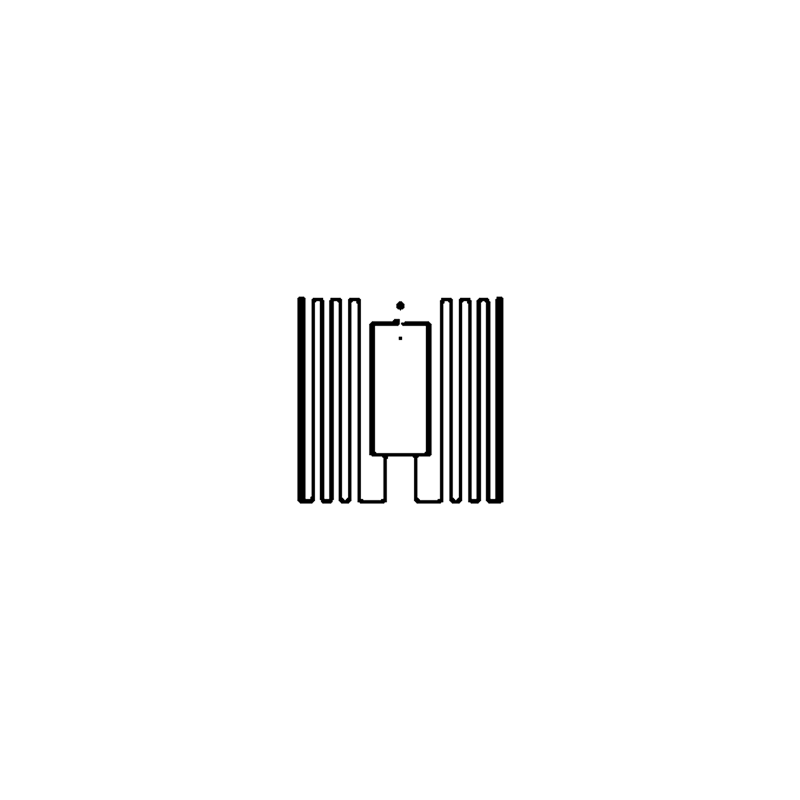
RFID Label
When labels are pre-encoded, define the data file, serialization ownership, quality report, rejected-label marking, reel sequence, and reconciliation process. When labels are source-applied by suppliers, provide controlled artwork, placement, encoding, verification, packaging, and change-management requirements.
Step 8: Check Standards and Regional Regulations
Protocol compatibility does not guarantee equal performance, but it is the foundation for interoperability. UHF projects commonly use the GS1 EPC Gen2 air interface, standardized as ISO/IEC 18000-63. HF and NFC projects may require ISO/IEC 15693, ISO/IEC 14443, NFC Forum specifications, or application-specific standards. Readers, tags, data encoding, and business software must agree on the selected protocol and identifier.
UHF reader frequencies and power are regulated by country or region. The GS1 overview of UHF spectrum allocations illustrates why a reader configuration approved in one market may not be legal or optimal in another. Verify current rules with the relevant regulator and confirm that labels perform across every region through which the tagged product will move.
Step 9: Test the Complete Tagged Item
The most important answer to How to Choose the Right RFID Label for Your Application is to test the finished tagged item in the intended workflow. Free-air inlay measurements can help screen designs, but acceptance should use the actual product, filled packaging, approved placement, production conversion, readers, antennas, motion, and normal operator behavior.
The GS1 Tagged-Item Performance Protocol is valuable because it focuses on tagged-item performance rather than the inlay alone. TIPP includes grading definitions, test configurations, and a testing methodology that allow users and suppliers to describe and evaluate performance in a repeatable way.
- Laboratory screening: Compare candidate designs on real objects across required frequencies and orientations.
- Printer and conversion test: Confirm encoding, print quality, liner release, adhesive application, and inlay survival.
- Application test: Use the real reader, antenna, speed, zone, packaging density, and tag population.
- Environmental conditioning: Expose samples to temperature, moisture, chemicals, washing, abrasion, or aging that represents the lifecycle.
- Pilot production: Measure multiple manufacturing lots and normal operator variation, not one ideal demonstration sample.
- Transaction validation: Score complete correct business events, missed items, unintended reads, false exceptions, and recovery time.
How to Qualify an RFID Label Supplier
A capable supplier should ask about the object, read method, environment, printer, location, volume, lifecycle, and standards before recommending a construction. Request a controlled bill of materials, dimensional drawing, chip and inlay identification, conversion tolerances, adhesive data, storage requirements, shelf life, packing format, test method, quality limits, change-notification procedure, and traceability by lot.
Ask how defective inlays are detected and marked, how encoded data is protected, and whether equivalent substitutions are allowed. A silent change to the chip, antenna, adhesive, liner, or face stock can affect printer settings and field performance even when the product name remains the same. Production change control is part of RFID reliability.
Evaluate Total Cost, Not Unit Price Alone
The lowest label price can become expensive if it causes encoding failures, line stoppages, missed reads, excessive reader infrastructure, manual exceptions, product damage, or short service life. Compare the complete cost of labels, printing, applicators, readers, antennas, installation, software, integration, testing, replacement, training, support, and operational recovery.
Measure business outcomes such as first-pass encode yield, application speed, tagged-item pass rate, inventory accuracy, cycle-count time, shipping exceptions, asset search time, loss, maintenance compliance, and device uptime. A higher-performing label can reduce system cost if it enables simpler reader placement or fewer manual interventions, but the result must be demonstrated in the target process.
A Practical RFID Label Selection Checklist
- What exact object or logistics unit will receive the label?
- What material and contents sit directly behind and around it?
- What business event must the read create or verify?
- Which frequency, protocol, and identifier standard does the system require?
- Which reader, antenna, distance, speed, orientation, and tag population apply?
- What label area, curvature, placement tolerance, and attachment method are available?
- What memory, security, serialization, lock, or rewrite functions are required?
- What printing, encoding, roll, and applicator constraints exist?
- What temperature, moisture, chemical, mechanical, and outdoor exposure occurs?
- Which countries, regulations, compliance documents, and partner specifications apply?
- How will failed labels, duplicates, replacements, and offline operations be handled?
- What test method and transaction-level acceptance criteria will determine approval?
Common RFID Label Selection Mistakes
- Choosing from range alone: Range without a tagged object, reader, orientation, and controlled zone is not a complete specification.
- Testing an empty package: Filled products, people, metal, and liquids can change RF behavior.
- Ignoring placement: A good label in an uncontrolled location can perform inconsistently.
- Using a standard label on metal: Select and validate an on-metal design or another suitable construction.
- Overbuying memory: Store a governed identifier unless the application has a justified need for additional on-tag data.
- Forgetting regional settings: Tags and readers must work within local spectrum and power rules.
- Skipping printer validation: Inlay position, roll construction, calibration, and verification behavior affect production yield.
- Approving one perfect sample: Test production variation, environmental exposure, and realistic operator behavior.
Conclusion
How to Choose the Right RFID Label for Your Application is ultimately a question of matching technology to a measurable business process. Define the event, frequency, object, surface, read zone, label construction, data, environment, compliance, and integration before comparing unit prices. Then test the complete tagged item under realistic conditions. That disciplined approach produces more dependable reads, fewer exceptions, and a solution that can be supported at production scale.
Frequently Asked Questions
How do I know whether to choose UHF, HF, NFC, or LF?
Choose according to the required interaction, reader ecosystem, range, speed, object, protocol, and user experience. UHF is commonly used for bulk inventory and logistics, HF for close item tracking and cards, NFC for intentional phone taps, and LF for short-range applications such as animal identification. Validate the exact standard and workflow.
Can one RFID label work on cardboard, plastic, metal, and glass?
A label may perform across several non-metallic surfaces, but no design should be assumed to work equally on every object. Metal, liquids, curvature, contents, adhesive surface, and placement can materially change performance. Use application-specific samples and tests.
What RFID label is best for a metal asset?
Use a label or tag specifically designed for on-metal operation. Select the construction according to available space, read method, required durability, curvature, attachment, and environment. Test it on the exact metal asset because size, geometry, coatings, and nearby structures affect results.
Does a larger RFID label always have a longer read range?
No. Antenna size can influence sensitivity, but chip performance, antenna design, frequency, tagged material, placement, curvature, orientation, reader, and surroundings all matter. Compare complete tagged-item performance in the target read zone.
How much memory should an RFID label have?
Use enough memory for the governed identifier and any justified application data. Many projects store a serialized identity on the tag and keep detailed records in software. High-memory, security, or sensor features should be selected only when the business and integration design require them.
How should I test How to Choose the Right RFID Label for Your Application?
Test representative finished objects using the approved label placement, production printing or conversion, real readers and antennas, normal speeds, worst-case orientations, realistic tag populations, and required environmental conditioning. Use a repeatable method such as GS1 TIPP where applicable and approve transaction-level results, not one maximum-range demonstration.