

Industrial RFID Tags are playing a pivotal role in the semiconductor industry, where the rapid development of technology demands extremely high standards for production process accuracy, efficiency, and intelligent management. As an advanced automatic identification technology, radio frequency identification (RFID) is quietly transforming the semiconductor industry’s production landscape with its numerous innovative applications and significant advantages.
With the development of the semiconductor market, the trend of automotive intelligence and electrification is an important driver of the future semiconductor market;
AI, GPU high-performance computing chip supply can not keep up with demand;
Demand for smartphones, computers, server chips, etc. with AI;
Logic chips, analog chips, microcomponents and memory chips and other supply of application demand increases;
Chip packaging technology will usher in new breakthroughs;
RFID technology is a non-contact automatic identification technology, through the radio frequency signal to automatically identify the target object and obtain relevant data. It is mainly composed of RFID tags, readers and antennas. The tag stores the information of the recognized object, when the object with the tag enters the RF field of the reader, the tag is activated, and the data is transmitted through the antenna and the reader, which reads the tag information and transmits it to the system for processing. The technology does not require physical contact, can quickly and accurately identify the target in complex environments, has the advantages of waterproof, dustproof, anti-magnetic, long service life, etc. It is very suitable for the production environment of the semiconductor industry.

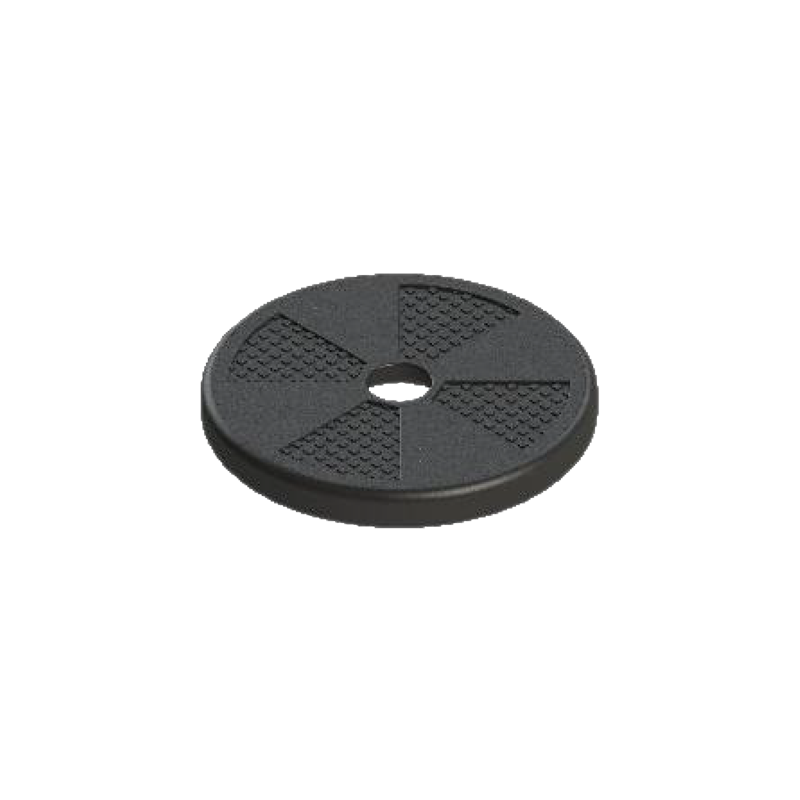
RFID Transponder Tag for Warehouse Management
1. RFID Industrial Identification in Semiconductor Factory
Introducing RFID Tags industrial identification technology in the semiconductor industry can improve productivity, enhance product quality, and optimize inventory to reduce cost management. The implementation steps include selecting appropriate RFID industrial identification readers, deployment, data collection and integration, processing and analysis.
In the semiconductor workshop, RFID is widely used in process management:
- Semiconductor production line
- Wafer silicon wafer cleaning
- wafer storage cabinet management
- Semiconductor electronic shelf management
- Semiconductor overhead crane management

2. Reader Deployment and Data Integration
Reader deployment: According to different application scenarios, the reader is installed at suitable workstation nodes, such as the rear of the identification position on the electronic shelves, inside the support board in the wafer storage cabinet, etc.
Data Collection and Integration: Utilize RFID readers to collect all relevant data in the production process, including material information, production batches, quality inspection results, etc., and integrate these data into the production management system.
Data Processing and Analysis: Processing and analyzing the collected data through the data center to generate reports and charts to help the production team understand the production status, identify problems and make improvements.

3. Application Scenarios and Equipment Selection
3.1 Semiconductor production line
Deploy the TI glass tube tag on the wafer box, and then identify the material model, specification, processing flow and other information inside the glass tube tag of the wafer box through semiconductor RFID read-write, so as to accurately control and adjust the production process. You can choose semiconductor RFID reader:


3.2 Wafer storage cabinet management
Industrial RFID read-write embedded in the storage cabinet bearing platform support board, when the wafer box into the storage cabinet, semiconductor RFID read-write recognition TI glass tube tags, access to the goods information of the wafer box, to confirm whether the wafer box is stored correctly, while access to the wafer chip storage location, when necessary, can be immediately found in the stored wafers.

3.3 Wafer silicon wafer cleaning
Semiconductor RFID read-write will be deployed in the wafer wafer cleaning station above, when the wafer box equipped with TI glass tube tags are sent to the cleaning area, semiconductor RFID read-write will automatically read and determine whether the wafer box arrives at its preset position. After the cleaning operation is completed, the collected TI tag information will be uploaded to the management system, and at the same time, the wafer wafers that have completed the cleaning step will be labeled. When the semiconductor RFID reader reads the tag again, it can be informed of which processes have been completed on the wafer, thus preventing process confusion.

4. semiconductor overhead crane management
Site identification: RFID tags installed on the track of the semiconductor crane, semiconductor RFID read-write deployed in the crane, when the RFID read-write receives the RFID tags at the site of the vehicle track, you can get the crane’s location information, real-time dynamic monitoring of the location of the crane, and according to its own location of the line planning and scheduling, to ensure that the crane’s operating safety distance and transportation efficiency.

Handling Management: When the FOUP wafer box is being handled by the truck, the semiconductor RFID reader receives the relevant information from the TI glass tube tag to ensure that the FOUP wafer box being handled is accurate. In driving to the corresponding storage / placement location, semiconductor RFID read-write again to identify the destination of the tag information, and will be consistent with the information of the FOUP wafer box to the appropriate location, at the same time will be taken to the placement of all the information uploaded to the management system at the time.
5. E-Rack electronic shelf
Mainly consists of: LED display, card reader, centralized control and management software; E-Rack type: 4 * 5 type, 3 * 4 type, 3 * 5 type, as well as AGV-electronic material rack;

The semiconductor RFID reader is installed at the back of the identification position of the semiconductor electronic shelf. When a wafer cartridge is placed on the Semiconductor E-Shelf, the Semiconductor RFID reader located on the identification position will read the TI tag through infrared sensing and trigger the antenna to collect the information of the wafer cartridge. At the same time, the display on the front of the semiconductor electronic shelf will show the type of wafer product in real time. When the cassette is removed, the semiconductor RFID reader is unable to sense the presence of the TI tag and will indicate on the display that the corresponding product has been removed.


6. Glass tube labels
Significant benefits from the use of RFID technology
Improvement of production efficiency:
RFID technology realizes the automation and fast management of production process, reduces the time delay caused by manual recording, tracking and management difficulties, and the overall production efficiency is greatly improved.
Reduced Costs:
Through accurate inventory management and production process optimization, inventory backlogs and waste are reduced, lowering inventory costs. At the same time, manual intervention and errors are reduced to avoid rework and losses due to errors, further reducing production costs.
Improve product quality:
Real-time tracking of product status, quality problems in the production process can be found and dealt with in a timely manner, improving the accuracy and efficiency of quality inspection, and strongly guaranteeing the high quality of the final product.
RFID technology in the semiconductor industry, the application of semiconductor industry intelligence, automation development has injected a strong impetus. With the continuous progress and improvement of the technology, its application prospects will be more broad, helping the semiconductor industry to a new level of development.
7. Conclusion
The semiconductor industry demands precision, efficiency, and traceability at every stage of production, making RFID technology a vital tool for industrial identification. By enabling real-time tracking, reducing human error, and enhancing supply chain visibility, RFID systems help semiconductor manufacturers maintain high standards of quality and operational efficiency. As the industry continues to evolve with advancements in IoT and automation, RFID will play an increasingly critical role in streamlining processes and supporting smart manufacturing initiatives. Investing in robust RFID solutions ensures that semiconductor companies remain competitive in a fast-paced, technology-driven market.
8. Frequently Asked Questions
8.1 Why are industrial RFID tags critical for semiconductor manufacturing?
They enable 100% accurate real-time tracking of wafers, cassettes, and equipment in cleanrooms—reducing human errors, preventing misprocessing, and ensuring traceability for compliance (e.g., ISO 9001).
8.2 Can RFID tags withstand harsh semiconductor environments?
Yes. Seiko’s industrial RFID tags are designed for extreme conditions:
High temperatures (up to 250°C)
Chemical exposure (acid/alkali-resistant)
EMI shielding for cleanroom safety
8.3 How do RFID tags improve semiconductor supply chain efficiency?
By automating:
- Work-in-progress (WIP) tracking
- Inventory management (30% faster than barcodes)
- Equipment maintenance logs
This cuts downtime by up to 20% (Intel case study data).
8.4 What’s the read range for RFID in semiconductor fabs?
Typically 0.5m~3m for HF/UHF tags, optimized to avoid interference with sensitive electronics while ensuring hands-free scanning at key checkpoints.
8.5 How do RFID tags prevent contamination in cleanrooms?
Our tags use:
Non-outgassing materials
Laser-welded stainless steel casing
Passive RFID (no batteries) to meet Class 1 cleanroom standards.