

RFID laundry tags, as core tools for intelligent textile management, have been widely adopted across various sectors. Among these, laundry tags specifically designed for hotel linens and medical laundry tags tailored for healthcare textile management each emphasize distinct features due to differing application scenarios. Both rely on RFID electronic tags and RFID readers/writers to achieve lifecycle tracking, cost optimization, and efficiency improvements for linens and medical textiles.
Despite similar functionalities, hotel laundry tags and medical laundry tags exhibit fundamental differences in technical standards, material selection, and practical applications. Incorrect selection may lead to economic losses or even safety risks.
Hotel laundry tags commonly employ metal wire antennas. This design prioritizes cost-effectiveness and aligns with the standard washing conditions for hotel linens (typically temperatures between 60-75°C using standard detergents), offering economic advantages in meeting basic durability and stable readability requirements.
Medical wash labels, however, must employ special synthetic materials (such as polymer-based) for their antennas. This is not merely an upgrade but dictated by the stringent demands of medical settings: First, synthetic materials withstand high-temperature, high-pressure steam sterilization (≥134°C) and strong oxidizing chemical disinfectants far exceeding hotel standards. Second, and most critically, they must be absolutely metal-free to prevent any interference with precision imaging equipment like MRI scanners or pose safety hazards—an absolute baseline requirement for medical applications.

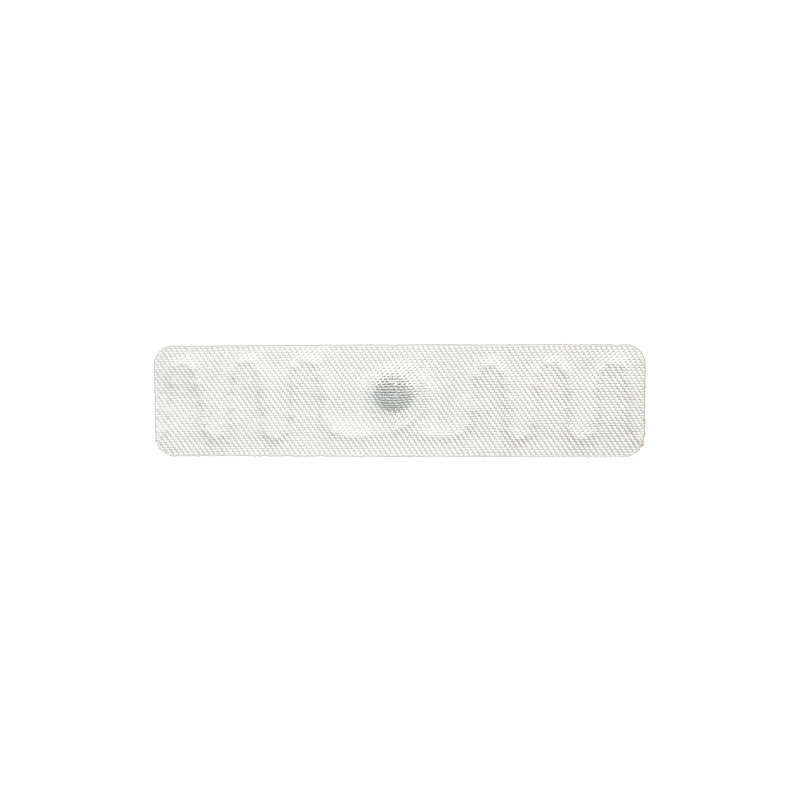
Custom RFID laundry tags
1. The durability standards for “durable” and “survivable” are not even in the same league
1.1 Wine-washed labels: Designed to withstand routine washing, friction, and neutral chemical environments.
Medical-grade labels: Must “survive” under extreme conditions, including but not limited to:
High-temperature, high-pressure steam sterilization (134°C and above);
Strong chemical exposure (hydrogen peroxide, peracetic acid, etc.);
Wide pH range (extreme environments from pH 2 to 12);
Multiple sterilization methods (e.g., ethylene oxide fumigation). Extreme pH ranges (environments spanning pH 2-12); Multiple sterilization methods (e.g., ethylene oxide fumigation)
1.2 Typical scenarios for selecting laundry-washed labels
Management of bed linens, duvet covers, and towels in hotels and inns; Laundering of tablecloths and staff uniforms in restaurants; Any textiles requiring washing at temperatures not exceeding 75°C and not requiring contact with potent disinfectants.
1.3 Mandatory Scenarios Requiring Medical-Grade Labels
All reusable textiles in hospitals, including surgical gowns, drapes, patient gowns, and bed linens; instrument wrap cloths requiring any form of high-temperature/high-pressure sterilization or chemical sterilization; all items potentially entering sensitive areas such as MRI rooms or operating theaters.

16 Port RFID UHF Tag Reader with Impinj E710
2.Common Misconceptions and Potential Risks
- Misconception 1: “Alcohol-wash labels can also be used in high-temperature sterilization environments.”
Risk: Alcohol-wash labels may melt or fail during medical sterilization processes. Their residues could contaminate medical devices or fabrics, leading to severe biosafety risks and medical incidents.
- Misconception 2: “Medical wash labels are more durable and suitable for all scenarios.”
Fact: Medical wash labels cost 30%-50% more. Using them in non-medical settings constitutes over-specification, resulting in unnecessary cost waste.
- Misconception 3: “Labels are small and have minimal impact.”
Warning: An erroneous, metal-containing label brought into an MRI room could be sucked into the equipment like a projectile, causing millions of dollars in damage or generating artifacts that compromise diagnosis—with unimaginable consequences.
3.Professional Selection and Verification Recommendations
Define the Full Lifecycle Environment:
Detail the maximum temperatures, chemicals, sterilization methods, and physical wear the label will endure.
Verify Key Certifications:
Ensure the label passes at least the following tests:
Biological Safety: GB18401, OEKO-TEX Standard 100 (Class I preferred); Chemical Restrictions: RoHS, EU SVHC; Medical Compatibility: MRI safety testing (1.5T and 3T) is a mandatory threshold for medical laundry labels; Radio Certification: e.g., RED Directive under EU CE certification.
Conduct Pre-Deployment Testing:
Prior to large-scale deployment, perform small-batch simulation tests in real-world conditions (e.g., 50-100 actual laundry sterilization cycles) to validate performance and data integrity.