

Manufacturing RFID Tags are becoming a core infrastructure for the digital transformation of the manufacturing and logistics industries. Compared with traditional barcodes, RFID technology offers unique advantages such as contactless reading, bulk identification, and readable/writable data capabilities, creating revolutionary efficiency improvements in smart warehousing, production traceability, asset management, and many other applications.
1. RFID Technology Principle: The Power of Wireless Sensing
RFID (Radio Frequency Identification) is a technology that uses radio waves to automatically identify specific objects and read/write related data. A complete RFID system consists of three parts: RFID tags, RFID readers, and a backend information management system.
RFID tags are attached to the objects being identified and contain a chip and an antenna. When the reader emits radio signals at a specific frequency, the tag is activated and transmits its stored data back to the reader. The entire process requires no manual intervention, and the reading distance can range from a few centimeters to dozens of meters depending on the frequency band used (LF/HF/UHF/Microwave).
2. RFID vs. Barcode: Key Differences
| Comparison Item | Traditional Barcode | RFID Technology |
|---|---|---|
| Identification Method | Requires visual scanning one by one | Contactless reading with simultaneous bulk scanning |
| Reading Distance | Short range (<30 cm) | 0.1m to dozens of meters |
| Data Capacity | Limited (usually <100 bytes) | Large capacity (up to several KB) |
| Environmental Resistance | Easily affected by dirt or obstruction | Resistant to heat, water, and contamination |
| Data Modification | Read-only | Rewritable multiple times |
| Cost | Very low | Higher, suitable for high-value assets |
3. Five Core Applications of RFID in Manufacturing
3.1 Smart Warehouse Management
RFID tags are attached to goods during inbound operations, while forklifts are equipped with RFID readers. As goods pass through warehouse gate channels, they are automatically identified in batches. The system updates inventory quantity and location in real time, improving stocktaking efficiency by more than 10 times compared to traditional barcode systems while reducing errors to nearly zero.
3.2 Production Process Traceability
RFID tags are bound to pallets, bins, or product carriers, allowing each workstation on the production line to automatically record processing time, operators, and equipment parameters. In the event of a quality issue, manufacturers can trace the exact batch and production step within seconds, significantly reducing recall costs.
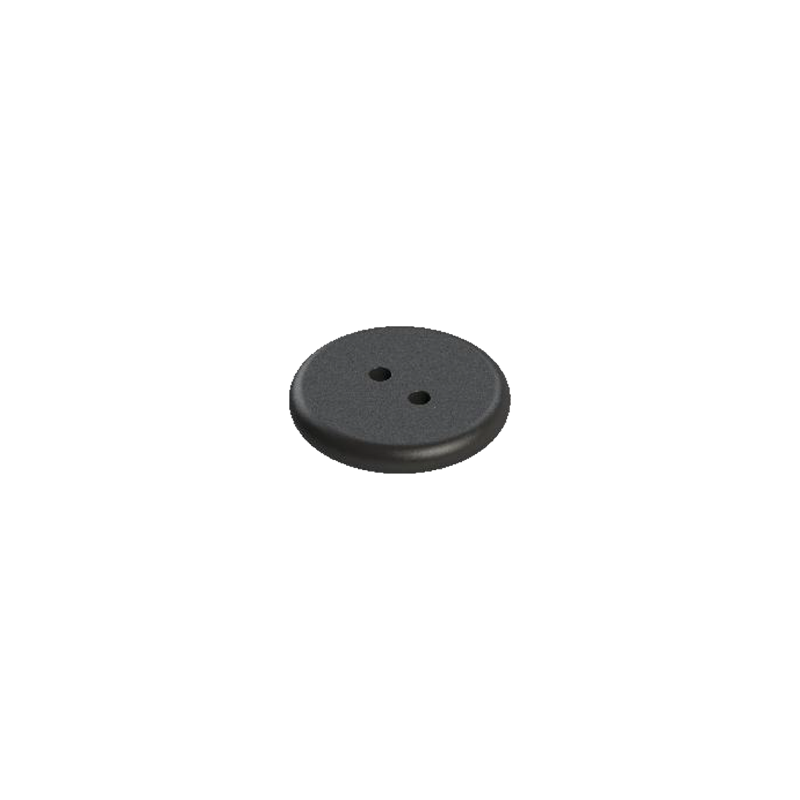
RFID Clothing Tag
3.3 Full Lifecycle Asset Management
RFID tags are attached to molds, fixtures, and fixed assets. The system automatically records all status changes, including issuance, return, maintenance, and disposal, solving traditional challenges such as difficult inventory checks and asset loss tracking.
3.4 Supply Chain Visibility
From supplier shipment and transportation to factory receiving, RFID tags continuously generate location and status data. This enables real-time visibility across all supply chain nodes, provides early warnings for abnormal situations, and reduces the risk of supply interruptions.
3.5 Personnel and Vehicle Management
Factory employees and visitors use RFID ID cards, while forklifts and AGVs are equipped with RFID tags. The system tracks the real-time location of personnel and vehicles within the facility, preventing unauthorized access to restricted areas and improving overall safety management.

Chip Transponder
4. Key Points for RFID System Implementation
4.1 Frequency Selection
UHF (860–960 MHz) is recommended for warehouse inbound and outbound management. Anti-metal RFID tags should be used in metal environments, while waterproof RFID tags are required for liquid-related applications.
4.2 Reader Deployment
Gate RFID readers are suitable for bulk identification in passageways, handheld readers are ideal for flexible inventory management, and fixed readers are designed for automatic workstation data collection.
4.3 System Integration
RFID middleware should be deeply integrated with WMS and ERP systems to enable real-time data synchronization and eliminate information silos.
4.4 Tag Durability
For industrial environments, RFID tags with an IP67 or higher protection rating should be selected to ensure stable performance under high temperatures, humidity, and dusty conditions.