

As the development of smart hospitals accelerates and the digital transformation of healthcare deepens, the shortcomings of traditional medical identification methods are becoming increasingly apparent. Leveraging the unique advantages of radio-frequency identification (RFID) technology, the Medical RFID Wristband has overcome the efficiency and security limitations of paper and barcode wristbands. It has become an indispensable smart tool in modern healthcare management and a core standard for the practical implementation of smart hospital scenarios; its widespread adoption has become an irreversible industry trend.
As a digital medium that integrates identity verification, data synchronization, security management, and process optimization, the Medical RFID Wristband not only addresses core pain points in healthcare settings but also drives the transformation of medical services from a “labor-intensive, low-precision” model to an “intelligent, precision-oriented” one, thereby laying a solid foundation for the high-quality development of smart hospitals.

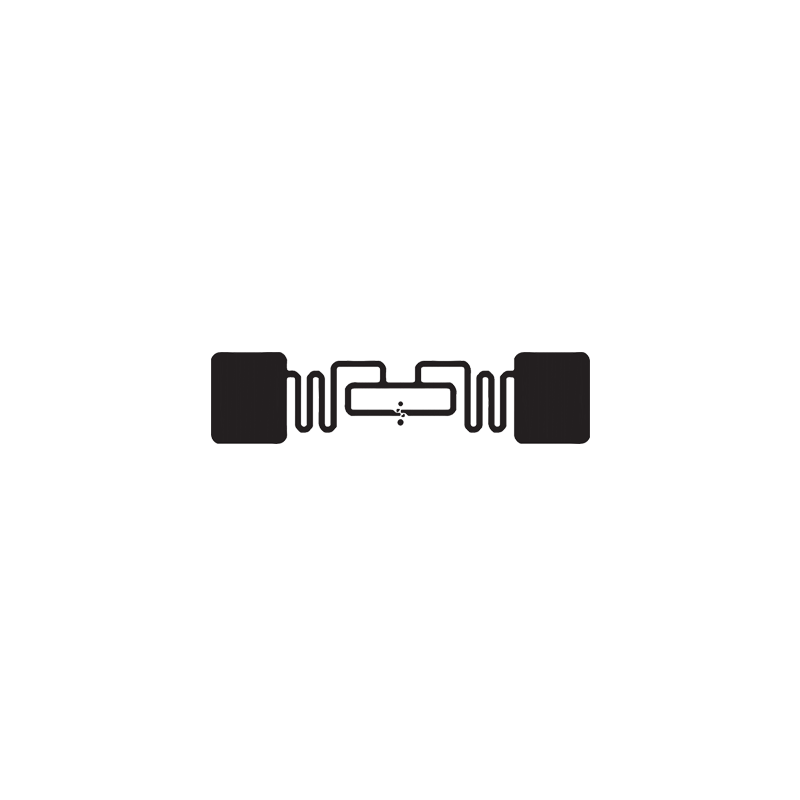
Alien ALN-9662 Short RFID White WET Inlay – High-Performance UHF RFID for Asset Tracking
1. The Essential Role of RFID Wristbands in Smart Hospitals
Traditional paper, handwritten, and barcode wristbands rely on manual verification and visual scanning, suffering from critical shortcomings such as fragility, illegibility, high error rates, low efficiency, and information silos. These issues can easily lead to medical safety incidents such as patient identity mix-ups, medication errors, and diagnostic mistakes, which run counter to the core principles of smart hospitals: “safety, efficiency, intelligence, and patient convenience.” In contrast, RFID medical wristbands leverage contactless wireless identification technology to enable rapid retrieval of patient information, real-time synchronization, and end-to-end traceability. This fundamentally resolves the challenges associated with traditional identification methods and aligns perfectly with the development logic of smart hospitals.
2. The implementation of RFID medical wristbands can address multiple issues within healthcare institutions, specifically in the following areas
2.1 Eliminating Identification Errors
Traditional wristbands often suffer from issues such as illegible handwriting, damaged or invalid barcodes, and oversights during manual verification, which can easily lead to serious consequences such as medication errors, incorrect diagnostic tests, or surgical mistakes. RFID medical wristbands contain a unique ID chip that stores encrypted, tamper-proof information. Medical staff can use handheld devices to scan the wristband without needing to look directly at it; even if the wristband is obscured by clothing or bedding, the information can be quickly read to verify the patient’s identity, ensuring that every patient receives the correct treatment.
2.2 Streamlining the Entire Diagnostic and Treatment Process
Under the traditional model, healthcare staff must manually review paper medical records, repeatedly verify patient information, and enter diagnostic and treatment data—a time-consuming, labor-intensive process prone to errors. RFID medical wristbands integrate with hospital information systems such as HIS, LIS, and PACS to enable data interoperability. By scanning the wristband, medical staff can instantly access a patient’s complete medical history with a single click, eliminating the need for repeated inquiries or manual data entry. This significantly reduces the time required for triage, rounds, medication administration, diagnostic tests, and surgeries.
At the same time, RFID supports long-range batch identification, enabling bulk patient roll calls, ward rounds for record verification, and patient flow monitoring. This frees healthcare staff from tedious administrative tasks, allowing them to focus on core clinical services and improve overall hospital operational efficiency.
3. Enabling Precision Smart Management
Smart hospitals emphasize end-to-end, visual, and intelligent management. Leveraging their capabilities for real-time location tracking and data collection, RFID wristbands establish a closed-loop management system covering the entire patient journey within the hospital. For special patient groups—such as critically ill patients, elderly patients, and those with mental health conditions—the system enables in-hospital location tracking, access control, and wandering alerts. If a patient strays beyond a designated area, the system automatically triggers an alarm, allowing medical staff to respond quickly; In high-risk scenarios such as surgeries and emergency rooms, the system enables dual pre-operative identity verification and rapid emergency patient registration, securing critical time for urgent treatment.
Additionally, data collected by the wristbands—including treatment duration, waiting times, and ward transfers—can be synchronized to the hospital management platform. This provides data support for process optimization, resource allocation, quality control, and operational analysis, driving the transformation of hospital management from “experience-driven” to “data-driven.”

RFID Handheld Reader
3.1 Enhancing the Patient Experience
A high-quality patient experience is a key criterion for evaluating a smart hospital. RFID wristbands comprehensively improve the patient experience by reducing the need for repeated verification, shortening wait times, and minimizing medical errors. Once a patient is admitted, they wear a single-use wristband for the entire stay, eliminating the need to repeatedly present identification or recount their medical history, resulting in a smoother treatment process. Precise medical services and rigorous safety controls also enhance patients’ trust and sense of security in the hospital, improving patient satisfaction and the hospital’s reputation, and helping the hospital build a patient-centered, intelligent service brand.
3.2 Alignment with Epidemic Prevention and Hospital Infection Control Requirements
As high-traffic facilities, hospitals must prioritize infection control. RFID medical wristbands are typically made of disposable materials, allowing for immediate use and dedicated assignment to individual patients, thereby eliminating the risk of cross-infection at the source. Additionally, the contactless identification method reduces direct contact between medical staff and patients, lowering the probability of virus transmission and meeting the ongoing needs of hospital infection control and public health safety.
4. RFID Wristbands Have Become an Essential Standard in Smart Hospitals
With the deep integration of technologies such as the Internet of Things (IoT), big data, and mobile nursing into the healthcare sector, the government is vigorously promoting smart hospital ratings, the widespread adoption of electronic health records, and clinical pathway management. As a result, the use of smart identification systems has become a mandatory requirement. Compared to identification technologies such as barcodes and QR codes, RFID wristbands offer advantages including non-visual identification, resistance to dirt and damage, large data capacity, batch reading capability, and strong compatibility, making them better suited for complex medical environments. Furthermore, as the technology matures and costs decline, the cost-effectiveness of RFID wristbands continues to improve. They have gradually spread from top-tier hospitals to primary healthcare facilities, becoming a core hardware component in smart hospital construction that delivers “small investment, big returns.”