

As digital transformation continues to reshape industries worldwide, businesses are increasingly adopting wireless identification technologies to improve efficiency, security, and customer engagement. Among the most widely used technologies are NFC (Near Field Communication) and RFID (Radio Frequency Identification). While many organizations search for information about near field communication vs RFID, understanding where these technologies are commonly used is equally important when selecting the right solution for business operations.
From retail and logistics to healthcare and smart access control, NFC and RFID are enabling smarter tracking, faster transactions, and better data visibility. This article explores the differences between NFC and RFID and highlights the most common applications of each technology across industries.
1.Understanding Near Field Communication vs RFID
Before discussing applications, it is important to understand the basic relationship between NFC and RFID.
RFID is a wireless technology that uses radio waves to identify and track objects equipped with RFID tags. RFID systems typically consist of tags, readers, and software that process collected data.
NFC is actually a subset of high-frequency RFID technology. It operates at 13.56 MHz and enables two-way communication between devices over very short distances, usually less than 10 centimeters.
When comparing near field communication vs RFID, the key differences include:
| Feature | NFC | RFID |
| Communication Range | Up to 10 cm | A few centimeters to over 100 meters |
| Communication Type | Two-way | Primarily one-way |
| Smartphone Compatibility | Excellent | Limited |
| Data Exchange | Supports interactive communication | Mainly identification and tracking |
| Typical Use Cases | Mobile payments, access control | Asset tracking, inventory management |
Both technologies serve different business needs, making it essential to evaluate application requirements before implementation.

Circular NFC Tags – Seamless Compatibility with iPhone and Other NFC Devices
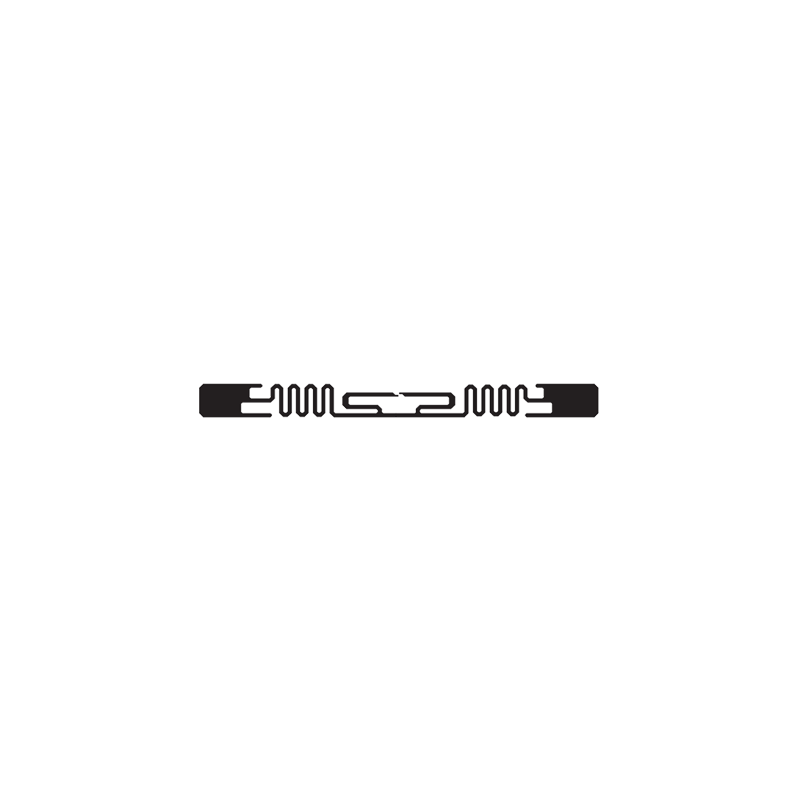
Advanced UHF Solution for RFID Asset Management ALN-9640 Label
2.Common Uses of RFID Technology
RFID has become one of the most valuable technologies for automated identification and tracking across large-scale operations.
2.1 Supply Chain and Logistics Management
One of the most common RFID applications is supply chain management.
Manufacturers, distributors, and logistics providers use RFID tags to:
- Track products throughout transportation
- Monitor shipment status in real time
- Reduce manual scanning errors
- Improve warehouse visibility
- Enhance inventory accuracy
RFID enables businesses to identify hundreds of items simultaneously without requiring direct line-of-sight scanning, making it highly efficient for large inventories.
2.2 Retail Inventory Management
Retailers increasingly rely on RFID technology to improve inventory accuracy.
Benefits include:
- Faster stock counting
- Improved replenishment processes
- Reduced out-of-stock situations
- Theft prevention
- Better customer satisfaction
Major global retailers use RFID-tagged products to achieve inventory accuracy rates exceeding 95%, significantly outperforming traditional barcode systems.
2.3 Asset Tracking
Organizations use RFID for tracking valuable assets such as:
- IT equipment
- Medical devices
- Manufacturing tools
- Rental equipment
- Vehicles
RFID provides real-time visibility into asset locations and utilization, helping businesses reduce losses and improve operational efficiency.
2.4 Healthcare Applications
Hospitals and healthcare facilities use RFID for:
- Patient identification
- Medication tracking
- Equipment management
- Surgical instrument tracking
- Staff monitoring
These applications help improve patient safety while reducing administrative workload.
2.5 Industrial Manufacturing
Manufacturers use RFID to track products throughout production processes.
RFID enables:
- Work-in-progress monitoring
- Automated quality control
- Production line optimization
- Traceability compliance
This level of visibility helps manufacturers reduce bottlenecks and improve productivity.
2.6 Common Uses of NFC Technology
While RFID excels at long-range identification and bulk tracking, NFC focuses on secure, short-range interaction between devices.
2.6.1 Mobile Payments
Perhaps the most recognized NFC application is contactless payment.
Consumers use smartphones, smartwatches, and payment cards to make purchases quickly and securely.
Popular NFC payment solutions include:
- Mobile wallets
- Contactless credit cards
- Transit payment systems
- Event ticketing
The convenience of tap-and-pay technology has accelerated NFC adoption globally.
2.6.2 Access Control Systems
Businesses increasingly use NFC-enabled credentials for secure access management.
Applications include:
- Office building entry
- Hotel room access
- Employee identification
- Campus security
- Smart locks
Unlike traditional keys, NFC credentials can be updated or revoked remotely.
2.6.3 Smart Marketing and Customer Engagement
Brands use NFC tags to create interactive customer experiences.
Consumers can tap an NFC-enabled product or display to:
- Access product information
- View promotional content
- Join loyalty programs
- Download apps
- Verify product authenticity
This direct interaction helps businesses strengthen customer engagement and collect valuable analytics.
2.6.4 Product Authentication
Counterfeit prevention has become a major concern across many industries.
NFC-enabled products allow customers to verify authenticity by tapping products with their smartphones.
Industries benefiting from NFC authentication include:
- Luxury goods
- Cosmetics
- Pharmaceuticals
- Electronics
- Wine and spirits
2.6.5 Smart Business Cards
Digital business cards are rapidly replacing traditional paper cards.
Using NFC technology, professionals can instantly share:
- Contact information
- Company profiles
- Social media links
- Websites
- Portfolios
This application demonstrates how NFC is modernizing networking and communication.
3.Near Field Communication vs RFID in Different Industries
Retail
RFID is primarily used for inventory management and supply chain visibility.
NFC is commonly used for customer interaction, contactless payments, and product authentication.
Healthcare
RFID tracks medical equipment and patient information.
NFC enables secure staff access and patient data sharing.
Manufacturing
RFID manages production assets and workflow tracking.
NFC assists with machine configuration and maintenance access.
Transportation
RFID supports toll collection, fleet management, and cargo tracking.
NFC powers transit ticketing and passenger payments.
Hospitality
RFID manages linens, uniforms, and inventory.
NFC enables keyless room access and guest services.
4.Choosing Between NFC and RFID
The decision between NFC and RFID depends on business objectives.
Choose RFID when you need:
- Long-range identification
- Bulk item scanning
- Asset tracking
- Inventory management
- Supply chain visibility
Choose NFC when you need:
- Smartphone interaction
- Secure authentication
- Contactless payments
- Customer engagement
- Access control
Many organizations implement both technologies simultaneously to maximize operational efficiency and customer experience.
5.Future Trends for NFC and RFID
The future of wireless identification technologies continues to evolve.
Emerging trends include:
- Integration with IoT platforms
- Cloud-based asset management
- AI-powered analytics
- Digital product passports
- Sustainable supply chain monitoring
- Smart packaging solutions
As Industry 4.0 adoption grows, both RFID and NFC are expected to play increasingly important roles in connected business ecosystems.
6.Conclusion
The discussion of near field communication vs RFID is not about determining which technology is better overall, but rather which technology best suits a specific application. RFID dominates large-scale tracking, inventory management, and logistics operations, while NFC excels in secure, short-range communication and consumer interaction.
Understanding where NFC and RFID are commonly used allows businesses to make informed technology investments that improve efficiency, enhance customer experiences, and support long-term digital transformation goals.
As organizations continue embracing automation and connectivity, both NFC and RFID will remain essential tools for modern business operations.
7.Frequently Asked Questions (FAQ)
Is NFC the same as RFID?
No. NFC is a subset of high-frequency RFID technology. While they share similarities, NFC supports two-way communication and is designed for very short-range interactions.
Which is better for inventory tracking, NFC or RFID?
RFID is generally better for inventory tracking because it can scan multiple items simultaneously and operates over longer distances.
Can smartphones read RFID tags?
Most smartphones can read NFC tags but cannot read many standard RFID tags, especially UHF RFID tags used in logistics and inventory management.
Why do businesses use NFC for payments?
NFC provides secure, fast, and convenient contactless transactions, making it ideal for mobile wallets and payment cards.
Can NFC and RFID work together?
Yes. Many businesses use RFID for asset and inventory tracking while using NFC for customer engagement, authentication, and mobile interactions.