

In the field of warehouse management, “low efficiency, high error, and high cost” are long-term pain points faced by many enterprises. When goods are in and out of the warehouse, manual scanning of codes often leads to recognition failure due to label wear and obstruction; The monthly inventory work, which takes dozens of people several days, is still prone to errors, which not only affects inventory accuracy but may also delay order delivery. Nowadays, with the mature application of RFID (Radio Frequency Identification) technology, these challenges are being solved one by one.While considering the significant advantages of RFID, it is also crucial to understand the potential Problems Of RFID In Warehousing Management to ensure a successful implementation. This article will explain in detail how RFID can reshape the warehousing, inbound, and inventory processes from technical principles to practical applications, helping enterprises achieve efficient management while navigating its complexities.
1.First understand: Why can RFID disrupt traditional warehouse management?
Many people confuse RFID with common barcodes, but in fact, there is a fundamental difference between the two. Barcodes require visual contact to be recognized, and only one can be read at a time; RFID technology, through radio frequency signals, can achieve non-contact, multi-target, long-distance automatic identification. Even if the tag is contaminated or obstructed, it can still be read stably. Its core consists of three parts:
Electronic tags: attached to goods, storing key information such as product name, specifications, batch, etc., divided into passive (no power supply, low cost) and active (long battery life, long recognition distance), can be selected according to the warehousing scenario.
Reader/writer: divided into fixed type (such as entrance and exit channel doors) and handheld type (such as inventory equipment), capable of actively transmitting RF signals, reading tag information and uploading it to the system.
Management system: Integrate with enterprise ERP or WMS systems, process real-time data transmitted by readers, and achieve visualization and dynamic updates of inventory information.

Compared to traditional manual or barcode management, RFID has significant advantages: recognition efficiency is improved by 5-10 times, error rate is reduced to less than 0.1%, and labor costs are reduced by 70%, especially suitable for warehousing scenarios with a large number of SKUs and frequent turnover.
2. Inbound and outbound: From “scan one by one” to “batch pass”
Process acceleration of 80%
In the traditional inbound and outbound process, employees need to hold barcode scanners to check the goods one by one. When encountering blurry or stacked labels, they often have to repeatedly adjust their positions, which is extremely inefficient. After the introduction of RFID technology, the inbound and outbound processes have achieved a revolutionary upgrade:
2.1 Warehousing: Automatic filing, completing a batch in 10 seconds
When the goods arrive at the warehouse, the system can instantly read the information in all the goods labels through the “storage channel” equipped with RFID readers, automatically complete quantity statistics and specification verification, and synchronously create storage records in the WMS system to generate storage location allocation suggestions. The entire process does not require manual intervention, even for pallets containing hundreds of items, the warehousing operation can be completed within 10 seconds, and the data is uploaded in real-time, avoiding delays and errors in manual input.
For example, a certain e-commerce company previously received a batch of 300 pieces of clothing, which took 1 hour to scan manually. After using the RFID channel, all operations were completed in just 5 minutes with an accuracy rate of 100%, completely solving the problem of “slow storage and easy mistake orders”.
2.2 Outbound: Intelligent verification to prevent wrong or missed shipments
When leaving the warehouse, employees select goods according to the order and pass them through the RFID outbound channel. The system will automatically verify whether the goods information matches the order. If there is a discrepancy in specifications, missing quantity, or excessive installation, the system will immediately sound and light an alarm to remind employees to make timely corrections. At the same time, the outbound data is synchronized in real-time to the system, and the inventory quantity is automatically updated to ensure that the accounts match the actual inventory.

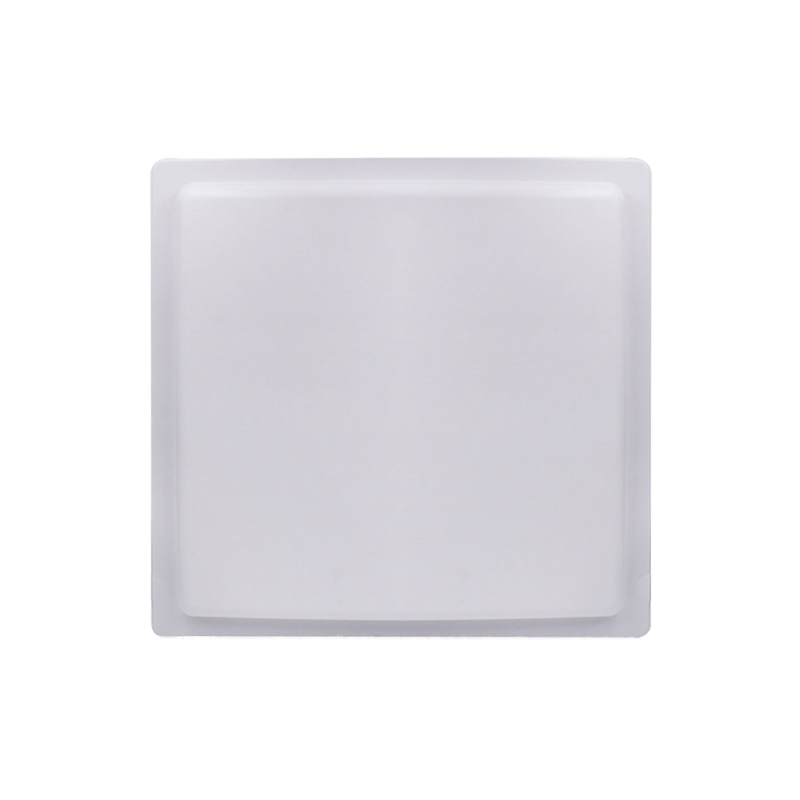
12dBi Circular Linear RFD UHF Reader Antenna
For goods that need to be managed by batch and shelf life (such as food and drugs), the RFID access control system can also automatically identify the production batch and expiration date of the goods through tag information, and prioritize recommending goods that are close to their shelf life for release, effectively reducing inventory backlog and expiration losses.
3. Inventory: From “all employees working overtime” to “one person handling it”
Efficiency increased by 10 times
Inventory is the “highlight” of warehouse management and also the most headache inducing link for enterprises. Traditional inventory requires organizing a large number of employees to check shelves one by one with inventory sheets, which is not only time-consuming and labor-intensive, but also prone to missed or incorrect inventory due to manual negligence. Often, it requires repeated reviews, occupying a lot of normal operating time. And RFID inventory has completely changed this situation:
3.1 Fixed inventory: 24-hour real-time monitoring
Installing fixed RFID readers at key locations in the warehouse can achieve 24-hour real-time monitoring of inventory goods. The reader will periodically scan the labels of goods on the shelves and automatically compare the inventory data of the system. If it finds that the goods have moved or the quantity is abnormal, it will immediately send a warning message to the administrator to achieve “dynamic inventory”. This method does not require interruption of warehousing operations, keeping inventory management in a “transparent and controllable” state at all times.
3.2 Handheld inventory: one person completes 10000 items per day
For scenarios that require comprehensive inventory, employees only need to carry handheld RFID readers and walk along the shelves. The handheld device can quickly read the tag information of all goods within the range, and the data is transmitted in real time to the system for automatic verification and recording. Compared to manual item by item counting, handheld inventory has increased efficiency by more than 10 times.
Previously, a manufacturing warehouse required 8 people and 3 days to conduct monthly inventory checks. With the use of RFID handheld inventory checks, only 1 employee can complete all inventory checks in 1 day, and the inventory error rate has been reduced from 5% to below 0.05%, greatly reducing labor and time costs. At the same time, it provides accurate inventory data support for production plan adjustments.


UHF Handheld Reader
4. Enterprise case: How RFID can reduce costs and increase efficiency for warehouse management?
The regional warehousing center of a large logistics enterprise in China had previously suffered from low efficiency in inventory due to the wide variety of goods (over 20000 SKUs), fast turnover, and long inventory cycle of up to one week. The inventory accuracy rate was only 85%, and there were frequent issues of order delays and wrong shipments. After introducing the RFID system, the center has undergone three major changes:
- 80% increase in inbound and outbound efficiency: The inbound and outbound time for a single batch of goods has been reduced from 30 minutes to 5 minutes, and the daily processing volume of orders has increased from 500 to 1200;
- The inventory cycle has been shortened to one day: no need for all employees to work overtime, one employee can complete the monthly inventory, and the inventory accuracy has been improved to 99.9%;
- Labor costs reduced by 60%: 6 warehouse operators were reduced, saving over 300000 yuan in labor costs annually.
The person in charge of the company stated that RFID not only solves the pain points of warehouse management, but also makes inventory data the ‘accurate basis’ for enterprise decision-making, helping us optimize procurement plans and inventory structures, and reducing inventory backlog by nearly 20%. ”
Under the wave of digital transformation, warehouse management has upgraded from “manual led” to “intelligent driven”, and RFID technology is no longer an “exclusive configuration” for large enterprises, but an “essential tool” for small and medium-sized enterprises to enhance their competitiveness. Whether it is the efficiency improvement of inbound and outbound inventory or the precision of inventory, RFID can bring visible cost savings and management optimization to enterprises.