

In today’s fast-moving digital economy, businesses are constantly searching for smarter ways to track products, manage inventory, and improve operational efficiency. One of the most effective technologies driving this transformation is the RFID Chip Barcode system. By combining traditional barcode identification with advanced RFID (Radio Frequency Identification) technology, companies can achieve faster, more accurate, and automated tracking solutions.
This article explores how RFID tags work, the relationship between RFID chips and barcodes, and the major advantages of RFID technology across industries such as retail, logistics, healthcare, manufacturing, and supply chain management.
1.What Is an RFID Chip Barcode?
An RFID Chip Barcode refers to a tracking and identification system that combines:
- RFID chips for wireless data transmission
- Barcodes for visual and optical scanning
Traditional barcodes require direct line-of-sight scanning, while RFID chips can transmit information wirelessly using radio waves. Many businesses use both technologies together to create a more flexible and reliable asset tracking solution.
For example:
- A warehouse product may have a printed barcode for manual scanning
- The same label may also contain an RFID chip for automatic bulk reading
This hybrid approach improves visibility, efficiency, and data accuracy.
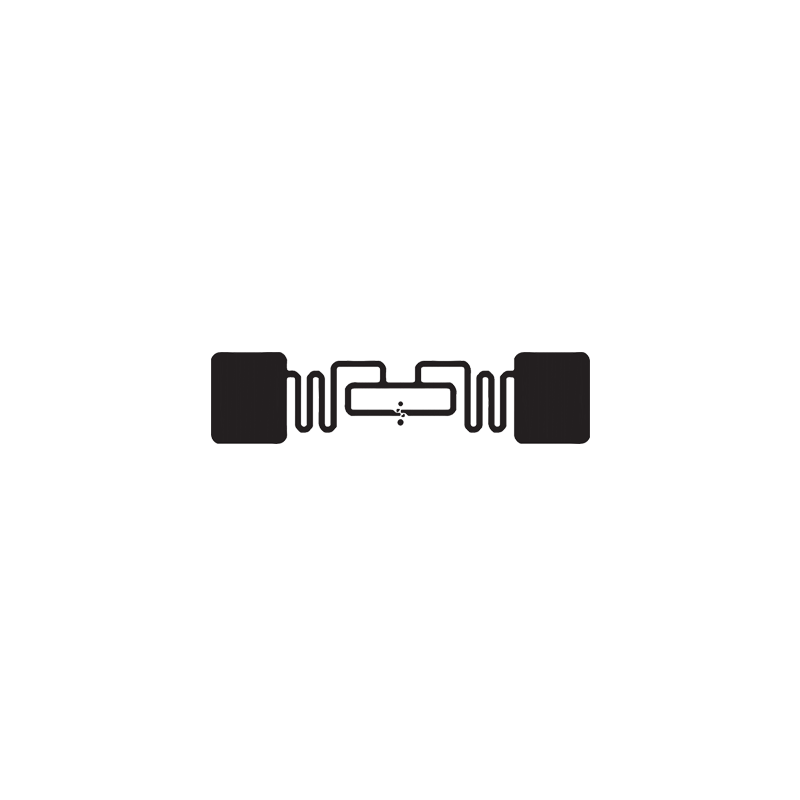
Alien ALN-9662 Short RFID White WET Inlay – High-Performance UHF RFID for Asset Tracking
2.How Do RFID Tags Work?
RFID tags work through wireless communication between three main components:
- RFID Tag
- RFID Reader
- Backend Software System
2.1 RFID Tag
An RFID tag contains:
- A microchip
- An antenna
- A substrate or label material
The chip stores data such as:
- Product ID
- Serial number
- Manufacturing information
- Tracking details
The antenna allows the tag to send and receive radio signals.
2.2 RFID Reader
The RFID reader emits radio frequency signals through its antenna. When an RFID tag enters the reader’s electromagnetic field, the tag responds by transmitting its stored information.
The reader then sends the data to a computer or cloud-based management system.
Unlike barcode scanners, RFID readers do not require direct visual contact with the label.
3.Data Processing System
The software system processes the collected RFID data and integrates it into:
- Inventory management systems
- ERP platforms
- Warehouse management systems
- Retail POS systems
- Asset tracking databases
This enables real-time visibility and automation.
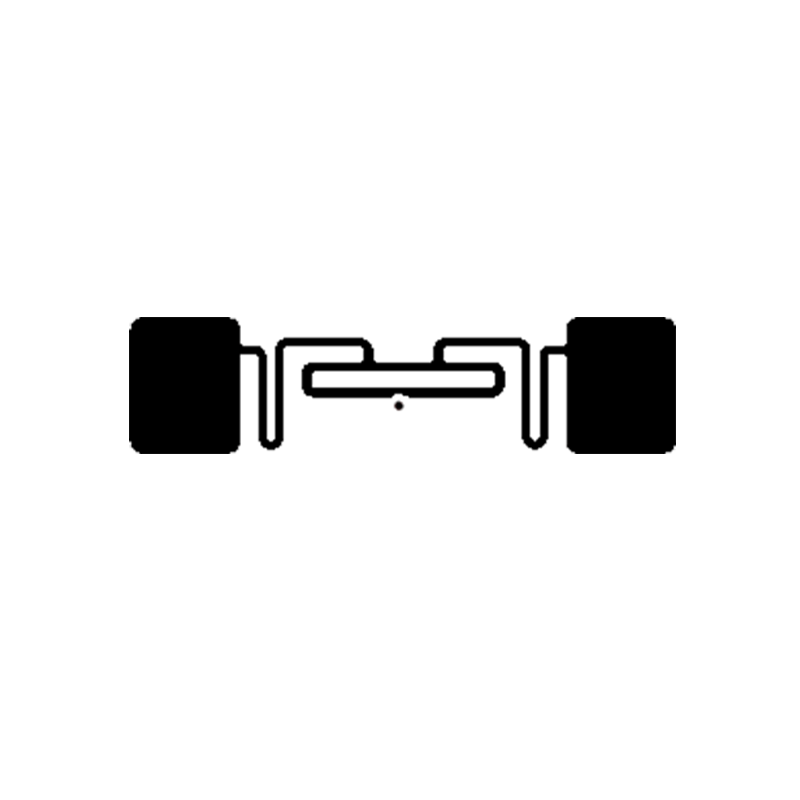
ALN-9962 Short Higgs 9 Clear Wet Inlay
4.Types of RFID Tags
4.1Passive RFID Tags
Passive tags have no internal battery. They receive energy from the RFID reader’s signal.
Advantages:
- Lower cost
- Smaller size
- Longer lifespan
- Minimal maintenance
Common Uses:
- Retail inventory
- Supply chain tracking
- Library systems
- Access control
4.2 Active RFID Tags
Active tags contain an internal battery that powers signal transmission.
Advantages:
- Longer read range
- Stronger signal
- Real-time monitoring
Common Uses:
- Vehicle tracking
- Industrial equipment monitoring
- Large asset management
4.3 Semi-Passive RFID Tags
These combine features of passive and active tags.
They use a battery for internal operations but still rely on the reader for communication.
5.RFID Frequency Categories
RFID systems operate under different frequency ranges:
| Frequency Type | Range | Common Applications |
|---|---|---|
| LF (Low Frequency) | Short range | Animal tracking, access control |
| HF (High Frequency) | Medium range | NFC payments, ticketing |
| UHF (Ultra High Frequency) | Long range | Warehouse logistics, retail inventory |
| Microwave RFID | Very long range | Toll collection, transportation |
UHF RFID is widely used in modern RFID Chip Barcode systems because of its fast reading speed and bulk scanning capability.
6.Advantages of RFID Chip Barcode Technology
6.1 Faster Scanning Speed
One of the biggest advantages of RFID over traditional barcodes is speed.
Barcode systems:
- Scan one item at a time
- Require direct visibility
RFID systems:
- Read multiple tags simultaneously
- Work without line-of-sight
This dramatically improves warehouse and retail efficiency.
6.2 Improved Inventory Accuracy
RFID technology helps businesses achieve near real-time inventory visibility.
Benefits include:
- Reduced stock discrepancies
- Fewer human errors
- Faster inventory audits
- Better stock replenishment
Retail brands using RFID often improve inventory accuracy from around 65% to over 95%.
6.3 Enhanced Supply Chain Visibility
RFID Chip Barcode systems allow businesses to monitor products throughout the entire supply chain.
Companies can track:
- Manufacturing stages
- Shipping status
- Warehouse movement
- Store delivery
- Product returns
This increases operational transparency and reduces losses.
6.4 Contactless and Automated Operation
RFID tags can be read automatically without physical contact.
Advantages include:
- Reduced labor costs
- Automated workflows
- Faster receiving and shipping
- Improved operational efficiency
This is especially valuable in large-scale logistics operations.
6.5 Better Security and Anti-Theft Protection
RFID technology can improve security through:
- Real-time item tracking
- Unauthorized movement alerts
- Access authentication
- Anti-counterfeiting verification
Many retailers integrate RFID into loss prevention systems.
6.6 Durable and Reliable Performance
Unlike printed barcodes, RFID tags are more resistant to:
- Dirt
- Moisture
- Scratches
- Harsh industrial environments
Industrial RFID tags can even operate under high temperatures and exposure to chemicals.
6.7 Long Read Range
Depending on the frequency and tag type, RFID systems can support read ranges from a few centimeters to several meters.
This enables:
- Automated warehouse gates
- Vehicle identification
- Pallet tracking
- Smart logistics management
7.RFID vs Barcode: Key Differences
| Feature | Barcode | RFID Chip Barcode |
|---|---|---|
| Reading Method | Optical scanning | Radio frequency |
| Line-of-Sight Required | Yes | No |
| Multiple Item Reading | No | Yes |
| Read Speed | Slower | Faster |
| Data Storage | Limited | Larger capacity |
| Durability | Lower | Higher |
| Automation Capability | Limited | Advanced |
Although barcodes remain cost-effective for simple applications, RFID offers greater scalability and automation.
8.Industries Using RFID Chip Barcode Technology
8.1 Retail
Retailers use RFID for:
- Smart inventory management
- Self-checkout systems
- Loss prevention
- Omnichannel fulfillment
8.2 Logistics and Warehousing
RFID improves:
- Shipment tracking
- Automated receiving
- Pallet management
- Warehouse visibility
8.3 Healthcare
Hospitals use RFID to track:
- Medical equipment
- Patient records
- Pharmaceuticals
- Surgical tools
8.4 Manufacturing
Manufacturers apply RFID in:
- Production tracking
- Quality control
- Tool management
- Work-in-progress monitoring
8.5 Transportation and Automotive
RFID supports:
- Toll collection
- Vehicle identification
- Fleet management
- Parking systems
9.Future Trends of RFID Technology
As Industry 4.0 and IoT technologies continue to expand, RFID systems are becoming smarter and more connected.
Future RFID trends include:
- AI-powered inventory analysis
- Cloud-based RFID platforms
- Smart shelves
- Digital product passports
- Sustainable RFID materials
- Blockchain-integrated traceability
The integration of RFID with automation and data analytics will continue reshaping global supply chains.
10.Conclusion
The RFID Chip Barcode system represents a major advancement in automatic identification and tracking technology. By combining the simplicity of barcodes with the wireless power of RFID, businesses can achieve faster scanning, improved inventory accuracy, enhanced security, and greater operational efficiency.
Understanding how RFID tags work and their advantages helps companies choose the right solution for modern inventory management and smart supply chain operations. As industries continue moving toward automation and digital transformation, RFID technology will remain a critical tool for improving visibility, reducing costs, and increasing productivity.