

As apparel companies look for faster, more reliable ways to identify garments at item level, rfid cloth has become more than a technical add-on. It is becoming a practical data layer for clothing manufacturers, uniform suppliers, retailers, laundries, and warehouse operators that need to see exactly where each garment is, what it is, and whether it is ready for the next step in the process. The broader topic is RFID chips in clothing: small radio-frequency inlays that can be embedded into woven labels, hang tags, heat-seal patches, care labels, or other textile-friendly formats.
RFID Chips In Clothing
The business value is straightforward: apparel is hard to count manually. SKUs vary by size, color, style, batch, location, and season. A carton may contain dozens of nearly identical garments. A retail back room may receive hundreds of pieces in a short delivery window. A uniform program may need to track the same garment through issue, wear, wash, repair, and return. Barcodes and manual checks still have a place, but they require line-of-sight scanning and one-by-one handling. RFID chips in clothing allow many garments to be identified quickly, even when they are stacked, boxed, hanging on racks, or moving through a portal.
What Are RFID Chips in Clothing?
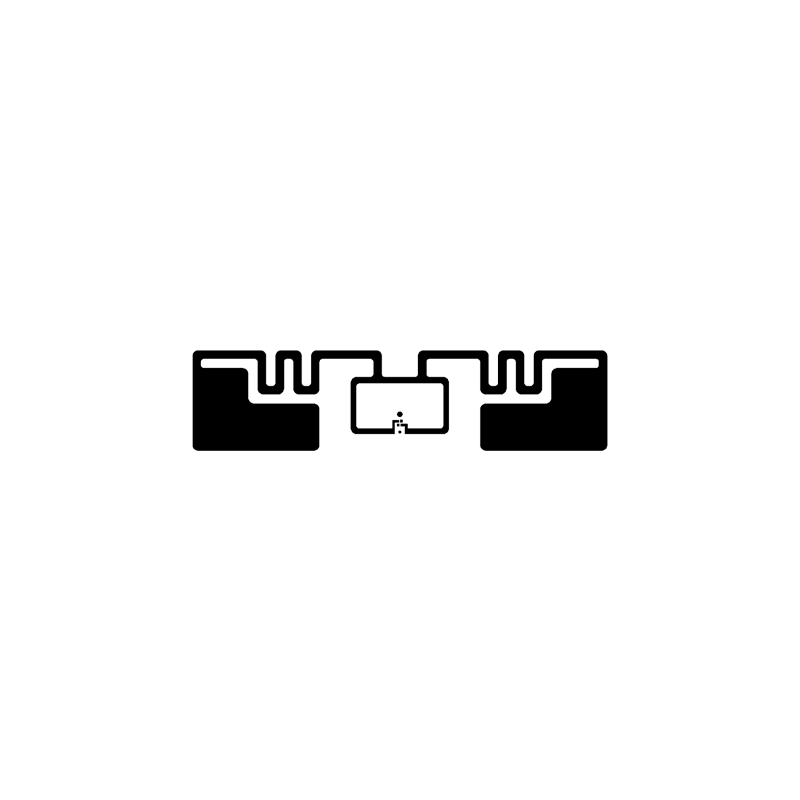
RFID chips in clothing are tiny integrated circuits connected to antenna structures. Together, the chip and antenna form an RFID inlay. In most apparel applications, the inlay is passive, which means it has no battery. It receives energy from an RFID reader, wakes up, and sends back a unique digital identity. That identity can be linked to product data in an ERP, warehouse management system, retail system, laundry platform, or brand traceability database.
For B2B buyers, it is useful to separate the chip from the finished tag. The chip is only one part of the solution. The final product may be a woven RFID label, a printed care label, a sew-in textile tag, a hang tag, a sticker label for packaging, or a durable laundry tag. The right format depends on the garment type, manufacturing process, expected life cycle, read-distance requirement, washing or heat exposure, and whether the tag must be visible, hidden, removable, or permanently attached.
In a retail T-shirt or fashion garment, the RFID may be applied as a hang tag or brand label for inventory visibility until point of sale. In workwear or reusable uniforms, the RFID inlay may be sewn into a textile label so the item can be tracked for years. In rental clothing, hospitality garments, healthcare textiles, and industrial uniforms, durability is often more important than the lowest tag cost. That is why RFID cloth solutions must be selected around the actual operating environment, not only around the chip model.
Why Apparel Businesses Are Moving Toward RFID Cloth
The apparel industry has always faced a visibility problem. A garment can move from cutting to sewing, inspection, packing, distribution, retail storage, customer delivery, return, and rework. At each handoff, data can be delayed or lost. If a team depends on manual counts, it may only know what should be in a location, not what is actually there. RFID cloth closes that gap by giving each garment a scannable identity that can travel with the item.
For manufacturers, RFID can support work-in-process tracking, bundle management, quality inspection, and shipment verification. For retailers, it can improve stock accuracy, replenishment, store audits, and omnichannel fulfillment. For uniform managers, it can help control issue and return cycles, reduce loss, monitor garment age, and match garments to departments or users. For laundries, RFID chips in clothing can record wash cycles, automate sorting, and reduce disputes around missing items.
The strongest cases usually appear where high item volume meets repeated handling. If garments are counted only once and never return, a low-cost label may be enough. If garments move repeatedly through warehouses, stores, repair stations, or laundry plants, RFID becomes a control system. The more touchpoints there are, the more value item-level identification creates.
rfid laundry tags
How RFID Cloth Works in a Clothing Operation
A typical RFID clothing workflow begins with tag encoding. The supplier encodes each tag with a unique number, often using an EPC structure or a company-specific serialization rule. That number is associated with garment data such as SKU, size, color, order number, production batch, customer account, or asset category. Once the RFID tag is attached, the garment can be read by handheld readers, desktop readers, tunnel readers, fixed antennas, or RFID portals.
During production, a reader can confirm that the correct garment bundle enters the correct workstation. During packing, a tunnel reader can verify carton contents without opening every package. At the warehouse dock, an RFID portal can compare actual received garments with the advance shipping notice. In the store, a handheld reader can scan racks quickly and update inventory counts. In a uniform or laundry environment, readers can identify bags, cages, conveyors, and finished orders with much less manual sorting.
This is where RFID differs from barcode labels. A barcode needs a visible symbol and a direct scan. RFID can read multiple items at once and does not require the label to face the reader. That does not mean RFID reads through everything perfectly. Metals, liquids, dense stacks, antenna orientation, reader power, and tag placement still matter. A professional RFID cloth project should include testing with real garments, real packaging, real read zones, and real process speeds.
Where RFID Chips Can Be Placed in Clothing
Placement is one of the most important design decisions. An RFID chip can be placed in a care label, a brand label, a hem label, a pocket label, a collar area, a waistband label, a removable hang tag, or a package label. The best location balances read performance, comfort, durability, brand presentation, and production efficiency.
For consumer apparel, a removable hang tag is often simple and economical, especially when RFID is mainly used for retail inventory before purchase. For reusable clothing, a sewn-in or heat-sealed textile tag is more appropriate because it remains with the garment after use. For workwear, the tag should avoid areas that bend sharply, rub heavily, or interfere with wearer comfort. For garments exposed to industrial washing, drying, ironing, or sterilization, the RFID tag needs materials and encapsulation that can survive heat, pressure, detergent, and repeated cycles.
Buyers should also consider how the garment will be folded, stacked, boxed, or hung during reading. A tag location that performs well on a single garment may perform poorly when 50 garments are packed tightly in a carton. Pre-production testing should include worst-case stacking and orientation, not only clean laboratory reads.
Key Benefits for B2B Apparel Buyers
The first benefit is inventory accuracy. When RFID chips in clothing are connected to the right software process, teams can count more frequently with less labor. That helps reduce stock discrepancies, missing sizes, wrong shipments, and emergency replenishment. For apparel companies with complex SKU structures, the improvement can be significant because the same style may exist in many size and color combinations.
The second benefit is process speed. Receiving, cycle counting, packing verification, and return handling can be performed faster when employees do not need to scan each barcode individually. This is especially valuable during seasonal peaks, store launches, ecommerce campaigns, and high-volume uniform distribution.
The third benefit is traceability. A serialized RFID identity can connect a garment to production date, supplier, quality inspection result, customer order, or wash history. This is useful for compliance, warranty, rental programs, sustainability reporting, and service-level agreements. If a batch has a quality issue, the business can locate affected garments more precisely instead of relying on broad assumptions.
The fourth benefit is loss control. In retail, RFID can help identify shrinkage patterns and improve store-level accountability. In uniform and laundry operations, RFID can show whether items were issued, returned, washed, repaired, retired, or missing. This data helps managers replace speculation with evidence.
Choosing the Right RFID Cloth Tag
Not every RFID tag is suitable for clothing. A good selection process starts with frequency. UHF RFID is common for apparel inventory because it supports longer read ranges and bulk scanning. HF or NFC may be used when short-range consumer interaction, authentication, or mobile-phone reading is required. For warehouse and retail operations, UHF is usually the first technology to evaluate.
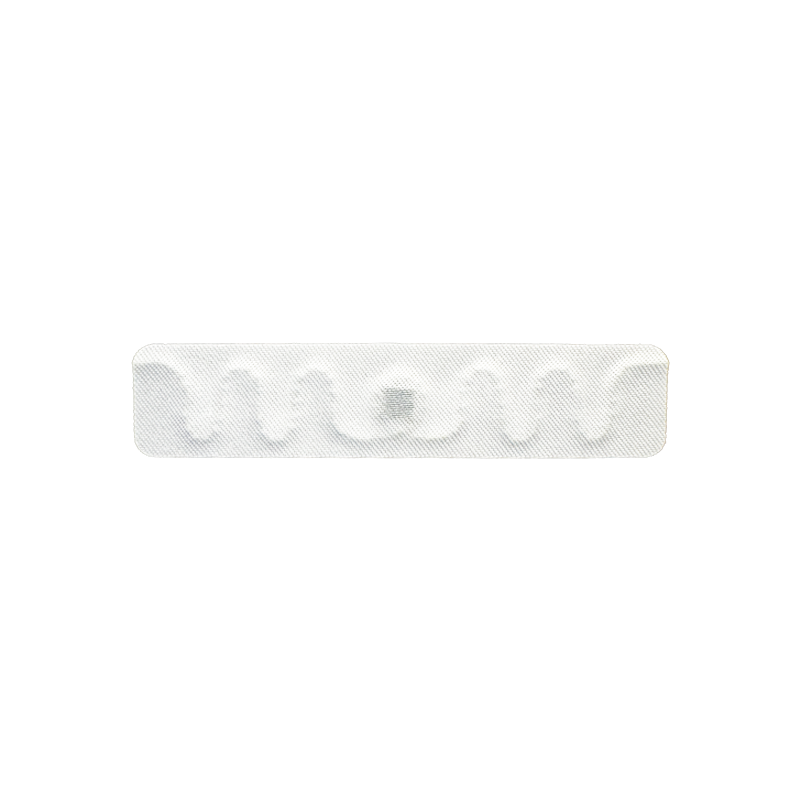
Next comes material construction. Textile labels should be soft enough for the garment and strong enough for the process. Hang tags need reliable printing and attachment. Laundry tags need resistance to washing, drying, ironing, chemicals, and mechanical stress. Packaging labels need good adhesive performance and predictable read distance on cartons or poly bags. The chip, antenna, substrate, adhesive, stitching method, and protective layer all influence final performance.
Memory is another consideration. Many apparel deployments only need a unique EPC number, with detailed data stored in software. Some applications may require user memory for local data storage, but adding memory can increase cost and complexity. In most B2B projects, a clean serialized identity model is easier to maintain than storing large amounts of changing data directly on the tag.
Compliance and system compatibility should also be checked early. The tag should work with the customer’s readers, middleware, ERP, WMS, POS, or laundry software. If the apparel buyer supplies major retailers, the RFID encoding format and label requirements may need to follow customer mandates. Testing should include both technical read performance and data workflow validation.
For teams comparing available RFID clothing products, the RFID Chips In Clothing product page is a relevant starting point because it focuses on embedded identification for garment and apparel applications.
Implementation Steps for Apparel Operations
A successful project usually begins with a defined use case. Instead of asking whether RFID should be used everywhere, a buyer should identify the process where visibility is most valuable: production tracking, carton verification, warehouse receiving, retail counting, uniform issue, return control, or laundry sorting. A focused pilot is easier to test, measure, and scale.
The second step is choosing data standards. Decide what each RFID number represents and where the master record lives. The tag should not become an isolated identifier. It should connect to SKU data, order data, customer data, location data, or lifecycle data in the system of record. Poor data design can weaken even a technically strong tag deployment.
The third step is tag testing. Test the RFID cloth tag on the actual garment material, in the intended position, with the expected packaging, and at the required read speed. Include edge cases such as dark fabrics, thick garments, dense cartons, mixed sizes, wet textiles, metal racks, and moving conveyors where relevant. Measure read accuracy, missed reads, duplicate reads, and operator workflow impact.
The fourth step is process integration. Readers need to be placed where the scan creates useful business data. A dock portal should update receiving. A packing tunnel should confirm shipment accuracy. A handheld scan should update location or count status. A laundry reader should record batch movement. RFID should reduce manual work, not create a second disconnected reporting task.
The fifth step is training and governance. Employees need to know what a successful read means, how to handle exceptions, and when to rescan. Managers need reports that show usable metrics such as inventory accuracy, missing items, cycle count variance, aging garments, shipment errors, or wash cycle history. RFID data becomes valuable when teams act on it.
Common Mistakes to Avoid
One common mistake is choosing the cheapest tag without validating the environment. A low-cost label may work in a simple retail carton but fail in repeated washing or heavy industrial use. Another mistake is placing the tag where it looks convenient but reads poorly after folding or stacking. A third mistake is treating RFID as a hardware-only purchase. Readers and tags are important, but the business return depends on software rules, clean data, and process adoption.
Buyers should also avoid unrealistic expectations. RFID improves visibility, but it still needs correct antenna design, reader tuning, tag placement, and exception handling. A professional pilot should define target read rates and test conditions. It should also compare labor savings, error reduction, and inventory accuracy against the cost of tags, readers, integration, and training.
What This Means for the Future of Clothing Data
RFID chips in clothing are part of a larger shift toward item-level apparel intelligence. Garments are no longer treated only as physical products; they can also become digital assets with a history. That history can include manufacturing batch, ownership, location, service life, repair status, wash count, return condition, or retirement decision. For B2B companies, this creates better control across operations that used to rely heavily on manual checking.
The market direction is practical rather than futuristic. Companies are not adopting RFID cloth because it sounds advanced. They are adopting it because it can reduce labor, prevent shipment errors, improve stock visibility, and support traceability at scale. As reader infrastructure becomes more common and apparel data systems mature, RFID-enabled clothing is likely to become a standard option for many high-volume and high-value garment categories.
FAQ
What does rfid cloth mean?
RFID cloth usually refers to textile-based RFID labels, woven labels, sew-in tags, or cloth-compatible RFID inlays used on garments and fabrics. The goal is to give clothing a unique digital identity that can be read by RFID equipment.
Are RFID chips in clothing washable?
Some RFID chips in clothing are washable, but not all RFID labels are designed for laundry. Washable applications need textile or laundry-grade tags that are tested for water, heat, detergent, pressure, and repeated cycles.
Can RFID clothing tags be hidden inside garments?
Yes. RFID tags can be sewn into care labels, hems, waistbands, collars, or other garment areas. The location should be tested for comfort, durability, and read performance before mass production.
Is UHF RFID suitable for apparel inventory?
UHF RFID is commonly used for apparel inventory because it supports longer read ranges and fast bulk reading. It is especially useful for warehouse receiving, retail cycle counting, carton verification, and uniform management.
How should a B2B buyer start an RFID clothing project?
Start with one measurable use case, choose a suitable RFID cloth format, test it on real garments and packaging, connect the tag identity to business software, and measure improvements in accuracy, speed, and loss control.
Today, SEIKO RFID TECHNOLOGY LTD. has successfully deployed RFID products and solutions across a wide range of industries, helping businesses accelerate digital transformation, automation, and intelligent asset management. Our RFID labels, RFID laundry tags, RFID on-metal tags, industrial RFID transponders, and RFID reader systems are widely used in manufacturing, logistics, warehousing, retail, healthcare, energy, automotive, and Industrial IoT applications.
In modern manufacturing environments, SEIKO RFID TECHNOLOGY LTD. enables real-time tracking of raw materials, work-in-progress inventory, and finished products, ensuring full traceability throughout the production lifecycle. Within logistics and supply chain operations, our RFID solutions enhance inventory accuracy, warehouse visibility, shipment tracking, and asset utilization while reducing labor costs and operational inefficiencies. For harsh industrial environments, our high-temperature RFID tags, ceramic RFID tags, PCB on-metal tags, and rugged RFID transponders provide reliable performance even under extreme conditions. In the retail and apparel sectors, RFID labels and laundry tags support inventory management, anti-counterfeiting, omnichannel fulfillment, and product lifecycle tracking.
As industries continue to embrace smart manufacturing and connected operations, RFID technology is becoming a critical foundation for digital transformation. SEIKO RFID TECHNOLOGY LTD. remains committed to advancing RFID innovation, expanding manufacturing capabilities, and developing industry-specific solutions that address evolving business challenges. By combining high-performance RFID tags, intelligent reader systems, and extensive application expertise, we help organizations build smarter factories, more efficient supply chains, and data-driven operations. Together with our global customers and partners, SEIKO RFID TECHNOLOGY LTD. will continue shaping the future of intelligent identification and creating greater value through RFID technology worldwide.