

For apparel manufacturers, retailers, uniform suppliers, and laundry operators, rfid clothing refers to garments that are identified by a radio frequency identification tag. The tag may be sewn into a care label, attached as a hang tag, heat-sealed to a textile item, or embedded into a brand or size label. Its role is simple but powerful: it gives each clothing item a unique digital identity that can be read wirelessly.
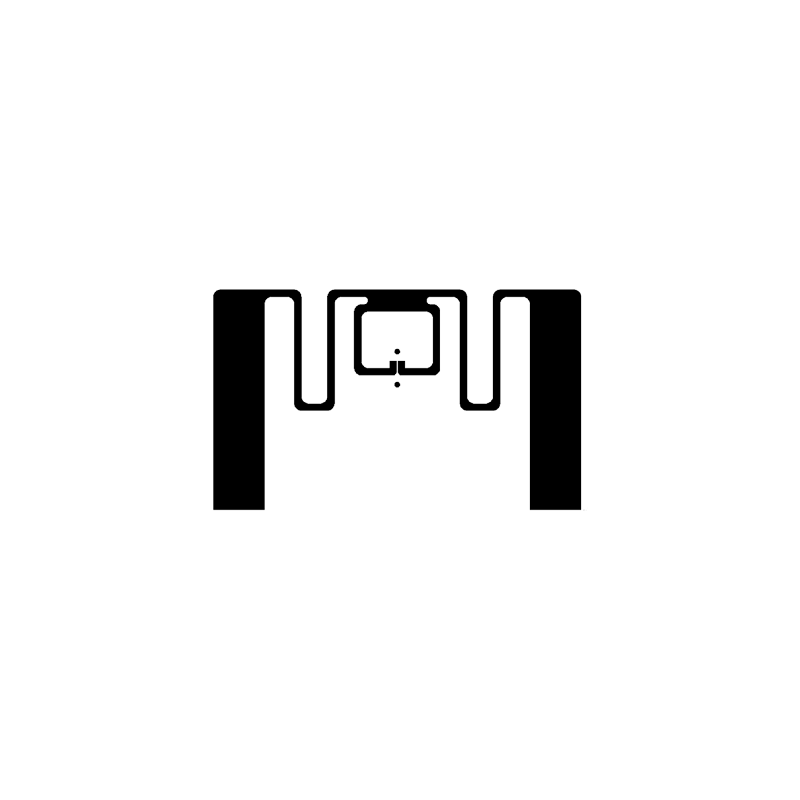
RFID Tags For Clothing
In a B2B environment, RFID in clothing is not just a technology trend. It is a practical answer to inventory inaccuracy, slow stock counts, shipment errors, garment loss, and limited item-level traceability. When thousands of shirts, uniforms, jackets, scrubs, or workwear pieces move through factories, warehouses, stores, and laundries, RFID helps teams know what each item is, where it is, and what should happen next.
What Is RFID in Clothing?
RFID in clothing means using a small RFID tag to identify a garment through radio waves instead of visual scanning. RFID stands for radio frequency identification. A reader sends a radio signal, the tag responds with its encoded identity, and software connects that identity to product or operational data such as SKU, size, color, style, batch, department, owner, wash count, or location.
This differs from a printed barcode. A barcode must be visible, clean, and scanned one item at a time. RFID can read many garments at once without direct line of sight. A carton of tagged apparel can be scanned at receiving, a rack can be audited with a handheld reader, and a laundry bag can be identified without opening every item manually.
For most clothing applications, passive UHF RFID is the preferred option because it supports item-level tagging, long enough read distance for operational workflows, and bulk reading at high speed. Passive tags do not need batteries. They are powered by the reader signal during the moment of scanning, which keeps the tag thin, light, and cost-effective for large apparel programs.
How RFID Clothing Tags Work
An RFID clothing tag contains a microchip and an antenna. The chip stores a unique number, and the antenna receives and transmits radio signals. When an RFID reader energizes the tag, the tag sends back its identity. Middleware or inventory software then translates that event into useful business information.
The tag itself usually does not need to store sensitive information. In many B2B systems, the tag only carries a unique identifier. The detailed product record stays in a secure database. This approach improves privacy, simplifies encoding, and allows companies to update garment information in software without changing the physical tag.
The physical format depends on the garment and use case. Retail apparel may use RFID hang tags or woven labels. Workwear and laundry applications often need washable textile tags. Brand owners may choose discreet labels that do not affect the customer’s wearing experience. Industrial users may need tags that survive heat, pressure, detergents, and repeated bending.
Why Apparel Companies Use RFID
The biggest reason apparel companies adopt RFID is inventory accuracy. Apparel is difficult to manage because products vary by style, color, size, season, and location. Manual counts are slow, and barcode counts can still miss items that are folded, packed, or placed on the wrong rack. RFID makes stock counting faster and more reliable.
In retail, better inventory accuracy supports replenishment, omnichannel selling, click-and-collect, loss prevention, and customer service. In manufacturing and distribution, RFID helps verify cartons, pallets, work-in-progress, and outbound shipments. In uniform and laundry programs, RFID tracks each garment through issue, return, washing, repair, and retirement.
For B2B buyers, the value is not only the tag read. The value is the operational record created over time. When every garment has a digital identity, businesses can analyze movement, shrinkage, cycle time, stock imbalance, supplier quality, customer usage, and lifecycle cost. This data can improve both daily execution and strategic planning.
Common RFID Clothing Applications
- Retail inventory: Stores can audit apparel racks quickly and improve on-shelf availability.
- Warehouse receiving: Distribution teams can verify cartons and shipments without scanning every barcode individually.
- Manufacturing traceability: Factories can track work-in-progress, production batches, and quality-control movement.
- Uniform management: Companies can assign garments to employees, departments, lockers, or job sites.
- Commercial laundry: RFID tags can track garments through collection, washing, drying, sorting, repair, and delivery.
- Brand protection: Item-level identity can support authentication, diversion control, and supply chain transparency.
RFID Clothing vs Barcode Clothing Labels
Barcode labels are affordable and widely understood, but they depend on line of sight. Workers must find the label, orient it correctly, and scan it individually. In apparel operations, this becomes a bottleneck when items are stacked in cartons, hanging on crowded racks, or moving through fast warehouse processes.
RFID improves speed because the reader can capture many tags in a single pass. It also improves process flexibility because the tag may be inside a garment label or packaging. However, RFID should be designed carefully. Reader placement, antenna tuning, tag orientation, and software filtering all affect performance.
Many companies use RFID and visible labels together. The printed label gives employees and customers human-readable information, while RFID provides automated identification. This combination is often the most practical path for apparel programs that need both operational efficiency and simple visual handling.
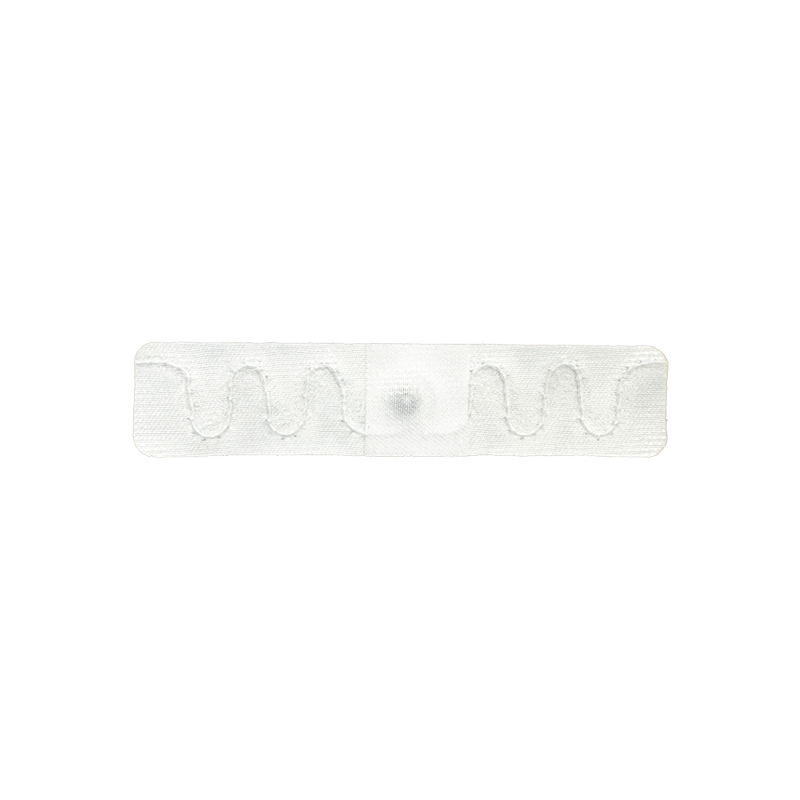
Heat Seal RFID Laundry Tags Manufacturer
Choosing the Right RFID Tag for Clothing
Tag selection should start with the business process. A disposable retail hang tag is different from a washable uniform tag. A luxury garment label has different appearance requirements from an industrial workwear label. A warehouse carton scan has different read-distance expectations from a point-of-sale or fitting-room workflow.
For apparel suppliers and uniform operators evaluating products, RFID Tags For Clothing can support garment identification, inventory visibility, and clothing lifecycle management. The right model should be confirmed through sample testing with the actual garment material, packing method, reader hardware, and operational environment.
Key specifications include chip type, memory, antenna design, read range, size, attachment method, wash resistance, heat tolerance, flexibility, and compatibility with encoding and printing equipment. For laundry or workwear, durability is critical. For retail apparel, readability, appearance, and tagging speed may be more important.
Where RFID Tags Are Placed in Clothing
RFID tags can be placed in several garment locations. Retail items often use hang tags attached to the garment until sale. Apparel brands may integrate RFID into care labels, woven brand labels, price labels, or packaging. Workwear and uniforms may use sewn-in textile tags placed at the hem, seam, waistband, collar, or label area.
Placement should balance read performance, comfort, durability, and appearance. A tag that is too close to metal accessories, dense folds, or heavy moisture may read less consistently. A tag that irritates the wearer can create complaints. A tag placed in a high-stress seam may fail earlier than expected. Testing real garments in real workflows is the best way to decide.
Implementation Workflow for B2B Teams
A successful RFID clothing project begins with a clear operating goal. Some companies want faster inventory counts. Others want better shipping accuracy, laundry visibility, employee uniform control, or anti-counterfeit traceability. The goal determines tag type, reader type, software integration, and success metrics.
After defining the goal, map the current garment flow. Document how clothing is received, stored, picked, shipped, sold, returned, washed, repaired, or retired. Identify where manual work creates errors or delay. RFID read points should be placed where the data will trigger a useful action, not simply where a reader can be installed.
Next, run a pilot with realistic volumes. Test tag readability on different sizes, colors, fabrics, packaging formats, rack densities, and movement speeds. Include the staff who will use the system every day. A pilot should measure read accuracy, process time, exception handling, and software usability.
Finally, scale gradually. Standardize tag encoding, item master data, label placement, receiving rules, and exception procedures. If RFID data will connect to ERP, WMS, POS, laundry management, or rental software, integration should be planned early. Clean master data is just as important as good hardware.
Data and Privacy Considerations
In most commercial clothing programs, the RFID tag identifies the item, not the person. This is important for privacy and compliance. Employee, customer, or wearer information should remain in protected business systems with proper access permissions. The tag can carry only an item identifier, while the software controls who can see related records.
Companies should also define data retention, access roles, and deactivation policies. For retail apparel, some organizations choose to deactivate, remove, or ignore tags after sale depending on the business model and local expectations. For uniforms and rental garments, tags normally remain active because the garments continue to circulate within a managed service.
Operational Benefits and ROI
The return on investment for RFID clothing depends on scale and process pain. In retail, ROI may come from labor savings, fewer out-of-stock situations, better online order fulfillment, and reduced shrink. In warehouses, it may come from faster receiving, fewer picking errors, and better shipment verification. In laundry and uniform operations, it may come from lower garment loss, faster sorting, and accurate lifecycle control.
The business case should include tags, readers, antennas, software, integration, staff training, and process redesign. It should also include measurable improvements such as audit time saved, inventory accuracy gains, reduced replacement purchases, fewer customer claims, or improved delivery accuracy. RFID works best when the project measures operational outcomes, not only read rates.
For high-volume apparel programs, even small improvements can create meaningful value. A better count can prevent unnecessary production, improve stock allocation, and reduce urgent replenishment. More accurate item-level records also help managers make purchasing and process decisions based on facts instead of estimates.
Challenges to Plan For
RFID clothing projects can face challenges if teams underestimate process design. Tags must be encoded correctly, master data must be clean, and staff must know how to handle exceptions. Reader zones must be tuned so they capture intended garments without reading unrelated items nearby. These details are manageable, but they should be included in the project plan.
Another challenge is selecting the wrong tag format. A retail hang tag may be unsuitable for industrial washing. A laundry tag may be unnecessarily rugged for a disposable retail label. A very small tag may look attractive but read poorly in bulk. The best choice is the one that fits the real garment journey from source to end use.
FAQ
What is RFID in clothing?
RFID in clothing is the use of a small radio frequency identification tag to give a garment a unique digital identity. The tag can be read wirelessly by RFID readers and linked to product, inventory, or lifecycle data in software.
Is RFID clothing safe to wear?
Yes. Passive RFID clothing tags do not contain batteries and are only activated briefly by a reader signal. They are commonly used in apparel, uniforms, linen, retail, and logistics environments.
Can RFID clothing tags be washed?
Some RFID tags are designed for washing, while others are intended for retail or packaging use only. Workwear, uniforms, and laundry applications should use washable textile RFID tags tested for temperature, pressure, chemistry, and repeated cycles.
Does RFID replace barcodes in apparel?
RFID can replace many barcode scanning tasks, especially for bulk inventory and automated workflows. However, printed barcodes and human-readable labels are still useful for visual handling, customer information, and backup processes.
What industries use RFID in clothing?
Retail, apparel manufacturing, logistics, hospitality, healthcare, industrial laundry, uniform rental, and workwear management all use RFID in clothing to improve visibility, accuracy, and operational control.
How should a company start with RFID clothing?
Start with a specific business problem, map the garment flow, choose suitable tag samples, test with real garments and readers, and integrate RFID data with the system that controls inventory or operations.
Conclusion
RFID in clothing gives each garment a reliable digital identity that can support faster inventory, better traceability, fewer errors, and stronger lifecycle management. For B2B apparel and textile operations, RFID clothing is most effective when tags, readers, software, and process rules are planned together. With the right design, RFID can turn ordinary garments into visible, manageable assets across the supply chain.
Today, SEIKO RFID TECHNOLOGY LTD. RFID products and solutions have been successfully deployed across a wide range of industries, helping enterprises accelerate digital transformation, automation, and intelligent asset management. Our RFID labels, RFID laundry tags, RFID on-metal tags, RFID industrial transponders, and RFID reader systems are widely used in manufacturing, logistics, warehousing, retail, healthcare, energy, automotive, and industrial IoT applications.
In modern manufacturing environments, SEIKO RFID TECHNOLOGY LTD. enables real-time tracking of materials, work-in-progress inventory, and finished products, providing complete traceability throughout the production lifecycle. In logistics and supply chain operations, our RFID solutions improve inventory accuracy, warehouse visibility, shipment tracking, and asset utilization while reducing manual labor and operational costs. For industrial and harsh-environment applications, our RFID high-temperature tags, ceramic tags, PCB metal tags, and on-metal tags deliver reliable performance under extreme conditions. In retail and apparel sectors, RFID labels and laundry tags support inventory management, anti-counterfeiting, omnichannel fulfillment, and lifecycle tracking.
Looking ahead, SEIKO RFID TECHNOLOGY LTD. will continue to invest in RFID innovation, advanced manufacturing capabilities, and industry-specific solution development. By combining high-performance RFID tags, intelligent reader systems, and customized application expertise, we are committed to helping businesses build smarter factories, more efficient supply chains, and data-driven operations. Together with our global partners and customers, SEIKO RFID TECHNOLOGY LTD. will continue driving the future of digital transformation and intelligent identification across industries worldwide.