

RFID desktop reader is a wireless radio frequency identification (RFID) device. As an efficient and accurate automatic identification technology, it can efficiently read and write RFID tags within a long distance without touching or approaching the tags. This ultra-high frequency RFID reader is widely used in logistics, warehousing, retail, manufacturing and other fields, greatly improving work efficiency and data accuracy. This article will introduce the functions of ultra-high frequency desktop readers and explore why more and more companies are choosing to use ultra-high frequency RFID readers?
Firstly, let’s understand the working principle of ultra-high frequency desktop readers. It emits high-frequency electromagnetic waves through an antenna. When an RFID tag enters the radio frequency range of the reader, the tag is activated and reflects back the electromagnetic waves. The reader reads the data inside the tag by receiving the reflected electromagnetic waves. Meanwhile, the reader/writer can also write data to the tag through the antenna, achieving data updates and modifications.

Compared with traditional barcode, QR code and other recognition technologies, ultra-high frequency readers have higher recognition speed and more accurate data reading rate. It can read data from multiple tags in a very short amount of time, greatly improving work efficiency. Meanwhile, due to the adoption of wireless communication technology, the reader/writer can easily connect with various devices or systems to achieve data sharing and exchange. For example, in the logistics field, ultra-high frequency desktop readers are widely used in warehouse management, cargo tracking, and transportation. By reading and writing cargo labels with a reader/writer, fast identification and tracking of goods can be achieved, improving logistics efficiency and accuracy. For example, in the retail field, readers are used for product management and inventory, which can quickly read product information, improve sales efficiency and service quality.

1. Introduction to the functions of ultra-high frequency desktop readers and writers
Efficient reading and writing ability: Ultra high frequency RFID readers have fast reading and writing capabilities, which can read a large amount of tag information in a short period of time. This makes it an ideal choice for efficient management of large-scale items, such as warehouse management, inventory counting, etc.
Long distance identification: Compared to RFID technology on other frequencies, it has a longer identification distance. Ultra high frequency readers can recognize tags within a range of several meters or even ten meters without direct contact, greatly improving work efficiency and convenience.
Multi tag simultaneous reading: The ultra-high frequency RFID reader/writer supports simultaneous reading of multiple tags without being limited by the number of tags. This means that a large number of items can be identified at once, reducing operation time and labor costs.
Stable and reliable: The well-designed ultra-high frequency reader/writer has stable and reliable performance, and can work normally under various environmental conditions, including harsh industrial environments and high and low temperature environments.
Flexible and diverse application scenarios: Ultra high frequency readers are widely used in various industries, including but not limited to logistics and warehousing, retail management, healthcare, manufacturing, and other fields. It can be used in various scenarios such as cargo tracking, asset management, access control, and production process monitoring, providing powerful management tools for enterprises.
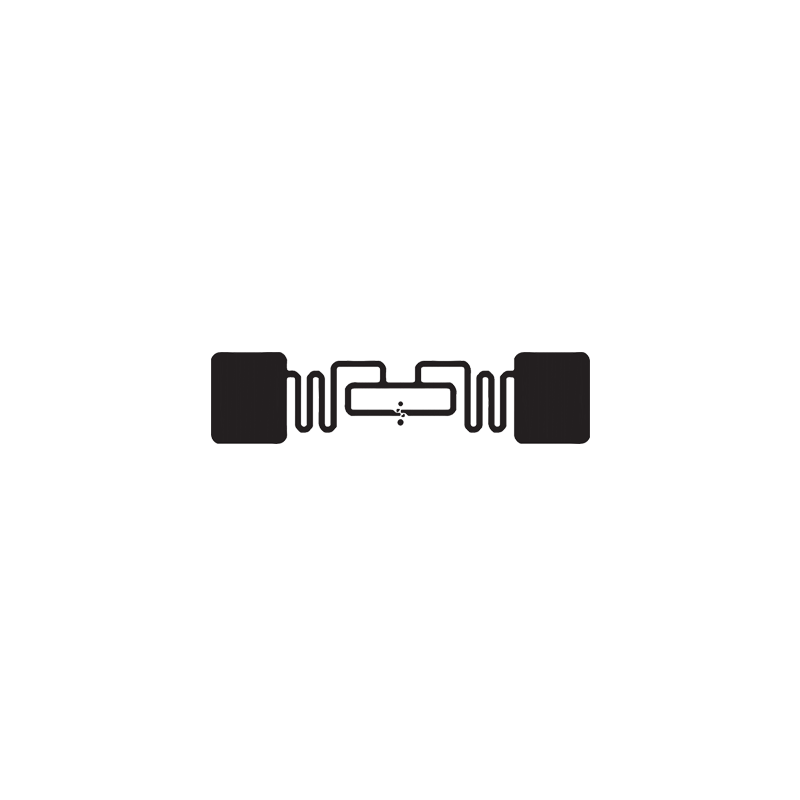
Alien ALN-9662 Short RFID White WET Inlay – High-Performance UHF RFID for Asset Tracking
2. Why choose to use ultra-high frequency RFID readers?
Improve work efficiency and accuracy: Ultra high frequency RFID readers can quickly and accurately identify a large amount of item information, avoiding errors and delays that may be caused by manual operations, thereby improving work efficiency and accuracy.
Cost reduction: Ultra high frequency RFID technology can achieve automated management, reducing labor and time costs. Compared to traditional manual recording or barcode scanning, it is more efficient and saves operational costs for businesses.
Improving management level: Ultra high frequency RFID readers can monitor and track the transportation, storage, and usage of items in real time, helping enterprise managers understand business conditions in real time, make timely decisions, and improve management level and business efficiency.
Adapting to complex environments: Ultra high frequency RFID technology has good anti-interference ability and adaptability, and can operate stably in complex environments such as high-speed movement and multi tag overlap. This allows it to perform excellently in various scenarios.
Realize intelligent management: Ultra high frequency RFID readers can seamlessly integrate with enterprise management systems to achieve real-time data updates and sharing. Through data analysis, enterprises can better understand market demand, optimize production processes, improve decision-making efficiency, and achieve intelligent management.
Future development trend: With the continuous development of the Internet of Things and automation technology, ultra-high frequency RFID technology will be more widely applied and developed. Choosing to use ultra-high frequency RFID readers means that enterprises have better future development and competitive advantages.

RFID Handheld Reader
In summary, as an important component of RFID systems, ultra-high frequency desktop readers have functions such as efficient reading and writing capabilities, long-distance recognition, and simultaneous reading of multiple tags, and are widely used in various industries. Choosing to use ultra-high frequency RFID readers can improve work efficiency, reduce costs, enhance management level, and have good adaptability and development potential. It is one of the essential tools for modern enterprise management.