

The RFID frequency range is a fundamental characteristic that directly dictates the performance, application, and capabilities of any RFID system. Essentially, it refers to the specific radio wave spectrum within which an RFID tag and reader communicate, with the most common operational bands being Low Frequency (LF), High Frequency (HF), and Ultra-High Frequency (UHF). The choice of frequency is a critical first step in system design, as it influences key factors such as read range, data transfer speed, and the ability to function effectively near metals or liquids.
1.Frequency: Communication Language of RFID System
In the RFID world, frequencies are like dialects used for communication between people. When the consumables cabinet in the hospital operating room and the intelligent shelves in the logistics center use different frequency bands, it is like a dialogue speaker speaking different languages, only matching frequencies can establish effective communication. This “same frequency resonance” characteristic has enabled LF, HF, UHF and other frequency bands to find unique value coordinates in different fields. Taking the automobile manufacturing workshop as an example, workers simultaneously use low-frequency tools to identify cards and ultra-high frequency component tracking tags on the assembly line. Devices in different frequency bands act like two professional translators, accurately capturing signals and transforming physical world operations into precise records of digital systems.
2.Low frequency (LF): the defender of penetration power
A low-frequency RFID operating in the 125KHz to 134KHz frequency band is like a skilled craftsman in close range communication. It uses the principle of electromagnetic coupling to stably transmit data within a distance of 10cm, ensuring reliable operation even in damp ranch environments or vibrating industrial workshops. This feature makes it the preferred choice for animal ear tags and car key chips, silently guarding the traceability of animal husbandry and the core of vehicle safety. After deploying low-frequency tags on the assembly line, a certain automobile parts factory can accurately identify even metal parts stained with oil, demonstrating the unique value of low-frequency technology in special environments.
3.High frequency (HF): a versatile player in mid-range scenes
When the frequency is increased to 13.56MHz, high-frequency reader/writer exhibits stronger environmental adaptability. This device, which uses adaptive tuning technology, can automatically optimize parameters based on on-site metal interference or liquid environment, achieving fast batch reading within 1 meter. When librarians use it to scan bookshelves, they do not need to align each book with the spine, and the metal plating on the pages does not affect recognition accuracy. In the management of high-value consumables in hospitals, it works in conjunction with intelligent shelves to accurately read instrument information through medical packaging materials, allowing nurses to retrieve surgical instruments and the system to update inventory data in real-time, showcasing the charm of high-frequency technology.

4.Ultra high frequency (UHF): an innovator in long-range identification
Entering the 860MHz -960MHz ultra-high frequency field, ultra-high frequency reader/writer is like opening a “god’s perspective”. This device that supports multi protocol recognition can simultaneously capture hundreds of package labels within 8 meters on the logistics sorting line. Its innovative anti-interference algorithm enables stable reading rates to be maintained even between stacked metal cargo boxes. In the intelligent fitting room of clothing stores, it can quickly identify and embed flexible labels through the fabric of the clothing. Customers can pick up shirts of different sizes, and the screen immediately displays inventory and matching suggestions. Behind it is a breakthrough in ultra-high frequency technology.
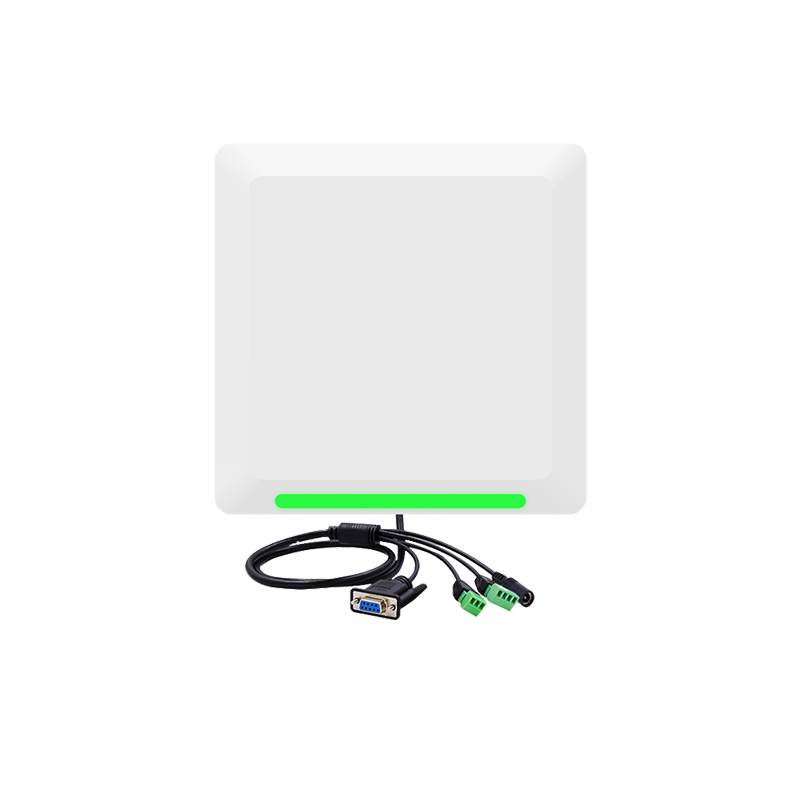
USB RFID Reader Integrated 12 dbi Antenna
5.Scene intelligence for frequency selection
Adhere to low frequency in tool management on automotive production lines, withstand oil pollution and vibration to achieve reliable identification; High frequency is balanced within the limited space of medical consumables cabinets to achieve rapid batch inventory; The breakthrough of ultra-high frequency in logistics centers has triggered an efficiency revolution in processing tens of thousands of packages per hour. A certain smart library is quite representative. The ancient book area uses low-frequency tags to protect precious documents, the circulation library uses high-frequency equipment to manage daily borrowing, and the book return sorting line relies on ultra-high frequency to achieve rapid classification. This layered design confirms the essence of frequency selection – there is no optimal solution, only the most suitable solution.
6.The unchanging original intention in technological evolution
From intelligent tuning functions to multi label processing capabilities, device upgrades revolve around the core: making technology better serve practical needs. Farm owners use low-frequency ear tags to trace the flow of meat products, nurses use high-frequency systems to quickly locate emergency equipment, and couriers use ultra-high frequency equipment to accurately sort packages. The technology in these scenarios hides complex parameters and leaves the temperature to solve problems. The essence of RFID frequency selection lies in understanding the demands of the scene. With the precise combination of keys and lock holes, appropriate frequency selection allows data to flow naturally like breathing, showcasing the ingenuity of the intelligent IoT era.