

As the government places increasing emphasis on workplace safety, policies such as the “14th Five-Year Plan for Digital Economic Development” and the “Action Plan for the Development of the Internet of Things” explicitly promote the innovative application of key technologies like RFID in Manufacturing and workplace safety management. Coupled with the deep integration of technologies such as the Industrial Internet, artificial intelligence, and 5G, market demand for RFID in the field of intelligent workplace safety inspections will continue to grow. The market is expected to evolve toward large-scale, diversified, and intelligent development, demonstrating immense potential.
The market continues to expand, and application scenarios are constantly evolving. Currently, RFID in Manufacturing and intelligent safety inspection solutions have been widely adopted across key industries such as power generation, petrochemicals, mining, rail transit, and construction. As small and medium-sized enterprises accelerate their digital transformation in workplace safety, demand is expected to further penetrate these sectors.
According to industry research data, China’s RFID market size reached approximately 120 billion yuan in 2024, with the share of applications in RFID in Manufacturing steadily increasing. It is projected that by 2030, China’s RFID market size will approach 600 billion yuan, with a compound annual growth rate (CAGR) as high as 12.5%, and intelligent safety inspection will become one of the core growth segments.
1. Application of RFID Technology in Intelligent Safety Inspection
1.1 Precise Inspections: Building a Solid Data Foundation
RFID technology enables precise location tracking and identification of inspection targets by equipping each piece of equipment and every inspection point with a uniquely identified electronic tag (particularly industrial-grade anti-metal tags).
Core information such as equipment parameters, maintenance history, and inspection standards can be pre-programmed into the tags. When read by a reader, these tags automatically trigger standardized inspection work orders, ensuring the authenticity, completeness, and compliance of inspection data. This provides reliable data support for equipment health analysis and safety risk assessment; in some enterprises, the misdiagnosis rate of equipment failures has been reduced by more than 60% following implementation.
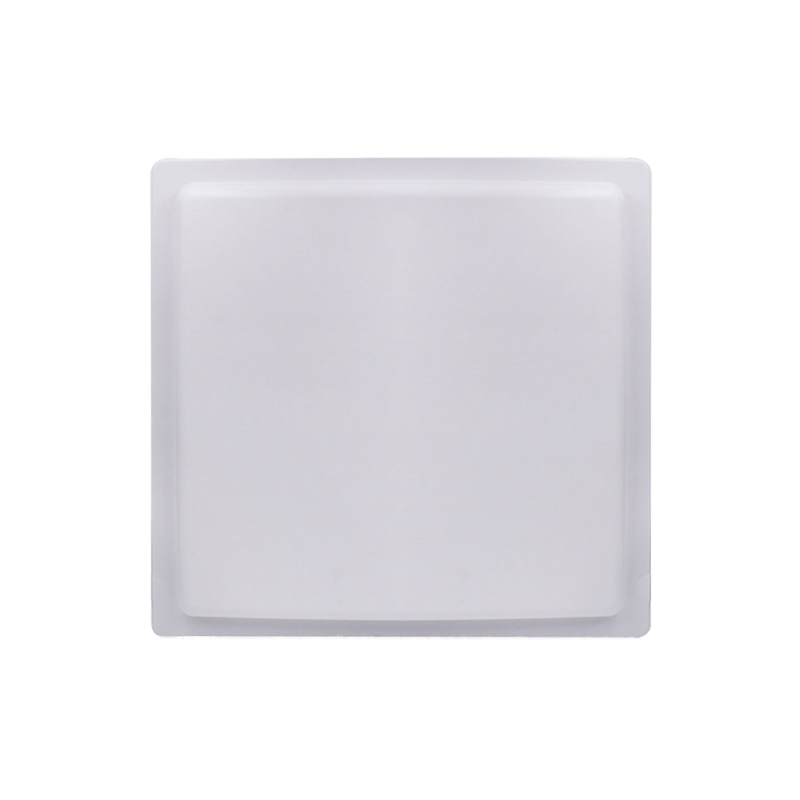
12dBi Circular Linear RFD UHF Reader Antenna
1.2 Streamlined Operations, Enhanced Management Efficiency
Safety inspection scenarios often involve extensive coverage, a large number of devices, and high inspection frequencies. RFID technology significantly improves inspection efficiency through features such as simultaneous reading of multiple tags and long-range identification. In environments like large power plants and rail transit depots, the coordinated use of fixed-mount readers and handheld terminals enables batch data collection and real-time synchronization during equipment inspections, further shortening inspection cycles.
1.3 Intrinsic Safety to Ensure Personnel Safety
In high-risk industries such as petrochemicals, mining, and high-voltage power plants, RFID technology innovates by enabling “unmanned or minimally staffed” inspection models, effectively mitigating operational risks to personnel and achieving a fundamental improvement in workplace safety. For example, in high-voltage power plants, RFID technology is used to empower inspection robots. By deploying RFID tags at critical equipment points and path junctions, the robots can read tag information via readers to achieve precise navigation and equipment identification, automatically completing inspection tasks such as infrared temperature measurement and partial discharge detection without requiring personnel to enter high-risk areas.

Antenna RFID Reader | High-Gain RFID Scanning for Precision Tracking & Automation
1.4 End-to-End Traceability to Support Risk Assessment
Work safety management requires that inspection work be traceable and verifiable. The record-keeping methods of traditional inspection models make it difficult to achieve end-to-end traceability; in the event of a safety incident, it is impossible to quickly pinpoint the root cause of the problem or identify the responsible party. RFID technology establishes a comprehensive traceability system for the entire inspection process. The time, personnel, equipment status, anomalies, and resolution outcomes of every inspection are fully recorded and stored on the backend platform, creating a digital health record for the entire equipment lifecycle.

The application scenarios will expand from traditional equipment inspections to encompass the entire spectrum of workplace safety management, including personnel safety monitoring, asset tracking, and standardization of operational procedures:
In the construction sector, it will be used for the inspection and tracking of specialized equipment such as scaffolding and tower cranes;
In the mining sector, it will be used for the location tracking and inspection of underground equipment and personnel;
In the healthcare sector, it will be used for the inspection and control of medical equipment and hazardous pharmaceuticals, further expanding market opportunities.