

In the era of digital transformation, warehouse operations are rapidly evolving from manual processes to intelligent, automated systems. RFID in warehousing has become a transformative force, with Radio Frequency Identification (RFID) technology—a core pillar of the Internet of Things (IoT)—enabling seamless asset tracking through non-contact scanning, batch data capture, and real-time updates. By integrating RFID with smart shelves, automated forklifts, and IoT-enabled pallets, businesses can achieve unprecedented visibility, accuracy, and efficiency in inventory control.
Beyond general stock management, RFID for tool tracking further extends its value, ensuring critical equipment is monitored, reducing loss, and optimizing maintenance workflows. This article explores how RFID in warehousing is reshaping logistics, from bulk inventory automation to precision tool management, and the measurable benefits it delivers across industries.
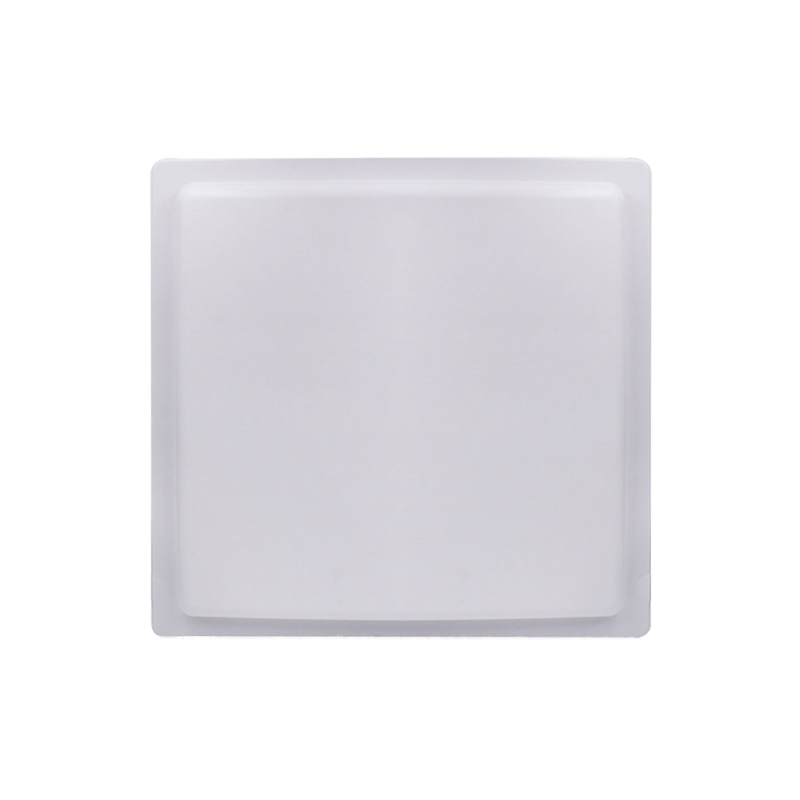
12dBi Circular Linear RFD UHF Reader Antenna
1. Core Components and Working Principles of RFID Technology
An RFID system consists of three parts: electronic tags (microchips embedded in goods), RFID readers (data collection terminals), and a back-end management system. Electronic tags communicate with readers via radio waves, enabling rapid data transmission without human intervention. Compared with traditional barcodes, RFID technology has the following advantages:
- Batch identification: Can read hundreds of tags at once, improving efficiency by over 10 times;
- Penetration capability: Operates in complex environments without requiring line-of-sight alignment;
- Data rewritability: Enables dynamic updates of goods status information.

2.Application Scenarios of RFID Technology in Smart Warehousing
2.1 Smart Shelves: The “Eagle Eye” of Real-time Inventory Management
Traditional shelves rely on manual inventory checks, which are prone to errors and omissions. Smart shelves equipped with RFID readers can monitor the location and quantity of goods in real time. When goods are taken or placed on the shelf, the built-in reader automatically scans the tags, and the data is synchronized to the management system, achieving an inventory accuracy rate of over 99.9%. For example, an e-commerce warehouse deployed smart shelves and reduced its restocking response time from two hours to 15 minutes.
2.2 Smart Pallets: The “Digital ID” for End-to-End Tracking
Embedding RFID tags on pallets enables the recording of product categories, batches, expiration dates, and other information. Combined with intelligent transfer systems, companies can monitor the entire process from inventory receipt, sorting, to shipment in real time. A cold chain logistics company saw a 30% reduction in product damage rates and a 25% increase in transportation efficiency after adopting smart pallets.
2.3 Smart Forklifts: The “Intelligent Brain” of Automated Operations
Traditional forklifts rely on manual navigation, resulting in low efficiency and frequent collisions with shelves. Smart forklifts equipped with RFID readers can automatically plan routes by scanning ground tags and integrate with warehouse management systems (WMS) to precisely locate goods for transportation. After introducing smart forklifts, a certain automotive parts warehouse saw a 40% increase in loading/unloading efficiency and a 50% reduction in labor costs.
2.4 Smart inventory counting: A revolutionary departure from the “human sea tactic”
Traditional manual inventory counting requires closing the warehouse, which is time-consuming and labor-intensive. With an RFID-based smart inventory counting system, employees can use handheld readers or fixed readers to scan 100,000 items in 10 minutes. After a retail company adopted this system, the annual inventory counting time was reduced from three days to two hours, with an 80% reduction in labor costs.
2.5 Smart Storage Cabinets: The “Security Guardian” for High-Value Materials
For high-value items such as precision instruments and medical supplies, smart storage cabinets use RFID tags to bind access permissions, enabling precise “one item, one code” management. Employees must swipe a card for authorization to access items, and the system automatically records operation logs. After adopting this solution, a semiconductor factory reduced material loss rates to below 0.01%.
2.6 Smart Transshipment: Seamless Coordination Across Multiple Warehouses
In large logistics hubs, RFID technology can optimize smart transshipment processes. Transshipment vehicles are equipped with onboard readers, which automatically verify information when goods enter or exit, and integrate with the central dispatch system to reduce misdeliveries or omissions. A cross-border logistics company reduced transshipment error rates from 5% to 0.3% through this technology.

3.The Four Core Advantages of Intelligent Warehouse Management
3.1Efficiency Boost: From “People Finding Goods” to “System Dispatch”
RFID technology reduces manual operations by more than 60%. Taking a certain daily chemical warehouse as an example, order picking time has been reduced from 4 hours to 30 minutes, and daily outbound volume has increased by 3 times.
3.2Cost Optimization: Reduced Labor and Waste
Smart warehouse systems can reduce inventory counting labor requirements by 70% while minimizing waste caused by misdeliveries or expired goods. A certain food company achieved annual cost savings exceeding 5 million yuan.
3.3 Data-Driven: Scientific Decision-Making
Real-time data supports inventory forecasting and supply chain optimization. A clothing brand analyzed RFID data to increase inventory turnover from 4 times per year to 8 times per year.
3.4 Scalability: Compatible with Future Upgrades
RFID systems can seamlessly integrate with new technologies such as AGV robots and AI visual inspection, providing enterprises with room for digital upgrades.
4.Challenges and Future Prospects
Despite the significant advantages of RFID technology, its application still faces technical challenges such as tag costs (approximately 0.3-1 yuan/piece) and interference from metal environments. With breakthroughs in domestic chip technology, the cost of electronic tags is expected to decrease further. In the future, RFID will be deeply integrated with 5G and edge computing, driving the evolution of warehouse management toward “unmanned” and “predictive maintenance.”