


RFID (Radio Frequency Identification) is a contactless automatic identification technology whose core function is to use radio frequency signals to automatically identify target objects and retrieve data. In the context of records management, the operational process is specific and precise: each record or file box is assigned an RFID tag, which acts as the record’s “electronic ID” and stores detailed information such as the record’s unique identification code, name, category, and creation date.
When a file bearing an RFID tag enters the reader’s radio frequency signal coverage area, the entire identification process within RFID Inventory Management Systems is immediately initiated. The reader transmits a radio frequency signal, and upon receiving the signal, the RFID tag obtains energy through electromagnetic induction or electromagnetic backscatter coupling.
Taking electromagnetic induction as an example, the coil within the tag generates an induced current in the alternating magnetic field produced by the reader, thereby obtaining sufficient energy to activate the chip; in electromagnetic backscatter coupling, the tag transmits its own information by reflecting the reader’s radio frequency signal.
Once activated, the tag modulates its stored archival information into the RF signal using a specific encoding format and transmits it back to the reader. Upon receiving the returned signal, the reader performs demodulation and decoding, converting the acquired information into a data format recognizable by the computer system. This data is then transmitted over the network to the archival management computer system, ultimately enabling the automatic collection and recording of archival information—a core capability of modern RFID Inventory Management Systems.
1.Operating Frequencies
RFID technology can be categorized into low-frequency (LF), high-frequency (HF), ultra-high-frequency (UHF), and microwave (MW) bands based on their operating frequencies. Each frequency band has its own advantages, disadvantages, and suitable applications in records management.
The low-frequency band (125 kHz–134.2 kHz) offers strong signal penetration and can operate reliably in complex environments such as liquids and metals. However, its reading range is relatively short, typically ranging from a few centimeters to over ten centimeters. It is suitable for scenarios requiring high archive security, complex storage environments, and where read speeds are not a priority, such as the management of precious ancient manuscripts.
High-frequency band (13.56 MHz): The reading range is longer than that of the low-frequency band, generally reaching about 1 meter. It features faster data transmission rates and lower tag costs. It is widely used in the batch management of ordinary paper archives; for example, in daily archival intake and checkout operations at archives, it can quickly identify multiple archive tags.
Ultra-High Frequency (UHF) band (860 MHz – 960 MHz): Offers significantly longer read ranges, reaching several meters or even tens of meters, with fast read speeds. It is suitable for large-scale, rapid inventory and location tracking of archives. However, signal performance is highly susceptible to environmental factors, though it offers significant advantages in the automated management of large-scale archive repositories.
The microwave band (2.45 GHz and above) features extremely fast transmission speeds and long-range identification, making it commonly used in scenarios requiring high-speed data transmission and long-distance identification. However, due to the high cost of equipment, its application in archival management is relatively limited.
2. Components of the RFID Management System
2.1 RFID Tags
2.2 Tag Type

Classified by Power Supply Method
They can be classified into active tags, passive tags, and semi-active tags.
Active tags are equipped with built-in batteries and can actively transmit radio frequency signals. They offer a longer detection range—typically up to several dozen meters—but are more expensive and have a limited lifespan due to battery constraints. They are suitable for the management of important archives that require real-time monitoring and a long detection range.

Passive tags do not have their own power source; they rely on radio frequency signals emitted by readers to power their operation. They are low-cost, compact, and have a long service life, but their reading range is relatively short. They are most widely used in general records management.
Semi-active tags combine the advantages of active and passive tags; they remain in sleep mode under normal conditions and are activated only when they enter the reader’s signal range. This design ensures a certain reading range while reducing power consumption, making them suitable for scenarios where the movement of archives needs to be monitored.
2.3Classified by packaging type
Common types include paper labels, plastic labels, and anti-metal labels.


Paper labels are inexpensive and easy to apply, making them suitable for standard paper records; however, they offer poor resistance to water, moisture, and wear.
Plastic labels have good physical properties and can withstand harsh environments; they are commonly used for records that require frequent handling and use.
Anti-metal tags are specifically designed for metal archive boxes or documents stored in metal environments. They effectively prevent metal from interfering with radio frequency signals, ensuring accurate reading of the tag information.
2.4 Tag Encoding
The encoding method of an RFID tag determines the format and capacity of the information it stores. Currently, commonly used encoding standards include EPC (Electronic Product Code) and UID (Unique Identifier).
EPC encoding uses a hierarchical structure that uniquely identifies each item. In records management, EPC encoding allows for the precise differentiation of each record, enabling tracking and management throughout the entire lifecycle of the records.
UID encoding, on the other hand, is a unique identifier inherent to the tag itself, with global uniqueness, and is commonly used for the initial registration and identity verification of records.
3. Readers
3.1 Types of Readers
Fixed-Mount Readers
Typically installed at fixed locations such as the entrances and exits of archive storage rooms or on archive shelves, these devices are used to monitor the movement of records in and out of storage and their storage status in real time. Fixed-mount readers offer stable performance and high read rates, enabling them to continuously receive and process RFID tag signals.
For example, fixed-mount readers installed at the entrances and exits of archive storage rooms can automatically identify the tag information of archives being moved in and out, record details such as the time of entry and exit and the operator’s information, thereby enabling automated management of archive circulation.
Handheld Readers
Compact and portable, these devices are suitable for staff performing mobile operations within archive storage rooms, such as inventory checks, searches, and temporary removal of archives.
Handheld readers are equipped with a display screen and control buttons, allowing staff to view archive information, enter data, and make modifications directly on the device. During archive inventory, staff can move around the storage room with the handheld reader to quickly read the information from each archive tag, compare it with the archive data in the system, and generate an inventory report.

RFID Handheld Reader
3.2 Performance Parameters
The performance parameters of the reader directly impact the operational efficiency and accuracy of the RFID management system. Key performance parameters include operating frequency band, transmission power, read range, read speed, and data transfer rate.
The operating frequency must match that of the RFID tags in use to ensure proper communication; transmission power determines the reader’s detection range—higher power allows for longer detection distances but may also cause interference with nearby devices; detection range and read speed affect the efficiency of archive management. In practical applications, the reader’s performance parameters should be selected appropriately based on factors such as the size of the archive storage area and the number of archives.
4. Antennas
4.1 Antenna Types
Based on their structure and operating principles, RFID antennas can be classified into dipole antennas, microstrip antennas, loop antennas, and others.
Dipole antennas feature a simple structure and are easy to manufacture; they offer good directivity and gain, making them suitable for short-range identification scenarios;
Microstrip antennas are compact, lightweight, and easy to integrate, and are widely used in miniaturized RFID devices;
Loop antennas are highly sensitive to magnetic fields, effectively enhancing tag detection capabilities, and are commonly used in low-frequency and high-frequency RFID systems.
4.2 Antenna Installation


The installation location and orientation of antennas have a significant impact on the performance of RFID systems. In archive storage facilities, antenna installation must take into account factors such as signal coverage and the avoidance of signal interference.
For example, when installing antennas on archive shelves, ensure that the antenna’s radiation pattern covers all archive storage locations while avoiding mutual interference between antennas.
Additionally, the installation height of the antennas must be adjusted appropriately based on the height of the archives and reading requirements to ensure optimal identification performance.
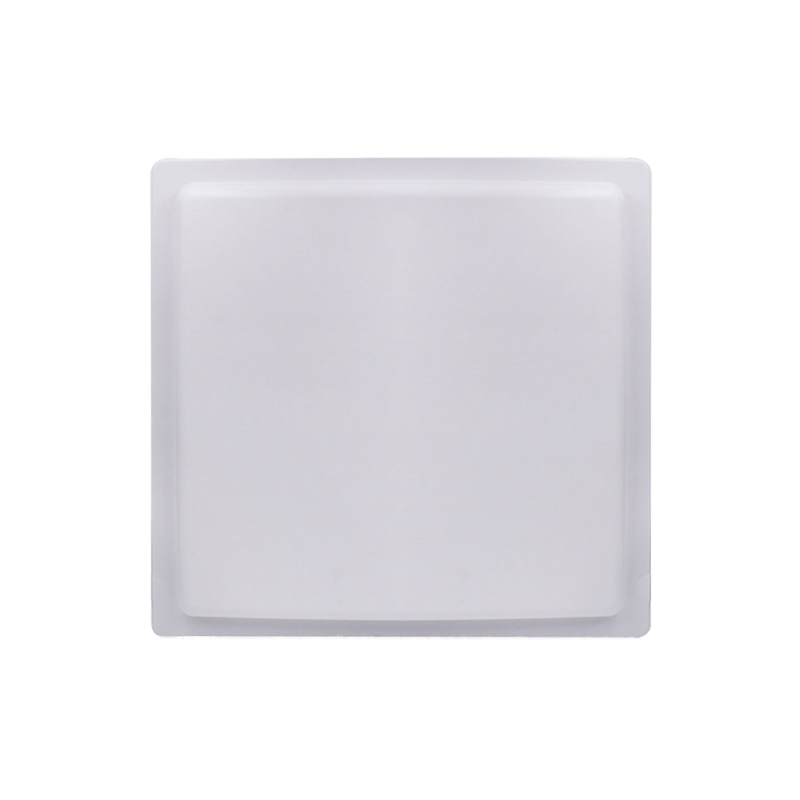
12dBi Circular Linear RFD UHF Reader Antenna
5. Computer System
Inventory Management Software
Functional Modules
Inventory management software is the core application of the RFID management system. It primarily includes functional modules such as data entry, searching, borrowing, returning, inventory counting, and statistical analysis.
Database
The database stores detailed information about archives and system operation logs, serving as the data center of the RFID management system. Database design must consider data integrity, security, and scalability.
In terms of data structure design, a reasonable table structure should be established, including tables for basic archive information, borrowing records, and inventory records. Through relationships between these tables, the system manages data across the entire lifecycle of the archives.
To ensure data security, the database must implement measures such as encrypted storage and user permission management to prevent data leaks and unauthorized access.
Furthermore, as the volume of archives continues to grow, the database should possess excellent scalability, allowing for easy expansion of storage capacity and performance optimization.
6. Advantages of the RFID Management System
6.1 Efficient and Fast
Batch Processing Capability
The batch identification capability of RFID technology is one of its key advantages for improving the efficiency of records management.
In traditional records management methods, whether using barcode scanning or manual data entry, each record must be processed individually, resulting in extremely low efficiency when handling large volumes of records.
In contrast, an RFID management system can simultaneously identify multiple record tags in a short period of time, significantly reducing the time required for records to be checked in, checked out, and inventoried. For example, during the archival intake process at a large archive, staff need only pass boxes of archives through a equipped with an RFID reader. The system can read and record the tag information of all archives within the box in a matter of seconds. Compared to traditional methods, this represents a tenfold or even hundredfold increase in efficiency.
6.2 Automated Workflows
The RFID management system automates archival management processes, reducing the need for manual intervention.
From automatic identification and data entry during archival intake, to automatic verification and recording during retrieval, and on to daily inventory and location tracking, the system can automatically handle most tasks. This not only improves work efficiency but also reduces the workload on staff.
For example, during inventory checks, staff no longer need to manually verify each file’s information as in traditional methods. Instead, they simply walk through the storage area along a predetermined route while holding a handheld reader. The system automatically collects file information, compares it with the database, and generates an inventory report—making the entire process fast and accurate.
High Accuracy
Reduced Human Error
Manual operations in records management inevitably lead to various errors, such as data entry mistakes, barcode scanning errors, and misplaced records.
In contrast, the RFID management system eliminates these human-induced errors through automatic identification and data transmission. The information in RFID tags is written once when the archive is added to the repository and is uniquely identifiable. When the reader scans the tag, as long as the tag is functioning properly, it can accurately retrieve the archive information without any missed or misread data.
For example, during the record borrowing registration process, traditional methods may result in errors in borrower information or record ID entry due to staff negligence. With an RFID management system, however, simply bringing the borrowed record and the borrower’s ID close to the reader allows the system to automatically and accurately record the relevant information, ensuring data accuracy.
Data Consistency
The RFID management system updates archive information in real time, ensuring that the data in the database always matches the actual status of the archives.
When operations such as archive entry, exit, borrowing, or return occur, the system immediately records the transaction details in the database and updates the archive’s status.
For example, when a record is checked out, the system automatically updates its status from “In Stock” to “Checked Out,” while simultaneously recording information such as the borrower and the check-out time; when the record is returned, the system promptly updates the status back to “In Stock.” This real-time data update mechanism ensures the accuracy and timeliness of archival management information, allowing administrators to monitor the actual status of records at any time.
6.3 Contactless Identification
Protecting Archival Integrity
For some precious and fragile archives, such as rare ancient books, historical manuscripts, and old photographs, frequent direct contact may cause physical damage to the archives, affecting their preservation lifespan.
The contactless identification feature of the RFID management system allows tag information to be read without direct contact with the archives or opening the archive boxes, minimizing physical handling of the archives to the greatest extent possible. When managing these precious archives, staff simply need to place the archives within the effective reading range of the reader to complete information retrieval and operations, thereby avoiding damage caused by actions such as flipping through pages or moving the archives.
Adaptability to Complex Environments
In archive storage facilities, records may be exposed to environmental factors such as humidity, dust, and high temperatures. Traditional identification methods like barcodes are prone to damage or blurring in such conditions, leading to failed recognition.
In contrast, RFID tags demonstrate excellent environmental adaptability and can operate reliably even in harsh conditions.
For example, in archives with high humidity, RFID tags are not affected by moisture and can still ensure accurate data retrieval, thereby guaranteeing the smooth operation of archive management.
6.4 Real-Time Monitoring
Dynamic Tracking
By installing RFID readers at key locations throughout the archive storage facility, the RFID management system establishes a real-time monitoring network capable of dynamically tracking information such as the location and status of archives.
Whether archives are being moved within the facility, checked in or out, borrowed, or returned, the system records the relevant information in real time and displays the current location and status history of the archives in an intuitive manner within the archive management software.
For example, when a record is moved from Shelf A to Shelf B, the RFID reader installed on the shelf promptly detects this change and transmits the information to the system. Administrators can then use the records management software to monitor the record’s location changes in real time.
Anomaly Alerts
The system supports various configurable alert rules. When anomalies occur—such as unauthorized removal of records, prolonged overdue status, or incorrect record placement—the system immediately triggers an alert to prompt administrators to address the issue promptly.
For example, if a file attempts to pass through a storage room entrance or exit without authorization, the RFID reader at the entrance/exit will detect the anomaly and trigger an alarm. Simultaneously, the archive management software will display the alert details—including the file name, ID number, and time of the alert—enabling administrators to quickly locate and resolve the issue, thereby ensuring the security of the archives.
6.5 High Scalability
System Integration
The RFID management system can seamlessly integrate with other archive management systems or information systems to enable the sharing and collaborative management of information resources.
For example, after integrating with a digital archive system, the information in the RFID tags is linked to the metadata of the digital archives. When users retrieve archives, they can search the content of digital archives using traditional keywords or quickly locate the corresponding physical archives via the RFID tag information, thereby achieving integrated management of physical and digital archives.
Additionally, the system can be integrated with office automation systems, incorporating processes such as record borrowing and approval into the office automation workflow to improve work efficiency and management standards.
6.6 Functional Expansion
As archival management needs continue to evolve, the RFID management system can easily add new functional modules through software upgrades and hardware expansions.
For example, when monitoring the temperature and humidity of the archival environment is required, temperature and humidity sensors can be integrated into the system, and corresponding functional modules can be developed to enable real-time monitoring and early warning of the archival storage environment. When the volume of archives continues to grow and the system’s processing capacity needs to be enhanced, the number of RFID readers can be increased or higher-performance equipment can be deployed to meet the demands of business development.
5. Implementation Guidelines
5.1 Tag Selection and Installation
When selecting RFID tags, factors such as the material, size, frequency of use, and storage environment of the records must be comprehensively considered.
For paper records, paper-based self-adhesive tags are recommended, as they are cost-effective, easy to apply, and will not damage the records. If records need to be frequently accessed or are stored in a humid environment, waterproof and wear-resistant plastic tags should be selected. For metal archive boxes, binders, and similar items, anti-metal tags must be used. These tags feature a special antenna design and a shielding layer that effectively eliminate interference from metal on radio frequency signals, ensuring accurate reading of tag information.
During tag installation, ensure that the tag is securely and smoothly affixed, avoiding issues such as curled edges or air bubbles, to prevent the tag from falling off and affecting archive management. Additionally, the installation location should facilitate reader recognition without affecting the normal use or appearance of the archives. For example, for larger archive boxes, the tag can be affixed to the center of the side; for smaller archives, it can be affixed to the upper right corner of the cover. After installation, use a reader to test each tag individually to ensure they can read and write information normally.
5.2 Reader Layout and Calibration
A reasonable reader layout is key to ensuring the performance of the RFID management system.
When planning the installation locations and number of readers, comprehensive consideration must be given to factors such as the archive storage room’s area, shape, and file storage methods. For large storage rooms with dense file storage, the number of readers should be appropriately increased to ensure that radio frequency signals comprehensively cover all file storage areas and avoid signal dead zones.
The installation height and angle of the readers must also be precisely calibrated. Generally, fixed readers should be installed at a height of 1.5 to 2 meters above the ground to ensure effective reading of tag information on all levels of the archive shelves. The angle should be adjusted according to the orientation of the shelves and the tag installation positions to ensure that the signal strikes the tags perpendicularly or nearly perpendicularly, thereby improving recognition accuracy.
After system installation is complete, comprehensive debugging and testing must be conducted. By simulating actual operational scenarios such as archive check-in/check-out and inventory counts, test performance metrics such as reader recognition range, reading speed, and accuracy. Based on the test results, optimize and adjust parameters such as reader transmission power, operating frequency band, and antenna gain to ensure the system operates stably and efficiently.
5.3 Data Security and Management
Archival information is highly confidential and critical, making data security management of paramount importance.
First, a comprehensive data security management system must be established to clearly define data access permissions. Different operational permissions should be assigned to staff in different roles; for example, archive administrators may perform operations such as data entry, modification, and deletion, while ordinary borrowers are limited to querying archive information.
At the same time, encryption technology should be employed to secure the storage and transmission of archival information, preventing data from being stolen or tampered with during these processes. For example, the AES (Advanced Encryption Standard) algorithm can be used to encrypt archival information in the database, ensuring that only authorized personnel can decrypt and read it.
Regular database backups are a critical measure for ensuring data security. A combination of full and incremental backups can be implemented, with incremental backups performed daily and full backups once a week. Backup data should be stored in different physical locations, such as local hard drives or cloud storage, to prevent data loss caused by hardware failures, natural disasters, or other factors.
Furthermore, a data recovery drill mechanism should be established, with regular data recovery tests conducted to ensure that data can be restored quickly and accurately in the event of an issue.
6. Staff Training and Management
Providing professional training on the operation of the RFID management system to archival staff is essential to ensuring the system runs smoothly.
The training curriculum should cover the system’s basic principles, operational procedures, and troubleshooting of common issues. Through a variety of methods—including theoretical instruction, hands-on demonstrations, and simulated case exercises—staff should become familiar with the system’s various functions and usage methods, enabling them to proficiently perform tasks such as archiving and retrieving records, inventory checks, searches, and locating items.
In addition to operational training, corresponding management systems must be established to standardize staff procedures. Detailed job operation manuals should be developed to clearly define the responsibilities and operational standards for each position, requiring staff to strictly follow established procedures.
An evaluation mechanism should be established to periodically assess staff members’ operational skills and work performance. Rewards should be given to those with outstanding performance, while penalties should be imposed on those who violate operational standards, ensuring the standardization and stability of system operations.
At the same time, staff members should be encouraged to actively provide feedback on issues encountered during system use and suggestions for improvement, thereby continuously optimizing system functionality and management processes.