

1. Industry status and pain points
In hotels, hospitals, nursing homes, and similar facilities, linen management is a tedious yet critical operational task. The entire process involves multiple stages—handover, washing, ironing, sorting, and storage—each presenting challenges under traditional management methods. Accurately tracking each piece of linen’s washing history, frequency, and inventory status is difficult, often leading to poor categorization, high error rates, and increased operational costs. For example, hotels may face guest complaints due to linen mix-ups, while hospitals might encounter infection risks if linens are not properly managed.
Traditional approaches rely heavily on manual records, barcodes, or QR codes. However, barcodes can smudge when wet, and QR codes require individual scanning, which is inefficient and unsuitable for modern precision management needs.
Integrating RFID linen management effectively addresses these pain points. By embedding RFID tags into linens, each item can be uniquely identified and tracked automatically throughout its lifecycle—without line-of-sight scanning. This enables real-time visibility into linen location, usage counts, and washing history, significantly improving inventory accuracy, reducing loss, enhancing hygiene control, and streamlining operations across hospitality and healthcare sectors.

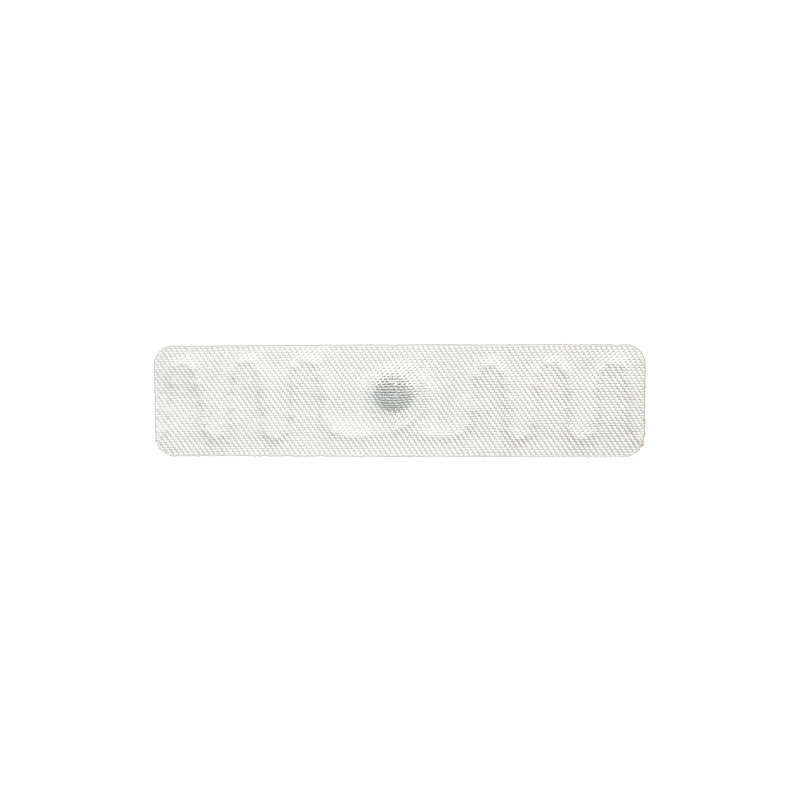
Custom RFID laundry tags
2. Introduction to RFID linen tagging solution
2.1 Hardware equipment
- Dedicated RFID electronic tags for linen washing: This is the key to the entire solution. By sewing ultra-high frequency (UHF) RFID tags into the linen, they serve as the linen’s “identity card”. These tags are waterproof, anti-magnetic, and heat-resistant, with a long lifespan and the ability to withstand multiple washes. Moreover, they have a long reading distance, data encryption capabilities, and a large storage capacity, allowing for the recording of various information about the linen, such as washing frequency and usage history.
- Handheld RFID terminal: It is like a compact “magic wand” used for internal management in places such as hotels. Staff can use it to quickly inventory linen, easily find and track the location and status of linen. With its compact design, it is easy to carry and use, while also boasting excellent performance and stability, greatly improving work efficiency.
- Fixed RFID reader: It is generally installed at key locations for linen handover, such as the passage where linen is sent to the laundry. It has multi-tag processing capability and anti-collision algorithm, which ensures the rapid and accurate reading of all linen IDs, achieving efficient handover work and avoiding errors and omissions that may occur during manual handover.

UHF Handheld Reader
2.2 Software management system
- System architecture: Based on Internet of Things technology, a complete solution comprising RFID electronic tags, RFID readers, and a back-end management system has been established. Just like a closely cooperating team, each component works together to achieve intelligent management of linen.
- Card issuance registration: After sewing the RFID tag onto the linen, the pre-defined coding information for hotels and other venues is written into the tag through the RFID card issuer. At the same time, the detailed information about the tag binding to the linen is entered into the management system backend. This information is stored in a separate software system database for subsequent query and management.
- Handover management: When linen is sent to the laundry, it passes through a fixed RFID reader scanner channel, which automatically acquires the ID of each piece of linen and transmits the data to the backend system for storage. After washing is completed, the linen again passes through the RFID reader scanner channel, and the system compares the scanned data with the data stored in the backend to quickly complete the handover process and ensure the accuracy of the linen quantity and status.
- Internal management: Within hotels and other venues, staff can utilize handheld RFID terminals to swiftly inventory linen, tracking its status and location information in real-time. Leveraging this information enhances the efficiency of tasks such as retrieving linen. Additionally, the backend system boasts robust data statistical analysis capabilities, precisely recording data like washing conditions and lifespan analysis for each piece of linen, aiding managers in better comprehending the usage status of linen.
3. Implementation steps of the plan
3.1 Requirement analysis
First, it is necessary to clarify the specific needs of hotels and other venues for linen management, such as functional requirements for goods receipt statistics, classification statistics, and email sending. Only by understanding these needs can we provide direction for subsequent configuration and implementation.
3.2 Hardware deployment
Equipping staff in hotels and other venues with handheld RFID terminals, installing fixed RFID readers at key locations, and sewing RFID tags onto each piece of linen is like laying a solid hardware foundation for linen management.
3.3 Software configuration
Based on the specific needs of hotels and other venues, configure the management system, including the setup of functional modules such as card issuance registration, handover management, and internal management, to ensure that the system can meet the needs of actual work.
3.4 Personnel training
Provide training on the use of RFID equipment and management system operations to staff at hotels and other venues, familiarizing them with how to use these new tools and systems to enhance work efficiency and accuracy.
3.5 Go live
After completing all configurations and training, the RFID hotel linen management system will be officially launched for operation. During the operation process, continuous attention should be paid to the system’s performance, and any issues that arise should be promptly resolved.
3.6 Data analysis
The backend system provides detailed data statistical analysis functions. Managers can utilize these data to evaluate the overall operational effectiveness of the system, grasp key indicators such as the quality and service life of linen, and thereby optimize business strategies, reduce costs, and enhance management efficiency.
4. Advantages and Effects of the Plan
By utilizing the RFID linen tagging solution, hotels and other establishments can facilitate the swift collection, sorting, fully automated inventory management, and retrieval of linen. This solution enables real-time tracking and management of each piece of linen, including its washing process, frequency, inventory status, and effective categorization. This not only significantly enhances the efficiency and capability of linen management but also reduces the likelihood of errors and operational costs. For instance, after implementing this solution, a certain hotel witnessed a reduction in linen inventory time from several hours to just tens of minutes, a notable decrease in linen wear and tear, and a substantial increase in customer satisfaction.
In summary, the RFID linen tagging solution is an ideal choice for modern linen management, as it can assist hotels, hospitals, and other venues in enhancing their management levels and achieving refined and intelligent linen management.