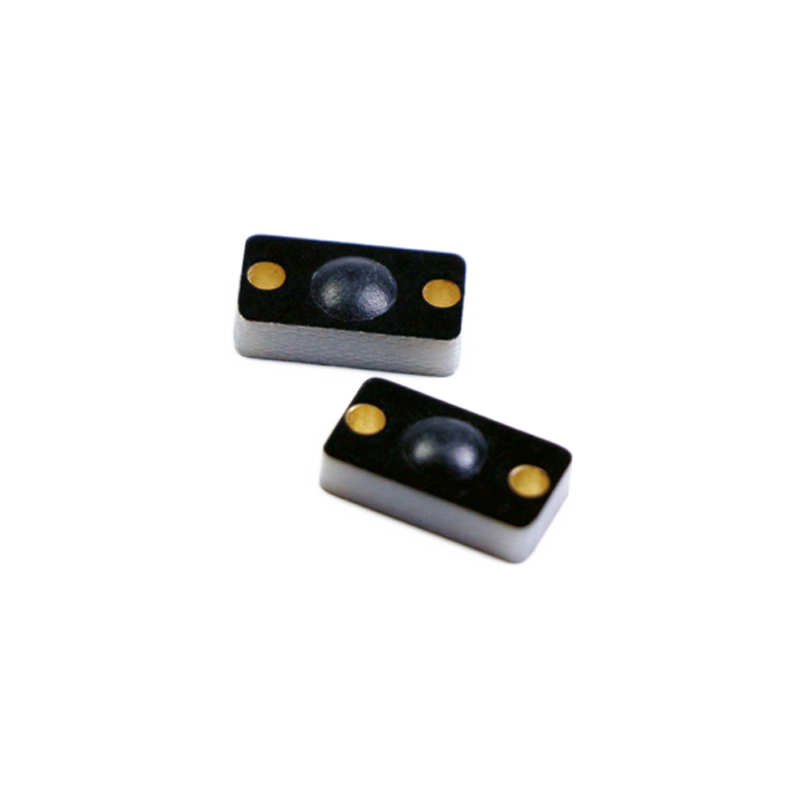
An RFID On Metal Tag is an RFID transponder engineered to operate when attached directly to steel, aluminum or another conductive surface. Its antenna, spacer and housing are tuned for the electromagnetic effect of the metal asset, allowing the tag to receive energy and return data where an ordinary RFID label may become severely detuned or unreadable.
For B2B asset tracking, choosing an on-metal tag is not simply a matter of buying the model with the longest advertised range. Tag dimensions, regional frequency, metal geometry, mounting method, reader setup, temperature, impact, chemicals and the required read zone all affect performance. This guide explains how the technology works, compares the major form factors and provides a practical selection and deployment process for industrial buyers.
What Is an RFID On Metal Tag?
An on-metal RFID tag, also called a metal-mount or anti-metal RFID tag, is designed so that a nearby conductive surface becomes a known part of its RF environment. Most long-range industrial versions use passive UHF, also known as RAIN RFID, although HF, NFC and LF on-metal designs are available for shorter-range applications.
A passive tag has no battery-powered transmitter. The reader sends an electromagnetic signal, the tag antenna collects enough energy to power its chip, and the chip modulates the antenna’s reflection to return encoded information. GS1’s RFID system explanation describes this energy-harvesting and backscatter process. An on-metal tag performs the same protocol exchange, but its antenna system is specifically designed not to collapse when mounted on metal.
The tag can be a thin printable label, a flexible foam-backed label, a hard polymer tag, a PCB transponder, a ceramic component, a screw tag or a rugged device attached with bolts, rivets, welding, cable ties or industrial adhesive. The correct construction depends on the asset and environment, not only on the desired read distance.
Why Standard RFID Labels Fail on Metal
A standard UHF label antenna is tuned for a particular impedance and surrounding material. When it is placed directly against conductive metal, image currents and reflected fields alter the antenna’s electrical characteristics. Its resonance can shift, the impedance match to the chip can deteriorate, and the energy available to power the chip may fall below the activation threshold.
Metal also changes the radiation pattern. It can reflect energy into unexpected directions, create multipath interference and produce strong or weak zones depending on distance and orientation. A label that reads well on corrugated cardboard may therefore stop responding when applied to a metal cabinet, even though the reader and encoded data are unchanged.
This does not mean RFID is unsuitable for metal assets. GS1 notes in its guidance on RFID around metal and water that dedicated tag packaging and antenna designs now support metallic items such as kegs, medical devices, automotive parts and aerospace components. The key is to use a tag designed and tested for the intended surface.
How an On-Metal RFID Tag Works
An RFID On Metal Tag controls the interaction between its antenna and the metal below it. Designs vary, but most use one or more of the following techniques:
- Dielectric or foam spacing: a controlled separation keeps the radiating structure from being shorted or excessively detuned by the surface.
- Ferrite or magnetic isolation: selected HF and NFC designs use ferrite material to redirect magnetic flux away from the conductive backing.
- Ground-plane antenna design: many UHF tags are engineered to operate with the asset metal acting as part of the antenna system.
- Patch, microstrip or specialized dipole geometry: the antenna shape and feed are optimized for the expected ground environment and frequency band.
- Protective encapsulation: a polymer, ceramic or PCB structure maintains the required geometry and shields the electronics from impact or contamination.
Once enough RF energy reaches the tag, the chip powers up and responds according to the supported protocol. In a passive UHF system, the reply is backscattered toward the reader. The metal surface can help form a directional pattern away from the asset, which is why many on-metal tags read best from the exposed face and perform poorly if they are enclosed between metal layers.
The RAIN Alliance’s field lessons for RAIN RFID emphasize that specialized tags should be selected for direct metal mounting and that on-metal tags are normally directional. This is an important installation rule: mounting surface, tag face and reader antenna orientation must be considered together.
Common RFID On-Metal Tag Types
| Tag type | Main advantage | Typical limitation | Common use |
|---|---|---|---|
| Printable on-metal label | Low profile, visual printing and fast adhesive installation | Lower impact protection and printer compatibility must be confirmed | IT assets, cabinets, electronics and indoor equipment |
| Flexible anti-metal label | Conforms to approved curved or irregular metal surfaces | Minimum bend radius and edge lifting require validation | Pipes, cylinders, tools and containers |
| PCB on-metal tag | Compact, stable RF structure with industrial durability | Rigid form and limited printable area | Tools, fixtures, molds and compact machinery |
| Rugged hard tag | Impact, water and outdoor protection | Thicker profile and higher unit cost | Heavy equipment, vehicles, returnable containers and yard assets |
| Ceramic tag | Very small form factor and heat-capable options | Brittleness, specialized mounting and shorter range in tiny sizes | Medical instruments, tooling and embedded identification |
| Screw or bolt tag | Secure mechanical installation | Requires a compatible hole or mounting point | Machinery, infrastructure and permanent assets |
| High-temperature tag | Survives paint lines, curing or sterilization processes | Temperature rating depends on duration and complete assembly | Automotive, foundry, aerospace and industrial processing |
Do not treat these categories as interchangeable. A thin label may be ideal for a server chassis but unsuitable for a foundry carrier. A heavy hard tag may survive outdoor impact but be unnecessarily bulky for a laptop. The best product meets the RF, mechanical and workflow requirements with enough margin for real-world variation.
UHF, HF and NFC Options for Metal Assets
Passive UHF / RAIN RFID
Passive UHF is widely used for industrial inventory and asset tracking because compatible tags can be read without line of sight and multiple EPCs can be inventoried rapidly. Range may extend several meters under suitable conditions, but it depends on tag size, reader power, antenna gain, frequency, orientation and site reflections. UHF on-metal tags are commonly supplied in region-specific or global versions.
HF and NFC
HF and NFC use magnetic near-field coupling and normally operate at shorter distances. An on-metal version commonly adds a ferrite layer behind the coil antenna. NFC can support smartphone interaction, maintenance records, product authentication or tap-based workflows where close, intentional reads are preferred over long-range inventory.
LF
LF tags operate at lower frequencies and can be selected for specific industrial or embedded identification tasks. Their data rates and read distances are generally lower, but the technology may be useful when process requirements favor close and controlled identification.
How Far Can an RFID On Metal Tag Be Read?
There is no universal range for an on-metal tag. A tiny ceramic tag may be designed for close identification, while a larger UHF hard tag can support a much longer read zone. GS1’s RFID read-range guidance explains that passive-tag performance depends on frequency, reader power, interference, antenna directivity, polarization and tag orientation.
For metal assets, additional variables include the metal type, surface area, thickness, curvature, tag position relative to edges, recesses and neighboring conductive structures. A supplier’s quoted range is normally measured with a specific reader, antenna, power level, frequency band and orientation. Treat it as a comparison condition, not a guaranteed production result.
Define a reliable operational zone instead of pursuing the largest number. A tool cabinet may need a controlled handheld read at close range. A returnable metal container passing a dock door may need consistent portal capture at speed. An overly long range can create unwanted reads from adjacent lanes, racks or rooms.
Key Selection Criteria for B2B Buyers
1. Asset material and geometry
Document whether the asset is steel, stainless steel, aluminum, painted metal or a mixed-material assembly. Measure the available mounting area, curvature, edge distance and nearby cavities. Test every important asset variant rather than assuming all metal surfaces behave the same.
2. Required read event
Specify whether the tag must support a handheld audit, fixed portal, workbench verification, automated production station or smartphone tap. Include distance, angle, item speed, tag population, allowable miss rate and areas that must remain unread.
3. Frequency and operating region
Confirm UHF regional tuning or the required HF, NFC or LF standard. For assets moving internationally, review performance across every destination band and make sure reader settings comply with local regulations.
4. Mechanical exposure
Assess impact, vibration, abrasion, pressure washing, immersion, UV, dust and the chance of being struck or peeled. IP ratings are useful, but they do not replace application testing. A tag mounted in a protected recess may outlast a more rugged model exposed on a high-contact edge.
5. Temperature and chemicals
Separate operating, storage and process temperatures. A tag may survive a short peak that it cannot tolerate continuously. Review cleaners, fuels, oils, solvents, acids and alkalis, including their concentration, duration and temperature. The adhesive can fail before the encapsulated transponder.
6. Attachment method
Options include pressure-sensitive adhesive, epoxy, screws, rivets, cable ties, brackets and weldable carriers. The method must maintain the tag’s intended spacing and orientation. Do not drill through or cover an antenna area unless the manufacturer approves that exact configuration.
7. Chip, memory and data model
Define the EPC length, factory-locked TID requirements, user memory, access controls and write operations. Most asset systems store a compact unique identifier on the tag and keep descriptive data, maintenance history and ownership in the enterprise database.
8. Printing and customization
If the tag also needs a barcode, QR code, logo or human-readable asset number, confirm printable surface, marking method and abrasion resistance. Thick on-metal labels may require a printer designed for raised media, or they may be supplied preprinted and encoded.
For a product family intended specifically for direct metal mounting, review On Metal RFID Tags. Confirm dimensions, chip, regional frequency, read test conditions, housing, attachment and environmental ratings with the supplier before placing a production order.
Installation Best Practices
- Choose a repeatable location. Keep the tag away from edges, deep recesses, moving joints and impact areas unless they have been tested.
- Prepare the surface. Remove oil, dust, rust, condensation and loose paint using a method compatible with the adhesive and asset.
- Control orientation. Align the tag antenna with the expected reader polarization or use a reader setup that supports variable presentation.
- Respect curvature. Use flexible products only within their qualified bend radius and do not crease or overlap the antenna.
- Apply full contact pressure. Follow adhesive dwell and curing instructions before exposing the tag to load, cleaning or extreme temperature.
- Protect the read face. Do not cover the tag with a metal plate, foil tape or conductive paint.
- Encode and verify after mounting. Confirm the EPC, printed asset ID and database record, then test the installed tag from required directions.
- Document the standard. Use photographs, placement dimensions and exception rules so installers produce consistent tagged items.
How to Test an On-Metal RFID Deployment
The finished tagged asset is the unit that matters. GS1’s Tagged-Item Performance Protocol provides a structured way to express tagged-item performance requirements and repeatable test methods. Even when a project does not require a formal TIPP grade, the principle is valuable: test the complete item, not a loose tag in isolation.
- Build a representative asset set. Include different metals, sizes, coatings, ages and mounting conditions.
- Use production hardware. Test with the intended reader, antennas, cables, power and software configuration.
- Map orientations. Rotate and move each asset through realistic positions, speeds and operator paths.
- Measure both reads and exclusions. Record successful target reads, misses and unwanted reads from neighboring assets.
- Test environmental stress. Repeat measurements after vibration, cleaning, temperature cycling or outdoor exposure relevant to the project.
- Define acceptance criteria. Set a minimum first-pass success rate, attachment survival requirement and exception workflow.
- Run a time-bounded pilot. Compare inventory time, search time, missing assets, manual corrections and maintenance compliance with the baseline.
Industrial Applications
- Manufacturing: track fixtures, molds, carriers, tools and work-in-process metal components.
- IT and data centers: identify servers, switches, cabinets, laptops and other metal-bodied equipment during audits and maintenance.
- Automotive: manage reusable racks, engine components, tooling, vehicles and parts through production and service.
- Aerospace: support tool control, component records and ground-equipment visibility under strict process requirements.
- Oil, gas and utilities: identify valves, instruments, pipe-associated assets and field equipment when tag approvals match the environment.
- Healthcare: track metal equipment, carts and selected instruments with materials compatible with cleaning and sterilization processes.
- Logistics: monitor metal cages, containers, pallets and other returnable transport items across facilities.
- Construction and rental: improve issue, return, inspection and utilization records for tools and equipment.
HID’s on-metal RFID overview similarly identifies manufacturing, logistics, construction, energy, healthcare, oil and gas and defense as relevant sectors. Application fit still depends on the specific product’s approvals and environmental limits.
Common Deployment Mistakes
- Using a standard label with an improvised spacer: a gap may produce a temporary read, but it is not a qualified on-metal design.
- Buying only by maximum range: range without orientation, zone control and test conditions is not a reliable specification.
- Testing the tag off the asset: the metal item changes antenna tuning and radiation.
- Placing the tag at a metal edge without validation: edge geometry can reshape the read pattern.
- Ignoring the adhesive: excellent RF performance is irrelevant after the tag detaches.
- Assuming on-metal means inside metal: enclosing a passive tag in a conductive box can block the field.
- Using maximum reader power by default: excessive power can create stray reads from adjacent zones.
- Skipping lifecycle tests: initial reads do not prove survival after cleaning, heat, impact or years of service.
Building a Defensible Business Case
The price of the tag is only one part of total deployment cost. Include readers, antennas, installation, encoding, software integration, data cleanup, replacement tags, training and support. Then measure current labor for audits, searching, issue and return, maintenance record entry, loss investigation and compliance reporting.
Use pilot data to calculate value. Relevant metrics include time per inventory cycle, first-pass read rate, false-positive rate, unlocated assets, tool availability, overdue inspections and manual exception hours. A more durable tag with a higher unit price may have a lower lifecycle cost if it avoids repeated replacement and process interruptions.
Frequently Asked Questions
Can a normal RFID label be used on metal?
A normal label may become detuned and lose most or all of its range when attached directly to metal. Use a product specifically designed for the mounting surface and validate it on the real asset.
Does an RFID on-metal tag need a battery?
Most inventory and asset-tracking on-metal tags are passive and need no battery. They collect energy from the reader field and return data by backscatter. Active and battery-assisted products also exist for specialized applications.
Can an on-metal tag work on plastic or cardboard?
Some products support both metal and non-metal surfaces, but others depend on a metal ground plane for correct tuning. Off-metal performance may be shorter or unstable, so each material should be tested.
Can an RFID tag read through metal?
UHF energy does not reliably pass through a solid metal barrier. On-metal tags are normally read from the exposed side. A tag enclosed inside a sealed metal box may need an external antenna, a non-metal window or another design approach.
What is the best attachment method?
The best method depends on surface condition, environmental exposure, service life and whether the tag must be removable. Adhesive suits clean protected assets; screws, rivets, brackets or epoxy can be better for rugged permanent installations.
How should on-metal tag read range be compared?
Compare measurements made at the same frequency, reader power, antenna, orientation and metal test surface. Then validate candidates on representative assets in the production environment.
Are all on-metal tags waterproof and heat resistant?
No. On-metal describes RF compatibility with the mounting surface, not environmental protection. Review the complete tag’s ingress, temperature, chemical, impact and attachment specifications.
Conclusion
An RFID On Metal Tag uses a purpose-built antenna and isolation or ground-plane structure to identify metal assets reliably. Its value comes from matching RF performance, form factor, attachment and durability to a clearly defined business process.
Start with the actual asset and required read event, shortlist products designed for that metal and frequency band, and test the complete tagged item with production hardware. Careful installation and lifecycle validation turn an on-metal tag from a component into dependable operational visibility.
Recommended Product