

Search demand for rfid requirements is growing because more companies now understand that buying RFID labels is not only a label purchase. A successful RFID project needs clear requirements for tag performance, encoding, printing, placement, reader setup, software integration, and quality control. Without those details, even a high-quality RFID label may fail in daily operations.
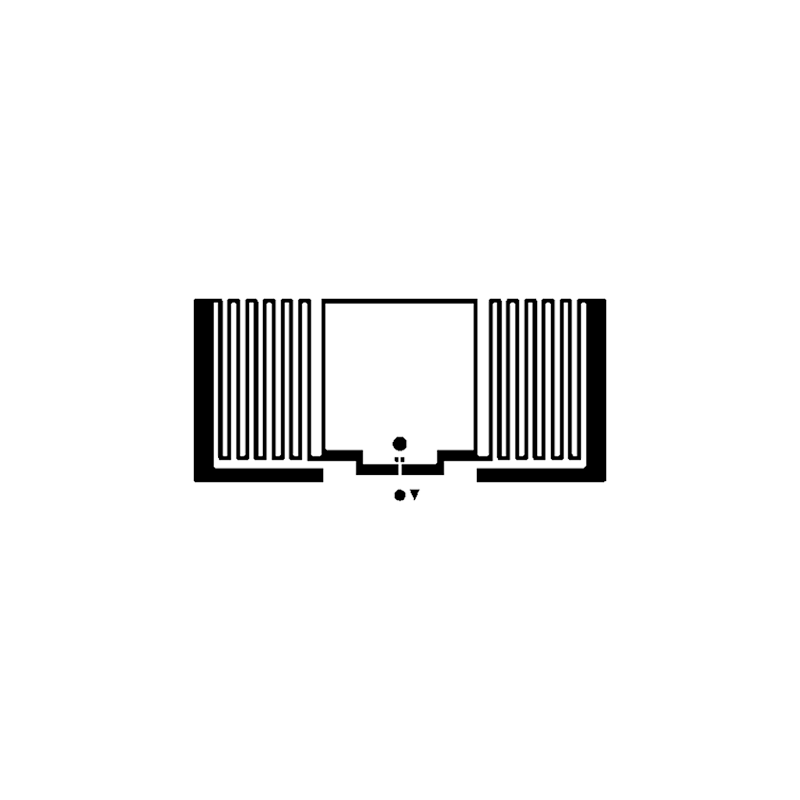
What Are UHF RFID Labels
The topic is closely linked to RFID labels how they work. An RFID label combines a chip, antenna, substrate, face material, adhesive, and often printed human-readable information. The label must communicate with an RFID reader, survive the product lifecycle, fit the packaging or asset surface, and carry data that business software can understand. For B2B buyers, RFID requirements turn that technology into a measurable specification.
What Are RFID Requirements?
RFID requirements are the technical and operational rules that define how an RFID tag or label must perform in a specific project. They answer questions such as which frequency is needed, what read range is required, what item surface will be tagged, what data must be encoded, what print information is required, where the label will be placed, and how the finished label will be tested.
Good requirements prevent vague buying decisions. Instead of asking for a generic RFID label, a buyer can specify a UHF RFID label for cardboard cartons, a washable textile tag for laundry, an on-metal tag for tools, or an HF/NFC label for short-range smartphone interaction. The more clearly the use case is defined, the easier it is to select the right tag and avoid field failures.
For UHF inventory and supply chain applications, What Are UHF RFID Labels can be reviewed when buyers need smart labels that support longer read range, EPC encoding, carton identification, apparel tagging, or warehouse inventory workflows.
RFID Labels How They Work
An RFID label works by using radio waves to exchange data with an RFID reader. In a passive UHF RFID system, the reader antenna sends RF energy into a read zone. The label antenna collects part of that energy and powers the chip for a short moment. The chip then returns its stored identifier to the reader through backscatter communication. The reader decodes the response and sends the data to software.
This process allows RFID labels to be read without line-of-sight scanning. A barcode scanner must see the printed code. An RFID reader can identify qualified labels on cartons, pallets, apparel, assets, tools, or packages even when the printed surface is not directly visible. This is why RFID labels are widely used for inventory accuracy, shipment verification, asset tracking, retail replenishment, and warehouse automation.
Industry sources such as GS1 explain that EPC/RFID standards provide a way to uniquely identify physical objects and encode identifiers into RFID tags. Auburn University RFID Lab’s ARC program has also become a common language for passive UHF RFID inlay requirements across retail, manufacturing, aviation, and transportation. These standards and testing programs help buyers communicate performance expectations more clearly.
Core RFID Label Requirements
Frequency. RFID labels must use the correct frequency for the application. UHF is common for inventory, logistics, apparel, cartons, pallets, and warehouse tracking. HF and NFC are common for cards, library labels, ticketing, authentication, and phone-based interactions. LF is used in some access, animal ID, and industrial applications.
Chip and memory. Buyers should define the chip type, EPC memory, user memory, security features, serialization rules, and data retention needs. The chip must match the reader system and the data model used by the business.
Antenna design. The antenna controls read performance. Size, shape, sensitivity, polarization behavior, and material tuning affect read distance and reliability. A small inlay may fit the product but may not deliver the required range.
Material and adhesive. The label face material and adhesive must match the tagged surface and environment. Cardboard, plastic, glass, textile, metal, curved surfaces, cold-chain packaging, and outdoor assets all require different consideration.
Print and barcode data. Many RFID labels still need printed text, barcode, SKU, UPC, GTIN, serial number, or handling information. The print layout should support both human operations and automated systems.
Encoding quality. Each RFID label should be encoded correctly and uniquely. Duplicate EPCs, unreadable tags, wrong data, or mismatched barcode/RFID data can create serious inventory errors.
Data and Encoding Requirements
Data requirements are often underestimated. RFID is valuable because the tag ID connects a physical item to a digital record. If the EPC or tag memory is not planned correctly, the reader may capture data that software cannot use. Buyers should define whether the label identifies an item, case, pallet, asset, location, returnable container, document, or shipment.
For supply chain projects, GS1’s EPC Tag Data Standard is commonly referenced because it defines EPC data formats and encodings for GS1 identification keys. This helps trading partners share a common data language. For internal projects, companies may still use private identifiers, but they should document the structure, avoid duplicates, and define how IDs are linked to ERP, WMS, MES, POS, or asset systems.
Encoding requirements should include target EPC format, serial number length, lock rules, password rules if needed, data verification method, exception handling, and audit records. For large rollouts, buyers should also define how bad labels are rejected before shipment.
Printing and Label Format Requirements
RFID labels often need to function as both wireless tags and printed logistics labels. This means the label must be printable, scannable, readable, durable, and visually correct. Print requirements may include barcode size, quiet zones, human-readable text, product description, lot number, style number, care information, carton ID, return address, or compliance marks required by a retailer or trading partner.
Buyers should specify label size, roll direction, core size, printer model, ribbon type, gap or black mark, print resolution, adhesive type, liner strength, and environmental exposure. These details matter because a label that reads well electronically can still fail if it jams in the printer, curls on the surface, peels during transport, or prints with poor barcode quality.
Placement Requirements
RFID label placement has a major effect on performance. A label placed near metal, liquid, foil, dense product stacks, or curved edges may read differently than expected. For apparel, placement on a hang tag may be easier than a sewn label. For cartons, placement should avoid corners, folds, tape, and crush zones. For assets, placement should consider user handling, cleaning, impact, and service visibility.
Placement requirements should define the exact location on the product or package, orientation, distance from metal or liquid, minimum spacing from other RFID labels, acceptable tolerance, and whether the label must survive storage, shipping, washing, sterilization, heat, cold, or outdoor exposure. Photos and diagrams are often useful for factory or warehouse teams.
Performance Testing Requirements
RFID performance should be tested on the real item, in the real environment, with the actual reader setup. Laboratory read range is useful, but it cannot fully predict a warehouse portal, retail shelf, conveyor, asset room, or production line. Testing should measure read rate, missed reads, false reads, orientation sensitivity, stacked-item performance, and performance after handling.
For retail programs, ARC specifications from Auburn University RFID Lab are widely used to communicate passive UHF RFID inlay performance requirements by category. In some retailer mandates, approved inlays and validated placement are required before products arrive at stores. Even when ARC is not mandatory, the same mindset is useful: test the RFID label against the actual use case before scaling.
Testing requirements should include the reader model, antenna type, power settings, distance, item orientation, sample size, pass/fail criteria, and reporting format. For mission-critical projects, buyers should also include aging, abrasion, temperature, humidity, chemical, wash, or impact testing.
System Integration Requirements
An RFID label does not create business value by itself. The reader must send clean data to software, and that software must understand what the tag means. Integration requirements should define where RFID reads happen, what event each read creates, how duplicate reads are filtered, how errors are handled, and which system becomes the source of truth.
Common integrations include WMS for warehouse receiving and shipping, ERP for product and inventory master data, POS for retail checkout, MES for production tracking, CMMS for maintenance assets, and middleware for reader management. Without integration planning, RFID data may remain isolated and fail to improve operations.
RFID Requirements by Application
Retail apparel. Requirements often include UHF inlay selection, hang tag format, item-level EPC serialization, barcode match, source tagging, store read performance, and compliance with retailer programs.
Warehouse and logistics. Requirements usually focus on carton or pallet labels, dock door read rate, conveyor read zones, shipment verification, label durability, and integration with WMS or ERP.
Manufacturing. Requirements may include work-in-progress tracking, tool and fixture tags, heat resistance, chemical exposure, production station reads, and MES integration.
Healthcare and laboratories. Requirements often include traceability, clean materials, sample identification, sterilization or cleaning tolerance, small tag size, and controlled reader zones.
Laundry and textiles. Requirements include wash durability, pressure resistance, textile attachment method, bulk read performance, chemical exposure, and lifecycle tracking.
A Practical RFID Requirements Checklist
Before ordering RFID labels, B2B buyers should document the following: target application, frequency, tag form factor, chip type, memory needs, EPC format, printing layout, barcode requirements, label size, adhesive, item surface, placement, read distance, reader model, antenna layout, environmental conditions, sample testing method, pass/fail criteria, software integration, operator workflow, and quality inspection plan.
This checklist does not make the project complicated. It makes the buying process more precise. RFID projects usually fail because assumptions are hidden, not because the technology is impossible. Clear requirements help suppliers recommend the right inlay, label construction, encoding process, and test plan.
Common Mistakes to Avoid
One mistake is buying RFID labels based only on price or advertised read range. A cheaper label that fails on the actual product can increase labor, delay shipments, and reduce confidence in the system. Another mistake is ignoring print and barcode requirements. Many supply chain labels still need printed data for human operators and backup scanning.
A third mistake is skipping encoding verification. If RFID data and printed data do not match, the warehouse or retailer may receive conflicting information. Buyers should also avoid deploying labels before testing placement and reader zones. RFID works best when the tag, reader, antenna, data, and workflow are specified together.
Market Outlook
RFID adoption is moving from experimental pilots to operational requirements. Retailers, logistics networks, manufacturers, healthcare systems, and asset-intensive companies increasingly expect item-level visibility and faster automatic identification. This means suppliers must understand RFID requirements before production begins.
For companies researching rfid requirements, the practical conclusion is simple: define the application first, then specify the label. A strong RFID label requirement covers how the label works, what data it carries, where it is placed, how it is tested, and how the reader data enters business software. That is how RFID labels move from a technical feature to measurable operational value.
FAQ
What are RFID requirements?
RFID requirements are the technical, data, printing, placement, performance, and integration specifications that define how RFID labels or tags must work in a business application.
How do RFID labels work?
RFID labels use a chip and antenna to communicate with an RFID reader through radio waves. Passive labels collect energy from the reader signal and return stored data such as an EPC or unique ID.
What data should be encoded on an RFID label?
The encoded data depends on the application. Many supply chain projects use an EPC linked to product, case, pallet, asset, or location records. The data structure should be documented before mass encoding.
Why is RFID label placement important?
Placement affects read performance. Metal, liquid, corners, folds, dense stacks, and tag orientation can change how well an RFID label communicates with the reader.
Do RFID labels need testing before deployment?
Yes. RFID labels should be tested on real items in real environments with the intended readers and antennas. Testing should measure read rate, missed reads, false reads, durability, and data accuracy.