

In the wave of digital transformation, radio frequency identification (RFID) technology has become a “secret weapon” for small and medium-sized enterprises to enhance efficiency and reduce costs. From RFID retail solutions that revolutionize inventory management to industrial tracking systems, the technology offers versatile applications. However, with RFID tags ranging from a few cents to dozens of dollars and varying functionality in read-write equipment, many business owners face a dilemma: should they choose low-cost solutions for quick implementation or invest in high-performance equipment for long-term stability?
SEIKO, drawing on years of IoT experience, breaks down the core selection logic for RFID systems to help you find the optimal balance between cost-effectiveness and practicality. Whether you’re implementing RFID retail solutions for store inventory or deploying asset tracking in manufacturing.
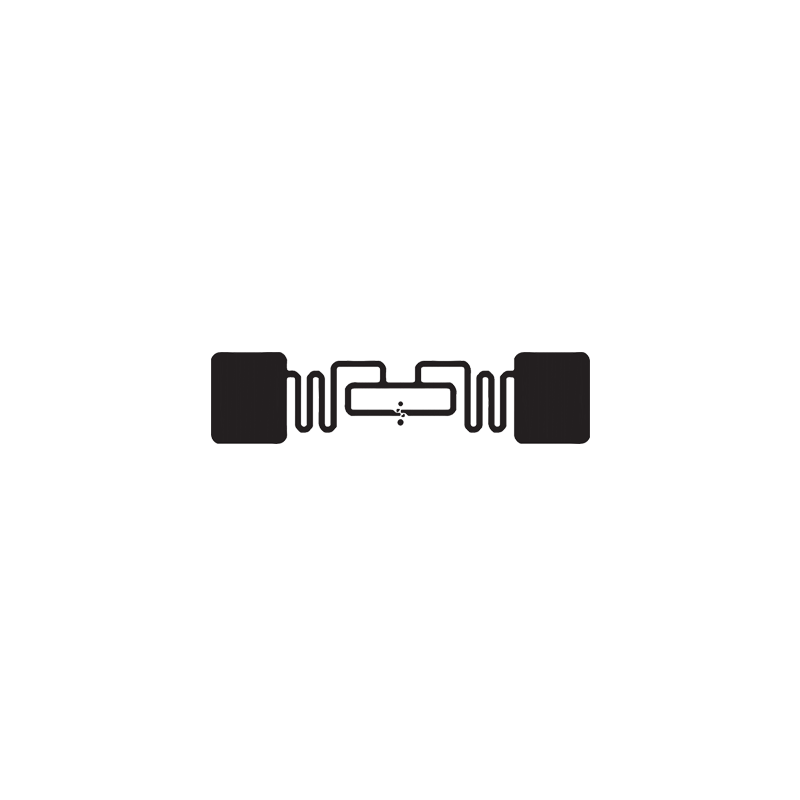
Alien ALN-9662 Short RFID White WET Inlay – High-Performance UHF RFID for Asset Tracking
1. Clear demand: the scene determines the technology route
The core value of RFID technology is “contactless, fast, batch identification”, but the performance requirements of different scenarios vary greatly. For example:
retail inventory: in some non-metallic goods management, need to quickly scan the shelf goods, ordinary self-adhesive ultra-high frequency (UHF) tags (read distance 3-5 meters) can greatly enhance the efficiency of inventory, the unit price of about 0.042USD-0.071USD;
asset management: if you only need to track the location of the office equipment, you need to have the ability of anti-metallic interference, read distance 1-2 meters of the electronic tags can meet the demand, the cost can be about 0.042USD-0.071USD Electronic tags can meet the demand, the cost can be controlled at 0.14-0.42USD or so;
industrial manufacturing: if it involves metal, liquid environment (such as automotive parts tracking), you need to choose anti-interference strong special UHF tags, and have waterproof corrosion-resistant characteristics, the cost may rise to 0.71-1.42USD.
Key principles: first sort out the business pain points, and then match the technical parameters, to avoid the “can not be used” performance of the bill.

2. Calculate the total account: hidden costs should not be ignored
low-cost tags may seem to save money, but may imply additional costs:
RFID tag loss rate: poor quality RFID tags in the humid, high-temperature environment is prone to failure, resulting in repeated purchases;
RFID read-write equipment compatibility: some low-cost tags need to be matched with a specific reader, the late upgrade of the equipment cost surge;
data accuracy: omission, misreading the rate is high will offset the efficiency advantages of RFID, and even trigger management loopholes. RFID efficiency advantages, and even lead to management loopholes.

Bluetooth RFID Reader
3. phased investment: start from a small-scale pilot
SMEs have limited resources, it is recommended that the “agile iteration” strategy:
Single-point breakthrough: choose 1-2 core links (such as warehouse access, tool management) for a small pilot, to validate the actual effect of RFID;
modular expansion: the priority of the deployment of the basic RFID reading and writing equipment (such as RFID handheld terminals), followed by the addition of fixed RFID access control, sensors, etc.;
cloud platform empowerment: choose to support the SaaS model of RFID management system, pay-as-you-go, to avoid excessive one-time investment.
There is no optimal solution, only the most suitable for the charm of RFID technology lies in its flexibility – it can be a few cents of the “paper sticker tags”, but also integrated AI algorithms RFID intelligent terminal. SMEs do not need to pursue the “one-step”, but should be around the actual demand, budget ceiling, expansion of space three points, to find a solution to 80% of the problem of “affordable program”. After all, the ultimate goal of technology investment is not to pile up hardware, but to make every penny is transformed into a visible efficiency gains.
4. Conclusion
For small and medium-sized enterprises (SMEs), RFID technology offers a powerful way to boost efficiency and cut costs—but only if implemented strategically. The key is to avoid overspending on unnecessary high-end solutions while ensuring performance meets real business needs.
Start by clearly defining your use case—whether it’s retail inventory, asset tracking, or industrial logistics—and choose tags and readers that match your environment (e.g., anti-metal tags for manufacturing). Remember, low upfront costs can lead to hidden expenses like tag failures or compatibility issues, so calculate total ROI, not just initial price.
A phased approach works best: begin with a small-scale pilot, validate results, then scale up with modular upgrades. Cloud-based RFID SaaS solutions help minimize upfront investment while allowing flexible expansion.
Ultimately, the best RFID solution isn’t the most advanced—it’s the one that solves 80% of your problems at a reasonable cost. By aligning technology with actual needs, SMEs can turn RFID into a cost-effective efficiency booster, not just another IT expense.
Smart adoption beats expensive perfection—start small, think long-term, and scale wisely.