

Managing sheep is different from managing many other types of livestock. Animals often move as a flock, visual ear-tag numbers can be difficult to read through wool, and important procedures such as vaccination, weighing and breeding checks may involve hundreds of animals within a short period.
RFID Sheep Ear Tags give every sheep a unique electronic identity. When used with compatible RFID readers, these tags help farmers identify animals more efficiently and connect each sheep with its corresponding production, health and movement records.
1.Why Sheep Farms Need Individual Electronic Identification
A flock may appear to be managed as one group, but many important decisions must be made at the individual-animal level.
Farmers may need to determine:
- Which lamb belongs to which ewe
- Which sheep has received a vaccination
- Which animals require additional treatment
- Which ewes have the best breeding performance
- Which lambs are gaining weight as expected
- Which sheep are being moved or sold
- Whether an animal has already passed through a processing point
Visual tags can support these tasks, but employees must usually approach the sheep and read the printed number. Dirt, movement, fading and wool around the ear can make this process slower.
RFID Sheep Ear Tags allow the identification number to be captured electronically without manually copying every visible number.
2.How RFID Sheep Ear Tags Work
An electronic sheep ear tag contains an RFID chip and antenna inside a durable tag housing. The chip carries a unique identification code.
When the tag enters the operating range of a compatible reader, the reader captures this code and transfers it to the connected device or management platform.
The RFID number can be associated with information such as:
- Animal number
- Date of birth
- Breed and sex
- Ewe and sire information
- Weight history
- Vaccination records
- Medical treatments
- Breeding history
- Current flock or location
- Movement and sale records
Most livestock RFID ear tags are passive, meaning they operate without an internal battery. The reader provides the energy needed to activate the tag during identification.
3.Managing Sheep from Birth to Movement
One of the main advantages of RFID identification is the ability to maintain a consistent record throughout the animal’s lifecycle.
Lamb Registration
A unique RFID Sheep Ear Tag can be assigned when a lamb is registered. The electronic number can then be linked with its birth date, breed, sex, mother and other essential information.
Accurate registration at the beginning helps prevent confusion later, especially when many lambs are born during the same season.
Weight and Growth Monitoring
When sheep pass through a weighing station, the RFID reader can identify each animal before its weight is recorded. This reduces the need to enter animal numbers manually.
Comparing weight records over time can help farmers evaluate growth performance and identify animals that may require additional attention.
Health and Treatment Records
During vaccination, parasite control or veterinary treatment, the electronic ear tag can be read before the procedure is recorded.
RFID does not diagnose a health condition. Its role is to identify the correct animal so that treatment information can be associated with the correct record.
Breeding Management
RFID Sheep Ear Tags can support the organization of mating, pregnancy, lambing and parentage records. Farms can use this information to review reproductive performance and make better breeding decisions.
Movement and Sale
Electronic identification can also support records when sheep are transferred between fields, farms, markets or processing locations. Each movement can be connected to the individual animal’s identification code.
LF and UHF RFID Sheep Ear Tags
The appropriate RFID frequency depends on the required reading process.
LF Electronic Sheep Ear Tags
LF RFID is widely used for close-range livestock identification. The operator brings a handheld reader near the animal’s ear, or the sheep passes close to a fixed reader.
LF ear tags are suitable for:
- Individual animal registration
- Veterinary treatment
- Breeding procedures
- Close-range identification
- Weighing and handling chutes
Projects based on official animal-identification requirements may use 134.2 kHz technology and ISO 11784/11785 protocols. The required standard should always be confirmed for the destination market.
UHF RFID Sheep Ear Tags
UHF RFID supports longer reading distances and can identify multiple tagged sheep within a controlled reading zone.
Possible applications include:
- Flock inventory
- Automatic gate identification
- Entry and exit monitoring
- Sorting areas
- Loading and transportation
- Group movement records
UHF performance depends on tag orientation, antenna placement, reader settings, animal density and the surrounding environment. A sample test in the actual operating area is recommended before mass deployment.
4.Handheld Readers or Fixed Readers?
Both reader types can be used in sheep-management projects.
Handheld RFID Readers
Handheld readers are portable and suitable for workers who need to move between barns, fields and handling areas. They are useful for individual checks, veterinary procedures and small-flock inventory.
Fixed RFID Readers
Fixed readers can be installed at gates, raceways, weighing stations or sorting points. They allow sheep to be identified as they move through a controlled area.
The reading zone should be carefully adjusted. If it is too wide, the system may collect tags from animals waiting outside the intended area. Controlled coverage is generally more important than maximum reading distance.
Advantages of RFID Sheep Ear Tags
Faster Flock Identification
RFID readers capture electronic identification codes more quickly than manually copying visible numbers, particularly when processing large groups of sheep.
Fewer Manual Entry Errors
Electronic data collection reduces mistakes caused by incorrectly reading or typing an ear-tag number.
Better Record Continuity
The same unique RFID identity can connect information collected during lambing, weighing, treatment, breeding and movement.
Easier Inventory Management
RFID technology can help farms verify which animals are present in a particular flock or location.
Improved Traceability
Individual electronic identities can support movement history and livestock traceability, subject to the farm’s record system and local regulatory requirements.
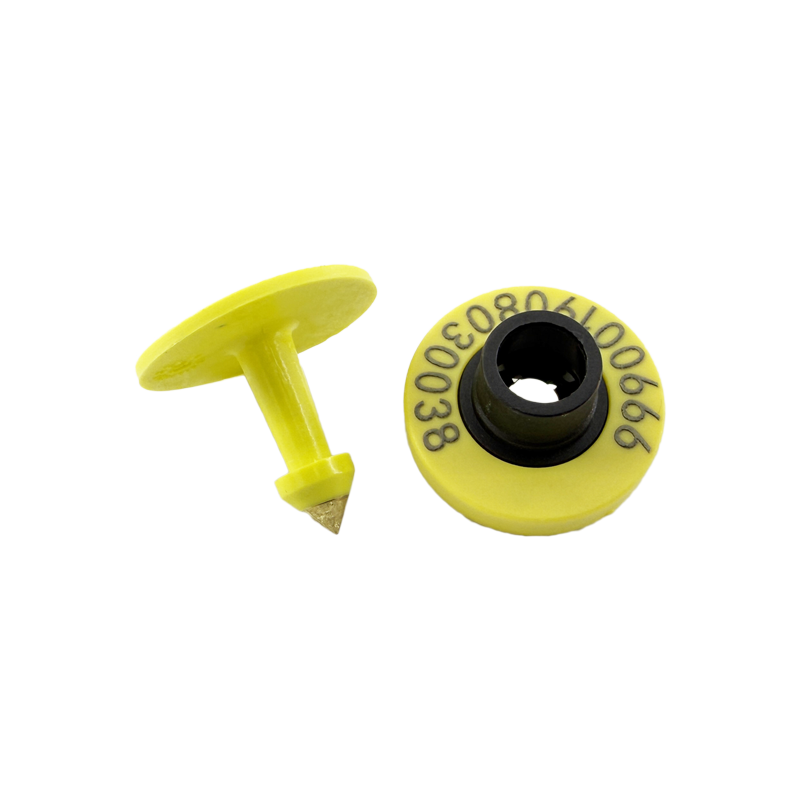
Custom RFID Ear Tag
5.How to Select RFID Sheep Ear Tags
Before ordering, the buyer should confirm several details.
Tag Size and Weight
Sheep and lambs generally require smaller, lighter tags than adult cattle. The product should match the animal’s age, ear size and long-term use requirements.
Tag Material
The tag should withstand rain, mud, sunlight and normal outdoor farm conditions. Flexible edges and a suitable attachment structure are also important.
RFID Frequency and Protocol
The selected ear tag must use the same frequency and communication protocol as the RFID reader.
Visible Identification
A printed serial number, barcode, farm code or other visible information can provide a backup identification method when an RFID reader is unavailable.
Data Encoding
The farm or integrator should define the RFID numbering structure before production. Each electronic code must be unique and correctly matched with the printed information.
Local Regulations
Livestock-identification requirements vary between countries and regions. Buyers should confirm whether specific frequencies, numbering formats, colors, tag designs or certifications are required.
Testing Before Large-Scale Deployment
RFID Sheep Ear Tags should be tested under real operating conditions rather than only on a desk.
A useful test should include:
- Tags installed on actual sheep
- Moving and stationary animals
- Single-animal and group identification
- Intended handheld or fixed readers
- Metal gates and fencing
- Different tag orientations
- Expected reading distances
- Realistic animal spacing
- Wet and dirty farm conditions
A small pilot flock can help determine whether adjustments are needed before the system is expanded.
6.RFID Hardware for Sheep Identification Projects
SEIKO RFID TECHNOLOGY LTD. supplies hardware for livestock-identification projects, including RFID sheep ear tags, handheld readers, fixed readers and reader antennas.
Available customization may include:
- LF or UHF RFID options
- Different ear-tag sizes and colors
- Unique RFID data encoding
- Serial-number printing
- Barcode or QR-code printing
- Customized logo printing
- SDK, API and communication protocol support
Software development and livestock-management platforms can be completed by the customer or system integrator using the available hardware interfaces.
7.Conclusion
RFID Sheep Ear Tags provide every animal with a unique electronic identity that can remain connected to its records from lambing through breeding, treatment, movement and sale.
However, reliable flock identification depends on selecting the correct tag size, RFID frequency, reader and installation method. Farms should define their identification process, test samples under real conditions and begin with a pilot group before full deployment.
For product selection, provide the required frequency, sheep age, estimated quantity, printing requirements, expected reading distance and reader type so that suitable RFID hardware can be recommended.