

RFID technology is widely used in express logistics, packaging, and warehouse management. By attaching RFID tags to each item—such as goods, pallets, reusable containers, and skid boxes—they are assigned unique identification codes. These items are then managed and tracked at various warehouse operation points using RFID readers. RFID technology offers the advantage of rapid identification over long distances, while the uniqueness of RFID tags enables serial number management, serving to prevent counterfeiting and facilitate traceability.
RFID Shipping Solutions build upon these core capabilities to optimize outbound logistics, ensuring that every tagged item is accurately verified and routed during the shipping process. A typical solution involves integrating Smart WMS (Smart Warehouse Management System) with RFID technology for the warehousing and traceability management of pallet boxes. This solution has been implemented across multiple industries, including those utilizing pallet boxes, shipping containers, and returnable containers.
1. Market Demand Analysis
These customers primarily focus on warehouse operations management and traceability management. They may operate multiple warehouses, including main warehouses and virtual warehouses. Virtual warehouses can be managed either by the customers themselves or by third-party organizations. Customers need to use RFID technology to track the flow of goods across various business processes and warehouses, and generate corresponding statistical and analytical reports. Key requirements include:
- RFID-based warehouse operations management integrated with inventory receipt and shipment processes, ensuring seamless integration with existing warehouse operations.
- Multi-warehouse management, including main warehouses and virtual warehouses (also known as customer warehouses), which play a critical role in the flow of goods.
- Management of both inner and outer packaging for items such as pallet boxes and shipping containers.
- Integration with the ERP system to enable data exchange, including data interaction with the ERP system within the container management process.
- Tracking of losses and wastage during the flow of goods, and recording of the entire lifecycle.
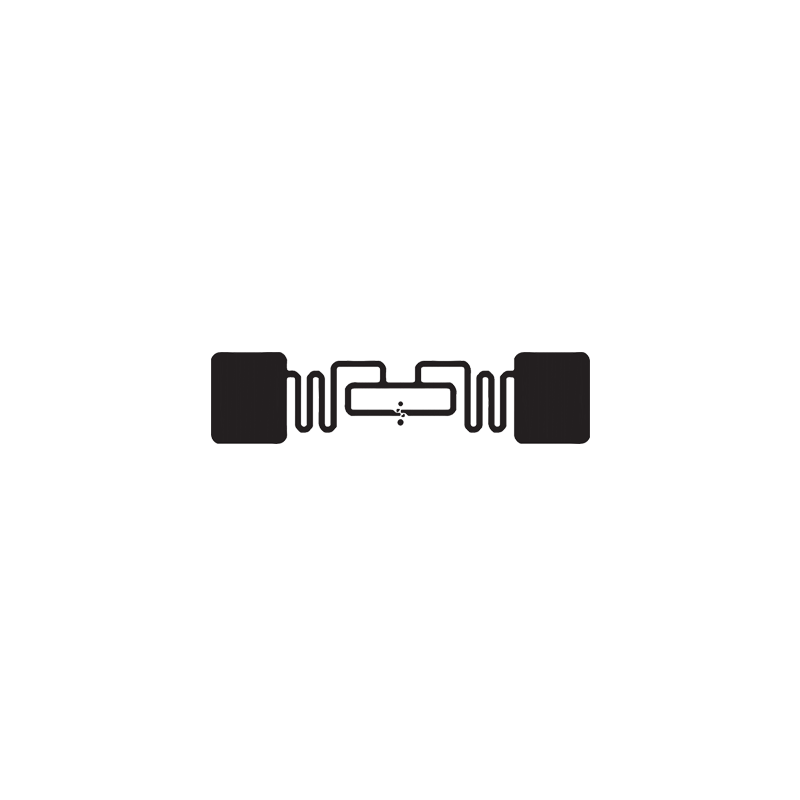
Alien ALN-9662 Short RFID White WET Inlay – High-Performance UHF RFID for Asset Tracking
2.Solutions
2.1RFID Tag Deployment: Realizing “Unique Identity” Identification for Goods
- Pallet-level Tag Binding: Pre-install UHF (Ultra High Frequency) RFID electronic tags on each storage pallet. Write all cargo information borne by the pallet (such as SKU, batch number, quantity, destination, validity period, etc.) into the tag at one time. This replaces the traditional case-by-case barcode method, realizing “one pallet, one code” and synchronous information of the entire pallet, thus completely avoiding missing scanning and wrong scanning.
- Tag Feature Adaptation: Select industrial-grade RFID tags with high temperature resistance, anti-interference, water resistance and fall resistance. These tags are suitable for complex scenarios in warehousing, transportation, sorting and other multi-scenarios, ensuring stable readability of tags during forklift handling, shelf storage and conveyor line transportation.
2.2Automated Sorting Production Line: Improving Sorting Efficiency and Accuracy
- RFID Automatic Identification on Production Line: Deploy fixed RFID readers and antennas at key nodes of the sorting production line. When pallets loaded with goods pass by, the system automatically reads tag information in batches without manual intervention, achieving 100% coverage of cargo information verification.
- Intelligent Sorting Logic: The system automatically drives the sorting device according to the destination and order information in the tags to divert pallets to the corresponding delivery ports accurately, realizing “cargo to port, automatic diversion”. The sorting efficiency is increased by 5-10 times compared with manual operation, and the error rate is reduced to below 0.1%.
- Closed-loop Management of Empty Pallets: Set up empty pallet recycling channels at the end of the production line. The system identifies the status of empty pallets through RFID and automatically classifies them into the empty pallet area, realizing the whole life cycle tracking of pallets and avoiding pallet loss and idle waste.
2.3 Intelligent Warehouse Inbound and Outbound Management: Realizing “Transparent” Control of the Warehouse
- Batch Verification for Inbound and Outbound: Deploy buried antennas and mobile reading equipment at the warehouse entrances and exits. When forklifts transport the entire pallet of goods in and out of the warehouse, the system automatically reads the pallet tag information and compares it with the orders in the WMS (Warehouse Management System) in real time to complete inbound acceptance and outbound review. It can verify the entire pallet in 1 second, replacing manual counting case by case.
- Full-process Data Synchronization: RFID data of all links including cargo sorting, inbound, storage and outbound are synchronized to the WMS system in real time. This realizes visual traceability of cargo location, status and flow direction, enabling managers to grasp inventory dynamics and order progress in real time.
- Digital Forklift Operation: Equip forklifts with RFID reading terminals. When forklifts are operating, they automatically read pallet tags and update the storage location of goods synchronously, realizing “real-time account update with cargo movement”. This completely solves the problems of lagging manual entry and inconsistent accounts and actual goods.
3. Warehouse Operations Management
Warehouse operations management involves two main modules of the merchandise logistics tracking and warehouse management system: hardware configuration and system functions.
The hardware configuration module consists of three submodules: serial port selection, baud rate settings, and reader power settings. The serial port selection submodule is used to select the serial port for communication with the reader; the baud rate settings submodule is used to set the data transmission rate of the serial port; and the reader power settings submodule is used to adjust the reader’s operating power.
The System Functions module comprises six sub-modules: Product Identification, Logistics Tracking, Product Receiving, Inventory Counting, Product Shipping, and Sales Records. The Product Identification module is used to pre-enter RFID information and link it to packaging materials; the Logistics Tracking module tracks product logistics information, including records of goods entering and leaving the warehouse and current location data; the Product Receiving module records product receiving operations, including scanning RFID tags and updating inventory information; The inventory count module is used to conduct inventory counts of goods in the warehouse, comparing actual inventory with the inventory information recorded in the system; the goods outbound module is used to record goods outbound operations, including scanning RFID tags and updating inventory information; the sales record module is used to record sales data, including sales quantity and sales time.
Within the system, product RFID information can be entered in advance and linked to packaging materials. For example, Goods A and Goods B can be combined into a composite item C, and a barcode can be defined for composite item C. A default quantity can be set for composite item C to indicate the number of goods it can hold. By linking the RFID information in the system to packaging materials (outer packaging), the management and tracking of composite items can be achieved.
4. RFID Technology Implementation Process
4.1 RFID Card Issuance Management
Desktop RFID readers can be used for card issuance and to initialize RFID tags; during operations, binding is performed using handheld RFID terminals.
4.2 RFID Tag Application
The number of RFID tags to be applied is determined based on actual requirements. To facilitate reading and improve efficiency, RFID tags can be applied to different surfaces. During operations, 1 to 4 RFID tags can be assigned depending on the specific scenario.
4.3 RFID Reading and Writing
For various warehouse operations, mobile RFID handheld terminals can be used for data collection, including on-site tasks such as receiving, picking, and verification. These handheld devices run Android-based applications, offering significant scalability and enabling convenient application across various operational scenarios.
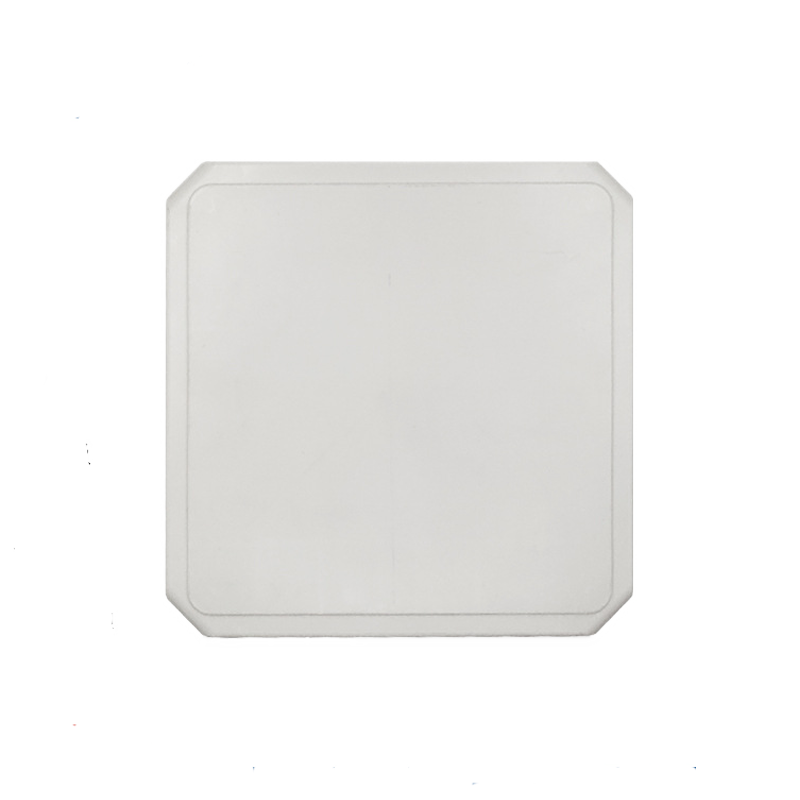

UHF Handheld Reader
4.4 RFID Power Settings
In mobile applications, the detection and sensitivity settings (ranging from 5 dB to 30 dB) of the handheld device can be linked to different operational modes (such as putaway, shelving, picking, de-shelving, and inventory counting), and manual adjustments are supported.
4.5 Virtual Warehouse (Customer Warehouse) Flow Management
Virtual warehouse (customer warehouse) flow management is a logistics tracking and warehousing management system implemented using RFID technology. This system integrates the C# programming language, RFID technology, and a database. It uses UHF RFID readers to capture information on incoming and outgoing items and stores the data in the database, allowing users to quickly and in real-time monitor the inventory status of purchased goods.
The logistics tracking and warehouse management system primarily consists of the following components: RFID tags, UHF RFID readers, a data management system, and a host computer. UHF RFID readers and antennas are installed on warehouse doors, primarily responsible for scanning and reading RFID tags on goods and transmitting the information back to the management system. When a large number of tags simultaneously enter the reader’s detection range, the reader can read information from multiple tags at once, enabling rapid recording of item entries and exits. Whenever an item arrives at a logistics transfer center, the system records its location information. When the item reaches the next transfer center, the system can track the transfer centers it has passed through and its route, providing a more intuitive understanding of the entire logistics process.
5. Receiving Process
- Create a Receiving Plan: Based on demand, create a receiving plan using the outbound documents from the main warehouse or the previous warehouse as a reference.
- Receiving Task: Use an RFID handheld terminal to process the receipt of goods via the PC interface or on-site operations. Scan the RFID tags on the outer packaging to retrieve product information, and manually enter details for other items (such as inner packaging materials).
- Putaway Management: Use an RFID handheld scanner to scan the RFID tags on the goods to identify their information. If the location is the origin warehouse, perform the putaway task; if it is a virtual transit warehouse, the goods are automatically put away upon receipt.
6. Outbound Process
- Create an outbound plan: Select and combine goods for outbound shipment based on demand. For combined shipments, Items A and B will be automatically separated during picking.
- Picking: Perform picking operations based on the RFID tags on the outer packaging. Use an RFID handheld terminal to scan the goods’ RFID tags, while manually picking the inner packaging components.
- Verification: Perform verification based on the RFID tags on the outer packaging. Use an RFID handheld terminal to scan the goods’ RFID tags while manually verifying the inner packaging.
- Upon completion of the outbound process, generate a receiving slip for the next transit warehouse.
7. Loss Analysis
- Traceability Management: Track goods’ movement through RFID records and generate corresponding statistical reports. Real-time recording and statistical analysis of loss incidents provide a basis for managerial decision-making. This allows identification of which warehouse has the highest loss rate and enables review of loss incidents involving RFID-tagged goods.
- RFID Application Reports: These reports aggregate information from various nodes, allowing users to track goods’ movement, current warehouse locations, and status via RFID records, while also providing comprehensive log query functions.
RFID technology offers extensive application value in logistics tracking and warehouse management systems. Over time, RFID technology is expected to replace barcode scanning technology and become even more deeply integrated into our daily lives. This system is suitable for companies and logistics carriers that require large-scale storage of goods.