

In today’s competitive retail landscape, RFID store solutions empower businesses to overcome operational challenges with cutting-edge automation. By integrating UHF RFID technology, stores gain real-time visibility into inventory, accelerate checkout speeds, and reduce labor costs—transforming traditional retail into a seamless, data-driven experience. From smart inventory management to frictionless payments, RFID delivers accuracy, speed, and scalability for modern retailers.
1.RFID technology introduction
RFID basic principles: radio frequency identification (RFID technology) is a non-contact automatic identification technology, through the emission of radio frequency signals to automatically identify the target object, and access to tag information data.

1.1 Tags
Each tag has a unique electronic code, attached to the object to identify the target object, used to write commodity information to achieve commodity tracking.
1.2 Read-write
read tag information equipment, can be designed for handheld RFID read-write or fixed read-write. Used to read and write the information entered.
1.3 Application software system
Is the application layer software, mainly to collect the data for further processing, and for people to use.
1.4 Hardware products

UHF RFID Integrated Reader Built in 9 dBi Antenna

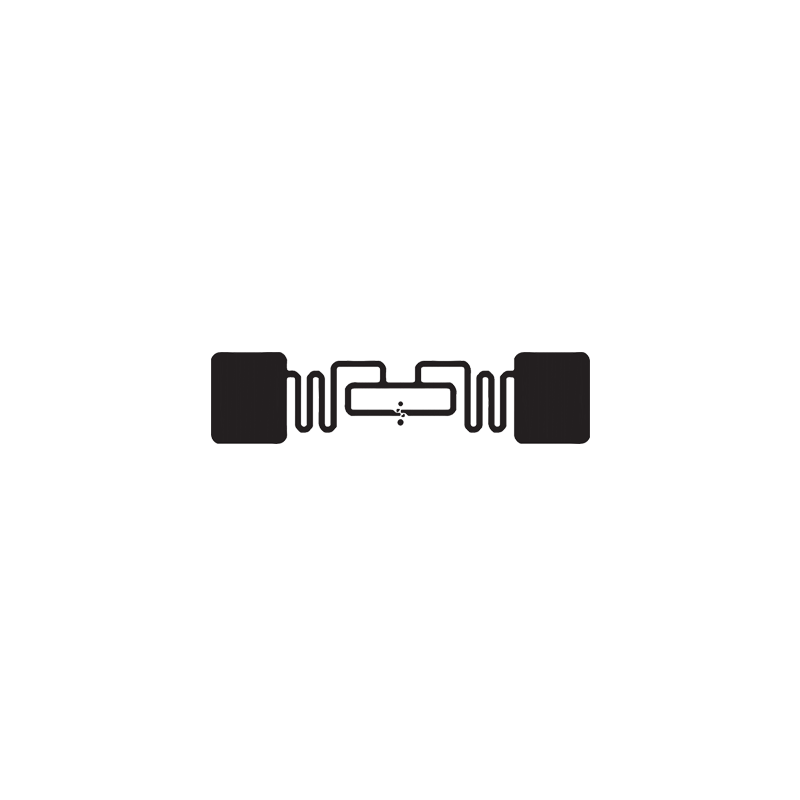
Alien ALN-9662 Short RFID White WET Inlay – High-Performance UHF RFID for Asset Tracking

RFID Single piece Hangtags For the Garment Retail
2. System architecture

System Docking Process

System docking process
3. Retail Pain Points in Stores
3.1 Difficulty in commodity management
There are many types of commodities in stores, and it is difficult to accurately grasp the location, quantity and status of commodities in real time, which can easily lead to the loss and misplacement of commodities.
3.2 Poor customer experience
Customers spend a lot of time in the process of searching for goods, queuing up for checkout, etc., which affects shopping satisfaction.
3.3 High labor cost
A large number of employees are needed for merchandise sorting, inventory, cashiering, etc., which increases the operation cost.
4. Cashiering pain points
4.1 Long queuing time
Traditional cashiering methods are less efficient, customers need to wait in line for a long time to check out during peak hours, which can easily lead to dissatisfaction.
4.2 Human error
cashiers may have misoperation, such as omission of commodity scanning, price input error, etc., leading to transaction disputes and losses.
5. Inventory inventory pain points
5.1 Time-consuming and laborious
traditional inventory counting requires manual counting of goods one by one, which is a heavy workload and inefficient.
5.2 Accuracy is difficult to ensure
manual inventory is prone to leakage, wrong inventory, etc., affecting the accuracy of inventory data.
6. Inventory pain points
6.1 Low efficiency of receiving goods
you need to check the information of goods one by one when entering the warehouse, which is a cumbersome and time-consuming process.
6.2 Inaccurate information
manual recording may lead to incorrect commodity information, affecting the subsequent inventory management and sales.
7. RFID Solutions

7.1 Commodity management
RFID tags are affixed to each piece of merchandise, and real-time access to merchandise information, including location, quantity, status, etc., is obtained through read-write, realizing accurate management of merchandise.
7.2 Customer experience enhancement
Utilizing RFID technology to realize quick finding of goods, customers can quickly locate the position of the required goods through the intelligent terminal, reducing the search time. At the same time, set up a fast checkout channel, through the RFID reader to quickly read the commodity information, realize fast checkout, reduce queuing time.
7.3 Labor cost savings
With RFID technology to achieve automated commodity management and inventory, reduce dependence on manpower and reduce operating costs.
For the solution to the cashier’s pain points:
- Fast checkout: install RFID read-write at the checkout counter, when the customer passes the shopping cart or basket through the read-write, it can read all the commodity information instantly, which greatly improves the checkout speed.
- Intelligent error correction: through the connection with the background system, automatically proofread the price and quantity of goods, reducing the occurrence of human error.
- Shopping process:
Step 1: Sweep the commodity barcode
Step 2: Sweep the cell phone payment code / face scanning payment
Step 3: out of the shopping ticket
Step 4: demagnetization of goods

In terms of inventory counting:
- Fast and accurate inventory: Using handheld RFID readers to quickly scan the goods in the store, the system automatically counts the inventory quantity, greatly reducing inventory time and improving accuracy.
- Real-time inventory monitoring: By obtaining inventory data in real time, inventory anomalies can be detected in a timely manner, which facilitates timely replenishment or adjustment strategies.
For the solution to the inventory pain point:
- Efficient Receiving: When warehousing, read the tag information of a large number of commodities at one time through RFID readers to quickly complete the receiving process and improve efficiency.
- Accurate records: ensure the accuracy of commodity information, to avoid the impact of manual recording errors on subsequent operations.
7.Practical Operation
- System construction: deploy RFID system, including readers, tags, servers and related software. Ensure that the reader covers all areas of the store, tags and commodities are accurately bound.
- Employee training: RFID technology and operation process training for store employees to enable them to master the relevant skills.
- Commodity labeling: RFID tags are affixed to all commodities and commodity information is entered into the system.
- Daily operation: Operate according to the set procedures in cashiering, inventory counting and warehousing. Through real-time monitoring of system data, timely detection of problems and adjustments to optimize.