

RFID Tag Card technology represents a pivotal innovation in wireless identification and access control systems. Essentially, an RFID Tag Card is a sleek, credit-card-sized device that contains a tiny integrated circuit and an antenna. This assembly allows it to transmit stored data, such as a unique identification number, wirelessly to a reader via radio waves, without the need for physical contact or direct line-of-sight. This core functionality makes the ubiquitous RFID Tag Card an indispensable tool for a vast array of modern applications, from securing office buildings and facilitating cashless payments to streamlining public transportation and managing inventory logistics.
1.Magnetic card
Magnetic cards use liquid materials or magnetic strips as information carriers, and the liquid magnetic material is coated on the card or a magnetic strip with a width of about 6-14mm is pressed onto the card. There are three tracks on the magnetic stripe, the first two tracks are read-only tracks, and the third track is a read-write track, such as recording book balances. The information reading and writing of magnetic cards is relatively simple, easy to use, and low-cost, which has led to their early development and entry into multiple application fields, such as prepaid phone cards, toll cards, appointment cards, tickets, savings cards, credit cards, etc. However, compared with the later developed IC cards, it has the following shortcomings: small information storage capacity, easy reading and forgery of magnetic stripes, poor confidentiality, requiring support from computer networks or central databases, etc.
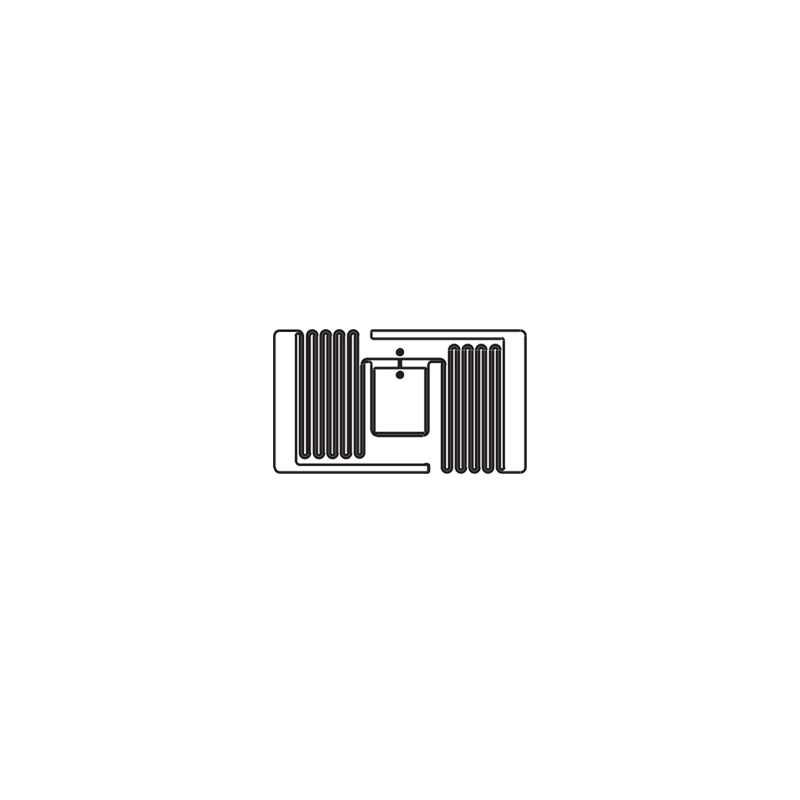
Advanced RFID Tags for Drug Tracking – Secure Pharmaceutical Inventory and Compliance
2.Barcode card
A barcode card is a barcode composed of a set of regularly arranged bars, spaces, and their corresponding characters to record information. Common barcode symbols are printed with black bars and white spaces. When light shines on the barcode symbol, the black bars and white spaces produce a strong contrast, thus utilizing the different reflectivity of the bars and spaces to read information.
Barcode cards are divided into two types: one-dimensional codes and two-dimensional codes. One dimensional codes are commonly used, such as the barcode on the outer packaging of daily goods. It has a small information storage capacity and can only store one code, which can be used to retrieve data from the computer network. QR codes have been developed in recent years, which can store more information in limited space, including text, images, fingerprints, signatures, etc., and can be used independently of computers.
Barcode card production is simple, ordinary barcodes can be printed or copied according to certain requirements, and the cost is relatively low, but its reading equipment (especially QR code reading equipment) is relatively expensive. Unlike magnetic cards and IC cards, the information in barcode cards cannot be rewritten. In addition, its poor security performance and inconsistent standards limit its application.
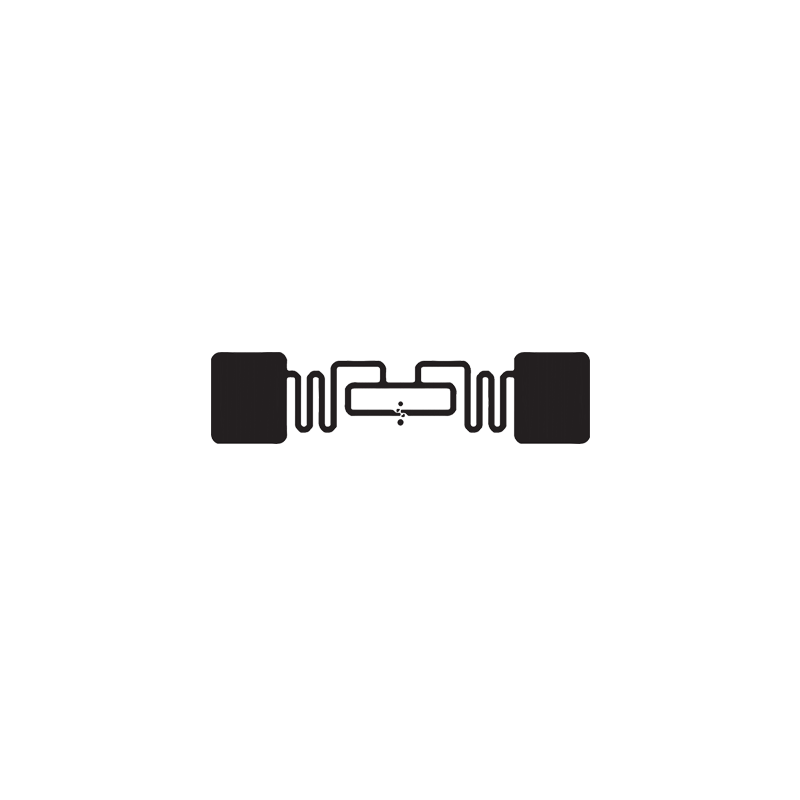
Alien ALN-9662 Short RFID White WET Inlay – High-Performance UHF RFID for Asset Tracking
3.IC card (Integrated Circuit Card)
The full name of IC card is Integrated Circuit card, which embeds integrated circuit chips on plastic substrates and utilizes the storable characteristics of integrated circuits to store, read, and modify information on the chips.
The concept of IC card was proposed in the early 1970s, and over the past 40 years, it has been widely used in many fields such as finance, transportation, communication, healthcare, and identity verification.
According to the form of data transmission with the outside world, IC cards have two types: contact and non-contact. The metal contacts of the contact IC card chip are exposed and visible to the naked eye. Through the contacts on the chip, information can be exchanged with the outside world for reading and writing. Currently, most IC cards in use belong to this type. The chips of non-contact IC are all enclosed in the card base, with no exposed parts, and exchange information through induction of radio waves or electromagnetic fields. They are usually used in situations such as access control, bus fare collection, subway fare collection, etc. that require a quick pass.
According to the different integrated circuits inside the card, IC cards can be divided into memory cards, logic encryption cards, and CPU cards (smart cards). Memory cards are suitable for systems that only use IC cards as data transfer media or have software encryption without worrying about tampering, and have a lower price; Logical encryption cards control card reading and writing by setting a password area on the card, with a moderate price and currently the largest number of applications; The integrated circuit of the CPU card contains a microprocessor, which can perform data calculation and information processing on its own. At the same time, it can use random numbers and keys for mutual verification between the card and the device, with high security. Although the price is slightly higher, the application prospects are still promising. At present, the financial card planned by the People’s Bank of China, the organization code card planned by the National Bureau of Quality and Technical Supervision, and the social security card planned by the Ministry of Labor and Social Security are all contact CPU cards.
IC cards have many advantages that cannot be compared to magnetic cards and barcode cards: large storage capacity, several to tens of times that of magnetic cards; High security, with the ability to prevent counterfeiting and tampering; Can be used offline, with flexible applications. At the same time, there are also disadvantages such as high price, weak anti-static and UV resistance.
4.Electronic tag RFID
RFID stands for Radio Frequency Identification, which stands for Wireless Radio Frequency Identification. Commonly referred to as inductive electronic chips or proximity cards, inductive cards, non-contact cards, electronic tags, electronic barcodes, and so on. A complete RFID system consists of two parts: a Reader and a Transponder. The operating principle is that the Reader emits infinite radio wave energy at a specific frequency to the Transponder, which drives the Transponder circuit to send out the internal ID Code. At this time, the Reader receives this ID Code. The special feature of Transponder is that it does not require batteries, contacts, or card swiping, so it is not afraid of dirt and stains. In addition, the chip password is the only one in the world that cannot be copied, with high security and long lifespan. RFID technology is widely used, with typical applications including animal chips, automotive chip anti-theft devices, access control, parking lot control, production line automation, and material management. There are two types of RFID tags: active RFID tags and passive RFID tags.
5.The Application of RFID Technology
- In the retail industry, the application of barcode technology enables the management of tens of thousands of product types, prices, origins, batches, shelves, inventory, sales, and other aspects in an orderly manner;
- By adopting automatic vehicle recognition technology, toll collection areas such as roads, bridges, and parking lots avoid the phenomenon of vehicles queuing for customs clearance, reduce time waste, and greatly improve transportation efficiency and the capacity of transportation facilities;
- On the automated production line, all aspects of the entire product production process are placed under strict monitoring and management;
- In harsh environments such as dust, pollution, cold, and heat, the application of remote radio frequency identification technology has improved the inconvenience for truck drivers who must get off the truck to handle procedures;
- In the operation and management of buses, the automatic recognition system accurately records the arrival and departure times of vehicles at various stations along the route, providing real-time and reliable information for vehicle scheduling and overall operation management.
6.CPU card
The CPU card can be applied to many fields such as finance, insurance, traffic police, government industry, etc. It has the characteristics of large user space, fast reading speed, support for multiple uses of one card, and has passed the certification of the People’s Bank of China and the State Commission of Commerce and Secretaries.
A CPU card, also known as a smart card, contains a central processing unit (CPU), random access memory (RAM), program memory (ROM), data memory (EEPROM), and on-chip operating system (COS).
The CPU card can be applied to many fields such as finance, insurance, traffic police, government industry, etc. It has the characteristics of large user space, fast reading speed, support for multiple uses of one card, and has passed the certification of the People’s Bank of China and the State Commission of Commerce and Secretaries.
Financial smart card: It conforms to the China Financial Integrated Circuit (IC Card) Specification, has passed the detection of the People’s Bank of China, supports one card for multiple purposes, supports multiple file types, supports the Single DES and Triple DES algorithms recognized by the People’s Bank of China, and supports the electronic wallet and electronic passbook functions specified by the People’s Bank of China.
Social security card: supports multiple uses of one card, and each application is independent of each other. Compliant with the “Social Security (Personal) Card Standards” and the “China Financial Integrated Circuit (IC) Card Standards”, and passed the testing of the Ministry of Labor and Social Security.