

In the production processes of traditional manufacturing enterprises, conventional production models primarily rely on single-piece flow. This single-piece flow production line model is highly prone to various issues when encountering complex processes and numerous production stages. The apparel manufacturing industry is a quintessential labor-intensive sector, characterized by unique business processes and intricate workflows. Apparel management consistently prioritizes enhancing production efficiency and shortening capital turnover time as its optimization benchmarks, and the application of RFID tags for clothing provides an innovative solution for this. By embedding RFID tags into each garment, enterprises can achieve precise tracking and management throughout the entire process—from cutting and sewing to ironing and packaging. This not only enables real-time monitoring of production progress and optimization of bottlenecks within the single-piece flow but also significantly improves inventory management efficiency and accelerates capital turnover. Consequently, it drives the overall digital and intelligent transformation of the apparel manufacturing industry.

RFID technology enables automatic data collection across all production line processes, providing comprehensive data on every operational step to the production platform. It automatically gathers process characteristics and relevant quality indicator parameters for each piece of equipment, facilitating real-time monitoring and analysis of production information such as process parameters and equipment operating data.
Among the numerous application scenarios for RFID technology, the footwear and apparel sector holds the largest share. RFID is present across major operational segments including production, warehousing and logistics, daily store operations, and after-sales service. For instance, major footwear and apparel manufacturers like Uniqlo, Hailan Home, and Decathlon have implemented RFID electronic tags on a large scale to enhance supply chain efficiency.
As public awareness of RFID technology deepens and implementation costs continue to decrease, RFID is accelerating its penetration within the apparel industry. Its diverse application scenarios and operational stages significantly drive the evolution of RFID electronic tags.
What types of RFID electronic tags are applied within the apparel industry?
1.Woven RFID Labels
Typical Application: Apparel Management
RFID technology enables comprehensive digitalization across all stages of apparel production—from manufacturing and processing to quality inspection, warehousing, logistics, distribution, and retail sales. It provides managers at every level with accurate, actionable, and timely management and decision-making support, accelerating business growth while resolving most operational challenges.


Alien 9620 ISO 18000-6C Passive RFID Tags
2.Coated Paper RFID Tags
Typical Application: Apparel Management
The footwear and apparel industry represents one of the largest consumption sectors for UHF RFID tags, primarily in the form of coated paper RFID tags. By integrating RFID technology into apparel hangtags, manufacturers can achieve anti-counterfeiting, traceability, distribution management, and market oversight. This safeguards corporate brands and intellectual property rights while protecting consumers’ legitimate interests.


ALN-9954 G Higgs 9 RFID Tags
3.PPS Laundry Tags
Typical Application: Garment Laundry Industry
PPS laundry tags are a common type of RFID tag in the linen washing industry. Resembling buttons in shape and size, they offer strong temperature resistance. The use of PPS laundry tags involves sewing a button-shaped (or tag-shaped) electronic tag onto each piece of linen. This continues until the linen is discarded (tags can be reused but not beyond their own lifespan). This approach makes laundry management more efficient and transparent for users, ultimately improving operational efficiency.

Chip Transponder
4. Silicone Laundry RFID Tags
Typical Application: Garment Laundry Industry
Silicone laundry tags withstand high temperatures and repeated scrubbing, primarily used in dry cleaning for tracking and verifying garment washing status. Employing silicone encapsulation technology, these tags can be sewn, heat-sealed, or hung onto towels and garments for inventory management of towel and apparel products.

5. Cable Tie Labels
Typical Application: Apparel Warehouse Management
Cable tie labels are typically encapsulated in PP + nylon material, offering excellent features such as easy installation and removal, waterproofing, and high-temperature resistance. They are commonly used in the apparel industry for logistics tracking, asset management, and similar applications.

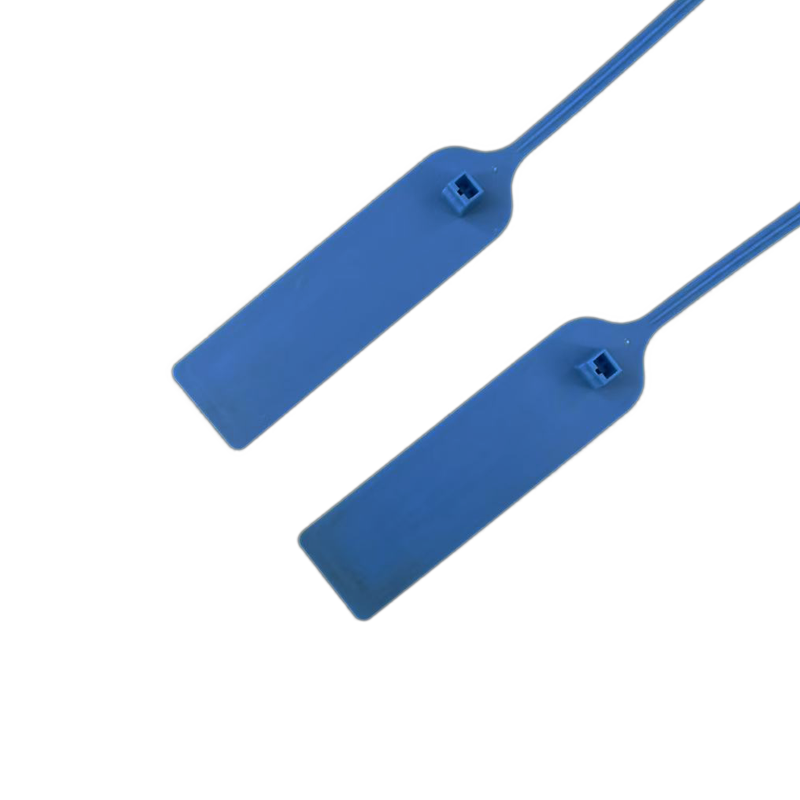
Disposable Seal RFID Cable Tag
6.Transparent RFID Garment Tags
Typical Application: Apparel Inventory Management
UHF RFID Transparent Garment Tags These RFID electronic tags are approximately the size of a curved shirt collar stay. The semi-transparent tags are virtually invisible when sewn onto garments. Primarily used for apparel tracking, they provide protection against counterfeiting and fraud while enabling more precise tracking of rented garments without the need to scan individual barcodes.


RFID Handheld Reader
Given the diverse range of categories within the apparel industry, which involves numerous materials and styles, it is necessary to attach RFID electronic tags to garments for information binding. Subsequently, data collection and statistics are accomplished using RFID handheld terminals to meet the growing demands of various industry sectors.