

As the apparel and textile industries continue to evolve, businesses are increasingly turning to RFID technology to enhance visibility, efficiency, and control across the entire product lifecycle. RFID Tags On Clothes are rapidly gaining adoption from manufacturing to retail and even laundry management, transforming how garments are tracked and managed. Embedding RFID tags directly into clothing is becoming a standard practice rather than an innovation.
Below are four key reasons why integrating RFID tags into garments is a smart move.
1. Real-Time Inventory Visibility


Clothing Labels Custom
One of the most significant advantages of RFID-enabled clothing is real-time inventory tracking. Unlike traditional barcodes, RFID tags can be read in bulk without line-of-sight, allowing retailers and operators to instantly know what items are in stock, on shelves, or in transit.
This real-time capability helps:
Reduce manual counting errors
Improve stock accuracy
Enable faster replenishment
For large-scale operations, especially in retail chains or warehouses, this translates into better decision-making and improved customer satisfaction.
2. Enhanced Loss Prevention
Shrinkage due to theft or misplacement is a major concern in the apparel industry. Embedding a loss prevention RFID tag directly into clothing provides an effective layer of security.
RFID tags can trigger alarms when unauthorized removal occurs and can also be tracked throughout the store. Compared to traditional security tags, embedded RFID solutions are:
Less intrusive
Harder to remove or tamper with
Dual-purpose (inventory + security)
This makes them a cost-effective solution for protecting merchandise while maintaining a seamless shopping experience.
3. Durable Through Wash Cycles

For applications such as uniforms, hotel linens, and healthcare garments, durability is critical. RFID tags designed for textiles can withstand repeated wash cycles, high temperatures, and exposure to chemicals.
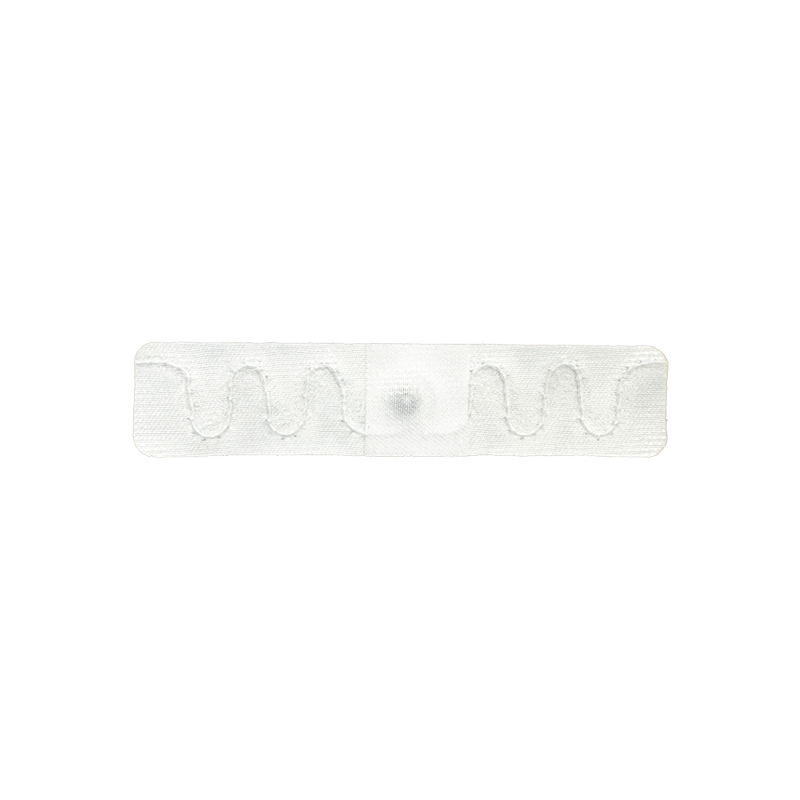
Heat Seal RFID Laundry Tags Manufacturer
Using technologies like heat seal, RFID tags can be permanently embedded into garments or integrated into care labels without compromising comfort or aesthetics. These tags remain functional even after hundreds of industrial washes, making them ideal for:
Laundry management systems
Rental garment services
Industrial textile tracking
4. Optimized Laundry Management
RFID plays a transformative role in laundry management, especially in industries like hospitality, healthcare, and workwear rental. By tagging each garment, businesses can automate the tracking of items through washing, drying, and distribution processes.
Key benefits include:
Accurate item-level tracking
Reduced loss and misplacement
Improved turnaround time
Automated sorting and counting
With RFID, operators gain full visibility into textile usage and lifecycle, enabling better planning and cost control.
5. Frequently Asked Questions (FAQs)
5.1 Are RFID tags safe for clothing?
Yes, RFID tags used in garments are passive and emit very low levels of radio frequency energy. They are safe for everyday wear.
5.2 Will RFID tags affect comfort?
No. When embedded into care labels or heat-sealed into fabric, RFID tags are lightweight, flexible, and unnoticeable to the wearer.
5.3 Can RFID tags survive washing and drying?
Yes. Textile RFID tags are specifically designed to endure harsh wash cycles, including high temperatures and detergents.
5.4 What industries benefit most from RFID-tagged clothing?
Retail, healthcare, hospitality, and uniform rental services benefit significantly due to improved tracking, efficiency, and loss prevention.
6. Conclusion
Embedding RFID tags into clothing is no longer just a technological upgrade—it’s a strategic investment. From enabling real-time visibility to enhancing loss prevention and streamlining laundry management, RFID technology offers a comprehensive solution for modern apparel operations.
As adoption continues to grow, businesses that leverage RFID early will gain a clear competitive advantage in efficiency, accuracy, and customer experience.