

With the continuous advancement of technology, Radio Frequency Identification (RFID) technology has gradually penetrated into various industries, especially in the fast-moving consumer goods industry, demonstrating enormous potential and advantages. RFID technology in retail, with its characteristics of long-distance reading, high storage capacity, reusability, strong penetration, and long service life, is becoming the core technology of the new generation of store management and supply chain management, helping the fast-moving consumer goods industry achieve efficient, intelligent, and sustainable development. This article will explore in detail the application of RFID technology in the fast-moving consumer goods industry, analyze its various advantages and future development trends
1. Overview of RFID Technology
RFID technology is a non-contact automatic identification technology that automatically identifies target objects and obtains relevant data through wireless radio frequency signals. It consists of three parts: tag, reader, and antenna. The label is attached to the object and contains a unique identification code; The reader/writer sends a certain frequency RF signal through the antenna. When the tag enters the working range of the reader/writer, the tag absorbs energy and sends the information stored in the chip to the reader/writer; After receiving the information, the reader/writer decodes it and transmits it to the computer system for data processing.

RFID Single piece Hangtags For the Garment Retail
2. The application advantages of RFID technology in the fast-moving consumer goods industry
2.1 Improve operational efficiency
Traditional barcodes or QR codes require manual scanning, which is inefficient and prone to errors. RFID technology can simultaneously read multiple tags in a short period of time, greatly accelerating data processing speed. In inventory counting, logistics tracking, and other processes, brands can quickly obtain accurate data, thereby making faster and more accurate decisions. For example, ZARA has achieved real-time tracking of products and precise inventory management by attaching RFID tags to each piece of clothing, effectively reducing the risk of inventory backlog and waste.
2.2 Optimize inventory management
RFID technology can monitor the real-time flow of products, including quantity, location, status, etc., enabling brands to grasp inventory status in real time. This helps to reduce sales losses caused by insufficient or excessive inventory, while also reducing the risk of inventory backlog and expiration. In addition, RFID technology can also predict inventory demand, help brands plan procurement and production plans more reasonably, and avoid waste and losses. For example, Uniqlo has achieved comprehensive tracking of the supply chain by attaching RFID tags to raw materials, semi-finished products, and finished products, improving the accuracy and flexibility of inventory management

2.3 Enhance customer experience
RFID technology provides customers with a more intelligent and convenient shopping experience. In the smart fitting room, customers can quickly obtain detailed information about the products they are trying on, including style, color, size, etc., through RFID technology, making it easier to make purchasing decisions. For example, H&M has set up intelligent fitting rooms in its stores, where customers can obtain detailed information about tried on products through RFID technology and enjoy personalized recommendations and services. This intelligent shopping experience not only enhances customer satisfaction, but also strengthens brand loyalty.
2.4 Strengthen anti-counterfeiting and anti-theft measures
RFID technology has a unique identification code, which gives each product a unique identifier. This helps brands effectively prevent the occurrence of counterfeit products, protect consumer rights and brand image. At the same time, by installing RFID access control systems at store entrances and exits, brands can monitor the flow of products in real time, detect abnormal behavior in a timely manner, and take corresponding measures to reduce the risk of product theft. Nike adopts RFID anti-theft buckle and sneaker ID technology, which not only enhances the anti-counterfeiting ability of the product, but also improves the security of the product and enhances consumers’ purchasing confidence.
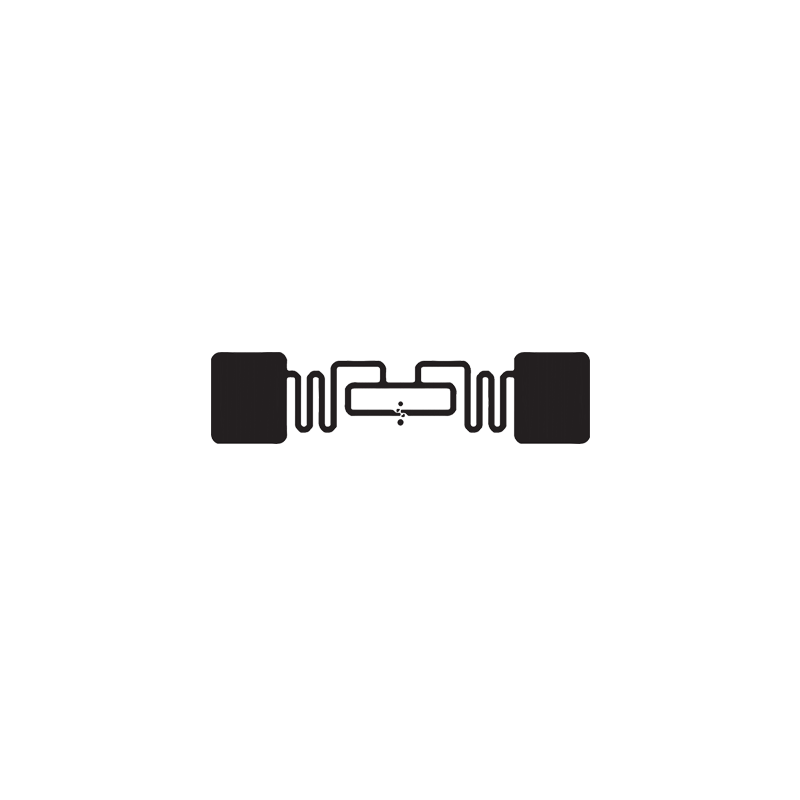
Alien ALN-9662 Short RFID White WET Inlay – High-Performance UHF RFID for Asset Tracking
3.Specific application cases of RFID technology in the fast-moving consumer goods industry
3.1 ZARA’s inventory management and product tracking
As a globally renowned fast fashion brand, ZARA has taken the lead in applying RFID technology for inventory management and product tracking. By attaching RFID tags to each piece of clothing, ZARA can real-time monitor product inventory, sales data, and customer preferences. This enables ZARA to respond more quickly to market demand, adjust production and procurement plans, and reduce the risk of inventory backlog and waste. At the same time, RFID technology also helps ZARA achieve precise tracking of products, enabling real-time monitoring from production to sales, ensuring product quality and customer satisfaction.

RFID Handheld Reader
3.2 H&M’s intelligent fitting room
H&M has set up intelligent fitting rooms in its stores, using RFID technology to provide customers with a convenient shopping experience. Customers can quickly obtain detailed information about the products they are trying on, such as size, color, material, etc., through RFID technology. In addition, H&M also utilizes RFID technology to collect customers’ shopping history and preference data, providing personalized recommendations and services to customers. This intelligent shopping experience not only enhances customer satisfaction, but also promotes sales growth.

3.3 Uniqlo’s digital stores
Uniqlo has opened digital stores driven by RFID technology, including RFID fitting mirrors, RFID shopping carts, RFID self checkout, etc., to comprehensively assist in upgrading the consumer experience. In the warehouse, Uniqlo has introduced an automated system where machines are responsible for clothing quality control, sorting, and other tasks, automatically reading RFID tags on clothes, reducing the warehouse’s manpower by 90%. This efficient automated inventory system enables Uniqlo to respond faster to market demand and enable customers to pick up goods from offline stores within 24 hours.

3.4 Batch cash register and anti-theft of Decathlon
Decathlon is one of the first fast fashion brands to introduce RFID technology, and most of its stores have adopted UHF RFID solutions. Decathlon uses RFID technology to realize the batch checkout of stores, reduce the waiting time of consumers and improve the shopping experience. At the same time, Decathlon also uses RFID anti-theft fasteners to prevent goods from being stolen. When a product leaves the store without going through the normal process, the RFID system will immediately trigger an alarm, effectively protecting the safety of the product.
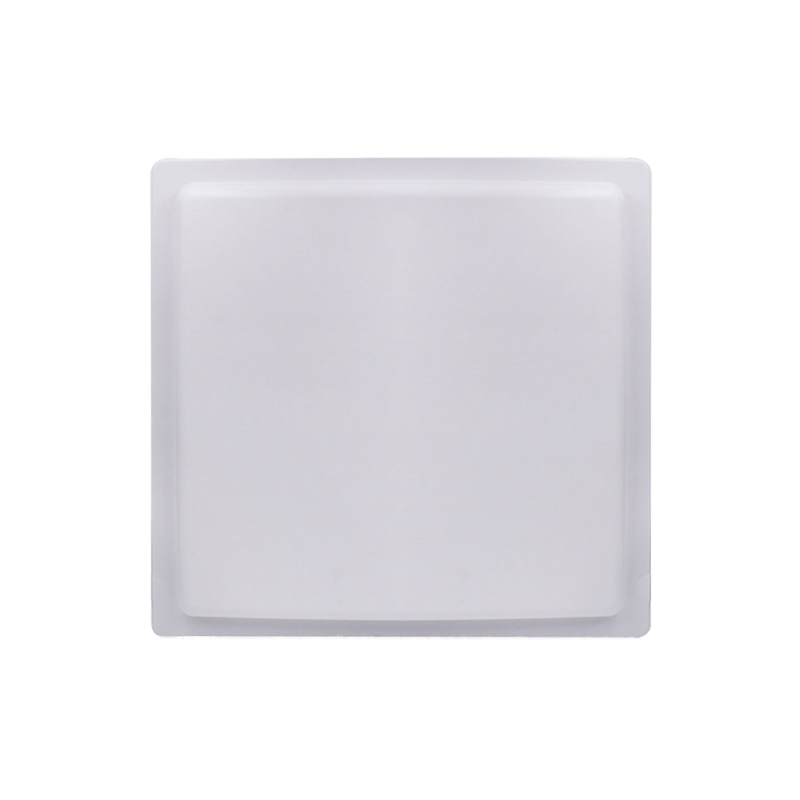
12dBi Circular Linear RFD UHF Reader Antenna
With the continuous development of technologies such as the Internet of Things, big data, and artificial intelligence, RFID technology will play a more important role in the fast-moving consumer goods industry. It will deeply integrate with these technologies to form a more intelligent and efficient supply chain management system, helping brands achieve precision marketing, optimize inventory management, and enhance customer experience. Meanwhile, as consumers’ demand for intelligent and convenient shopping experiences continues to increase, RFID technology will also become an important means to enhance brand competitiveness and market share.