

In the fields of industrial manufacturing, construction sites, and large-scale facility maintenance, the loss, misplacement, and low management efficiency of tools have always been hidden pain points for cost control and safety production. Traditional paper-based registration or simple electronic recording methods are difficult to track the real-time circulation status of thousands of tools. The emergence of RFID tool tracking systems, with their core technology of non-contact and batch identification, is transforming static tool inventory into dynamic transparent digital assets, opening a new chapter in precision and automated tool management. By embedding micro RFID tags into each tool, managers can instantly complete batch inventory, real-time positioning, and usage records at critical nodes. This not only greatly improves asset utilization, but also reduces the risk of tool loss and operational costs from the source.
1. The long-standing challenge of tool management: why is the traditional model difficult to sustain?
For tool companies in the fields of production manufacturing, engineering construction, equipment operation and maintenance, tools are the core means of production, but their management faces multiple pain points in the long run:
Low inventory efficiency: relying on manual registration and paper ledgers, counting hundreds of tools takes several hours, with an error rate of over 15%, and is prone to “discrepancies between accounts and reality”;
Chaotic collection and return: Borrowing and returning without traceability, difficult to define responsibility, loss, misappropriation, and overdue return of tools have become the norm, resulting in asset losses accounting for 8% -12% of the total value of tools every year;
Failure to maintain in a timely manner: lack of warning for tool wear and calibration expiration, and use with defects can easily lead to safety accidents or affect construction quality;
Data interoperability: The information of various projects and workshop tools is isolated, making it difficult to coordinate and schedule, resulting in duplicate purchases or idle resources.
These problems not only consume corporate profits, but also constrain production efficiency and safety management level. The combination of RFID technology and intelligent tool cabinets is becoming the “golden key” to solving industry pain points.
2. Technical Collaboration: The Core Working Logic of RFID Tags and Intelligent Tool Cabinets
RFID (Radio Frequency Identification) technology automatically identifies target objects and obtains data through wireless signals, without the need for manual contact or visual recognition. Combined with the hardware terminal and management system of the intelligent tool cabinet, it constructs a full chain intelligent management system of “perception transmission management traceability”:
2.1 RFID tags: tool for “electronic ID card”
Equip each tool with a dedicated RFID tag (customizable according to tool characteristics such as metal resistance, waterproofing, high temperature resistance, etc.), with a unique ID code embedded in the tag, associated with tool model, purchase date, calibration cycle, responsible person, and other full lifecycle information. Tags can be read from a distance (single tag reading distance can reach 0.5-3 meters), supporting simultaneous recognition of multiple tags (can read 50+tags per second), completely eliminating the limitations of manual scanning.

2.2 Intelligent tool cabinet: the “intelligent center” of management
The cabinet integrates hardware such as RFID readers, touch screens, and electronic locks, and has three core capabilities:
Automatic recognition: When the tool is taken out/returned, the reader/writer senses the tag in real time and completes data collection within 5 seconds, without the need for manual registration;
Permission control: Identity is verified through fingerprint, password, or card swiping, and only authorized personnel are allowed to use designated tools to prevent unauthorized access;
Data transmission: Real time synchronization of borrowing and returning records and inventory status to the cloud management system, supporting remote viewing on computers and mobile devices.

2.3 Management System: The “Data Brain” of Decision Making
The cloud system integrates inventory management, borrowing and returning traceability, maintenance reminders, report analysis and other functions to achieve:
Real time monitoring: check the inventory quantity, tool location, and borrowing status of each tool cabinet at any time;
Intelligent warning: When the tool is overdue, calibration expires, or inventory is insufficient, automatic SMS or APP reminders will be sent;
Data precipitation: Generate analysis reports on usage frequency, loss rate, utilization rate, etc., to provide data support for procurement planning and resource scheduling.
3. Application value: Four major upgrades from “passive management” to “active control”
3.1 Efficiency Upgrade: Inventory and Loan Return Efficiency Increased by 80%
Traditional manual inventory of 1000 tools takes 3-4 hours, while RFID intelligent tool cabinets can achieve “second level inventory” without the need to open the cabinet, and can complete the full cabinet tool verification in just 5 minutes; When borrowing and returning tools, employees can complete the process in two steps: swiping their ID card and taking out the tools. The entire process takes no more than 30 seconds, greatly saving labor costs. After being applied in a certain mechanical manufacturing enterprise, the labor cost of tool management has been reduced by 60%, and the inventory error rate has been reduced to below 0.5%.
3.2 Security Upgrade: Dual Protection of Responsibility Traceability and Risk Prevention and Control
Each borrowing and returning operation has a clear identity record and timestamp, and the responsible person can be quickly traced when the tool is lost or damaged; For special tools (such as high-voltage tools and measuring instruments), the system enforces the association of calibration certificates, and uncalibrated or expired tools cannot be used to avoid safety accidents from the source. A certain power engineering company has reduced the occurrence rate of tool safety accidents by 90% and achieved a compliance inspection pass rate of 100% through this plan.
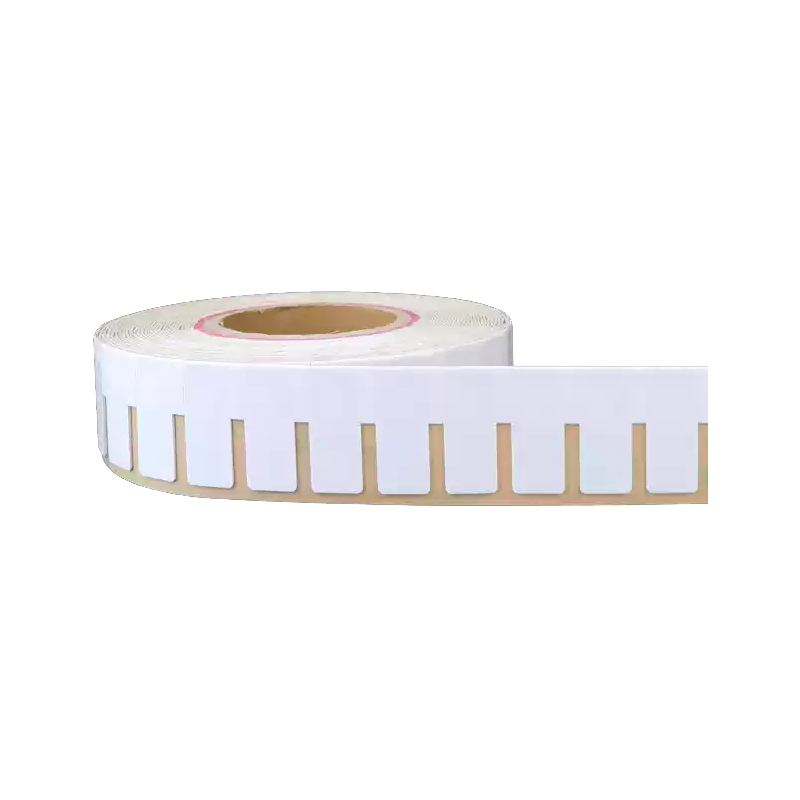
UHF Passive RFID Tag for Metal Surfaces
3.3 Cost Upgrade: Reduce wear and tear and idle, lower total cost of ownership
The system tracks the entire lifecycle of tools to avoid duplicate purchases due to loss or misappropriation; By analyzing utilization rates, idle tools can be scheduled to demand departments to improve resource turnover efficiency. According to data from a construction company, the tool wear rate has decreased from 10% to 2.3% after application, the cost of repeat purchases has decreased by 30%, and the total cost of tool ownership has decreased by 18%.
3.4 Management Upgrade: Digital Transformation from “People Manage Things” to “System Manage Things”
Get rid of dependence on manual experience and achieve standardization, process oriented, and digital tool management. Managers can remotely monitor the tool status of various project sites and allocate resources in real-time through mobile devices without the need to be on site; The data analysis report accumulated by the system helps enterprises optimize their procurement strategies, avoid “blind procurement” and “inventory backlog”, and promote the transformation of management decisions from “experience driven” to “data-driven”.

RFID Metal Label For IT and Data Centers Management
4. Implementation Cases: Practical Applications in Different Scenarios
Engineering construction scenario: A large construction group deployed intelligent tool cabinets in 20 project departments, and managed more than 12000 tools (including lifting equipment, measuring instruments, etc.) through a cloud system to achieve cross project tool scheduling. The utilization rate of idle tools increased by 40%, and the procurement cost of project tools decreased by 25%.
Intelligent manufacturing scenario: A certain automotive parts factory is equipped with intelligent tool cabinets for its production lines, which enable “on-demand and automatic recording” of commonly used tools such as wrenches and screwdrivers. The average time for employees to receive them has been reduced from 5 minutes to 20 seconds, and the waiting time for production line downtime has been reduced by 30%.
Equipment operation and maintenance scenario: A subway operation and maintenance company classifies maintenance tools and stores them in an intelligent tool cabinet. The system automatically pushes a list of required tools according to the maintenance plan, and employees receive them according to the list. The maintenance efficiency is improved by 50%, and the tool omission rate is reduced to 0.
5. Conclusion: RFID intelligent tool management is not just about “managing tools”
For tool companies, the combination of RFID tags and intelligent tool cabinets is not only an upgrade of management tools, but also an important lever for digital transformation of enterprises. It empowers tool management from “passive response” to “active control” through technology, solving the efficiency, safety, and cost pain points of traditional models, and providing support for enterprise resource optimization and decision upgrading through data accumulation.
With the advancement of Industry 4.0 and intelligent manufacturing, the digitization and intelligence of tool management have become an inevitable trend. Choosing an RFID intelligent tool management solution that is suitable for one’s own business scenario can not only make tool management more worry free and efficient, but also lay a solid foundation for the stable operation of the enterprise’s core business.