

In recent years, Radio Frequency Identification (RFID) technology has been widely adopted across various industries, including livestock farming. By enabling automated identification, tracking, and data collection, RFID helps farmers achieve precision livestock management, improving efficiency, productivity, and overall herd health. Major swine and poultry producers have already integrated RFID systems to monitor animals through electronic ear tags or injectable microchips, allowing seamless wireless communication between tags and readers for real-time tracking and smart management.

1.Key Applications of RFID in Livestock Management
RFID technology enhances multiple aspects of livestock farming, including:
1.1 Automated Weighing (Smart Weight Monitoring)
- Traditional Method: Manual weighing is labor-intensive and stressful for animals, often leading to inaccuracies.
- RFID Solution:
- Animals pass through weighing gates or automated scales equipped with RFID readers.
- The system automatically records weight data and uploads it to a central database.
- Farmers can track growth trends, adjust feeding strategies, and optimize nutrition.
- Example: In pig farming, RFID-based weight tracking provides more accurate growth assessments compared to visual estimation, improving feed efficiency.
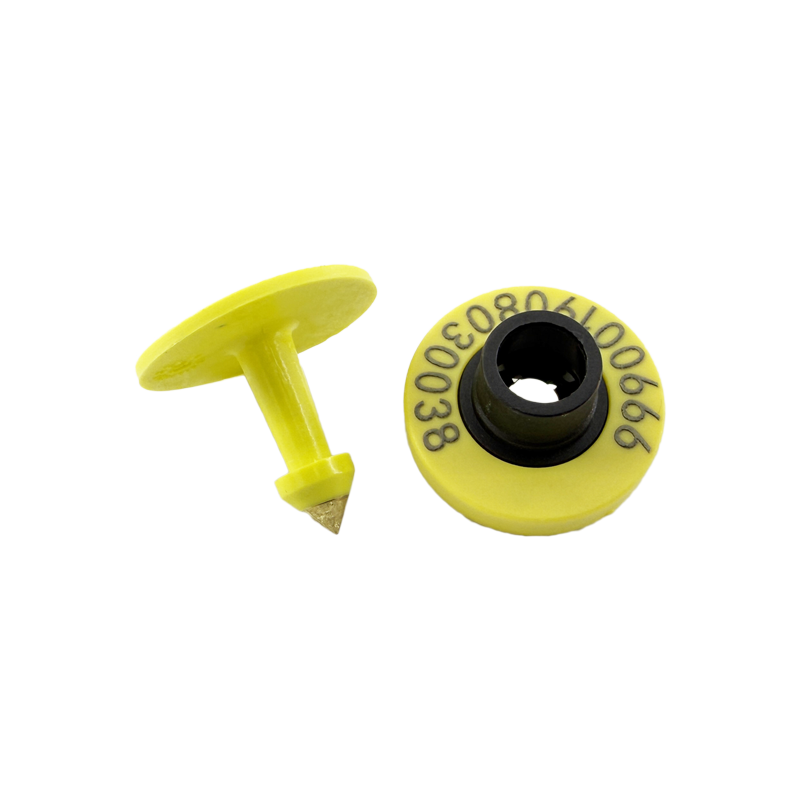
Custom RFID Ear Tag
1.2 Intelligent Feeding (Precision Nutrition Management)
- Traditional Method: Uniform feeding leads to overfeeding or underfeeding, increasing costs and waste.
- RFID Solution:
- Each animal’s RFID tag stores individual feeding history and weight data.
- When an animal approaches a smart feeder or water station, the system adjusts portions based on its needs.
- Benefits:
- Reduces feed waste by 15-30%.
- Ensures optimal nutrition for faster growth and better health.

RFID Chip in Ear
1.3 Automated Inventory & Tracking (Smart Herd Counting)
- Traditional Method: Manual counting is time-consuming and error-prone, especially in large farms.
- RFID Solution:
- Animals passing through RFID-enabled gates or feeding areas are automatically counted.
- The system logs entry/exit times, detecting missing or relocated animals instantly.
- Example: A dairy farm can monitor milking cycles, while poultry farms track flock movements without manual checks.

UHF 860-960 MHz Livestock RFID Ear Tag
2. Breeding & Genetic Management (Improved Livestock Selection)
- Traditional Method: Breeding records are often paper-based or fragmented, leading to data loss.
- RFID Solution:
- Each animal’s growth performance, health records, and lineage are stored in RFID-linked databases.
- Farmers can select the best breeding stock based on historical data, improving genetic quality.
- Prevents information loss due to staff turnover, ensuring long-term breeding consistency.

Sheep EID Ear Tags
3. Implementation Methods
- RFID Ear Tags: Most common for cattle, sheep, and pigs.
- Injectable Microchips: Used for permanent identification in high-value breeding stock.
- Leg Bands (Poultry): Track movement and feeding patterns in chickens and ducks.
4. Future Trends
With advancements in IoT, AI, and big data analytics, RFID-based livestock management is evolving into predictive farming:
- Health Monitoring: Early detection of diseases via behavioral changes.
- Blockchain Integration: Secure and transparent supply chain tracking from farm to market.
- Automated Herd Optimization: AI-driven insights for better breeding and feeding decisions.
5. Conclusion
RFID technology is transforming livestock farming by enabling automated, data-driven management. From smart feeding to genetic tracking, it reduces labor costs, minimizes waste, and enhances productivity. As farms continue to adopt digital solutions, RFID will play an even greater role in sustainable and efficient animal husbandry.
6. Frequently Asked Questions
6.1 What is RFID and how does it work in livestock farming?
RFID (Radio Frequency Identification) uses electronic tags attached to animals to wirelessly transmit data to RFID readers. In livestock farming, it enables automated identification, tracking, and data collection, helping farmers monitor health, weight, movement, and feeding patterns in real time.
6.2 What are the benefits of using RFID in livestock management?
Key benefits include:
- Accurate animal identification and traceability
- Automated weight and feed monitoring
- Reduced labor costs and human error
- Improved breeding and genetic selection
- Enhanced herd health and productivity through data-driven decisions
6.3 What types of RFID tags are used for animals?
Common types include:
- RFID Ear Tags: Widely used for cattle, pigs, and sheep
- Injectable Microchips: Ideal for permanent identification in breeding animals
- Leg Bands: Used mainly in poultry for movement and feeding tracking
6.4 Is RFID technology suitable for both small and large farms?
Yes. RFID systems can be scaled according to the size of the operation. Small farms benefit from basic tracking and health monitoring, while large farms use advanced integration with smart feeders, IoT devices, and farm management software for precision control.
6.5 How does RFID improve animal feeding and nutrition?
RFID-based smart feeders identify each animal and dispense customized feed portions based on its weight, age, and growth history. This ensures optimal nutrition, reduces feed waste, and supports faster, healthier growth.
6.6 Can RFID help in disease prevention and health monitoring?
Yes. When integrated with sensors and data systems, RFID can detect changes in animal behavior, feeding, or movement, which may indicate illness. Early alerts help farmers isolate sick animals and take preventive action quickly.
6.7 Is the data collected by RFID systems secure and easy to manage?
Modern RFID systems store data in centralized, often cloud-based platforms. These are secure, backed up regularly, and accessible from mobile devices, allowing farmers to make informed decisions anytime, anywhere.
6.8 What is the cost of implementing an RFID system on a livestock farm?
Costs vary depending on the scale, tag type, and level of system integration. Basic systems with ear tags and handheld readers are relatively affordable, while fully automated systems with smart feeders and AI-based analytics require higher investment—but deliver long-term savings and efficiency.