

In the modern era of automation and data-driven decision-making, Radio Frequency Identification (RFID) has emerged as a cornerstone technology. From tracking a single item in a retail store to managing thousands of shipping containers in a logistics hub, RFID enables wireless data transmission using radio waves. While the term “RFID” is often used generically, not all RFID systems are the same. Understanding the types of RFID is critical for selecting the right solution for a specific application. This article explores what RFID is, dives deep into its various classifications, and examines the extensive scenarios where each type excels.
1.What Is RFID?
Radio Frequency Identification (RFID) is a wireless communication technology that uses electromagnetic fields to automatically identify and track tags attached to objects. An RFID system consists of three core components: a tag (transponder) attached to the item, a reader (interrogator) that emits radio waves, and a backend database or software system that processes the data.
Unlike barcodes, which require line-of-sight scanning, RFID tags can be read from a distance, through various materials such as cardboard, plastic, or even human tissue. This makes RFID far more versatile for automation, inventory management, access control, and tracking.
RFID tags contain an integrated circuit (chip) and an antenna. The chip stores unique identification information, while the antenna enables communication with the reader. Depending on the type of RFID, the tag may either be powered by the reader’s electromagnetic field or have its own internal power source.

Container Centralen RFID
2.The Main Types of RFID Based on Frequency Bands
RFID systems are most commonly categorized by their operating frequency. Each frequency band has unique characteristics in terms of read range, data transfer speed, and environmental sensitivity.
2.1 Low Frequency (LF) RFID
Low Frequency RFID operates between 30 kHz and 300 kHz, with the most common frequency being 125 kHz or 134 kHz. LF RFID has a very short read range, typically less than 10 cm (about 4 inches). It has slow data transfer rates but is highly resistant to interference from liquids and metals.
Common applications of LF RFID:
- Animal identification (livestock tracking, pet microchips)
- Car key fobs and immobilizers
- Access control for secure areas
- Industrial automation where metal or liquid is present
2.2 High Frequency (HF) RFID
High Frequency RFID operates at 13.56 MHz worldwide. It offers a read range of up to 1 meter (approximately 3 feet), though typical implementations range from 10 to 50 cm. HF RFID supports faster data transfer than LF and is less affected by environmental noise.
One of the most important subsets of HF RFID is Near Field Communication (NFC) , which is standardized and used in smartphones and contactless payment systems.
Common applications of HF RFID:
- Contactless payment cards (e.g., Visa PayWave, MasterCard PayPass)
- Library book tracking
- NFC-enabled mobile payments and smart posters
- Ticketing systems (concerts, subways, amusement parks)
- Anti-counterfeiting in luxury goods
2.3 Ultra-High Frequency (UHF) RFID
Ultra-High Frequency RFID operates between 300 MHz and 3 GHz, with the most common bands being 865–868 MHz (Europe) and 902–928 MHz (North America). UHF RFID offers the longest read range, from 1 to 12 meters (up to 40 feet) for passive tags, and even longer for active tags. It also has the highest data transfer rate among passive RFID types.
However, UHF signals are more easily absorbed by liquids and reflected by metals, requiring specialized tag designs for such environments.
Common applications of UHF RFID:
- Supply chain and logistics tracking (pallets, cartons, containers)
- Retail inventory management (e.g., Zara, Decathlon, Amazon Go)
- Vehicle tracking and toll collection
- Race timing (marathons, cycling events)
- Warehouse automation
3.Types of RFID Based on Power Source
Another critical classification of RFID types is based on how the tag obtains power to operate.
3.1 Passive RFID Tags
Passive RFID tags have no internal battery. They are powered entirely by the electromagnetic energy emitted by the RFID reader. When the reader’s signal reaches the tag, the antenna captures energy and activates the chip, which then transmits its stored data back to the reader.
Characteristics of passive RFID:
- Very low cost (often $0.05–$0.50 per tag in bulk)
- Extremely long lifespan (decades)
- Small form factor (can be as thin as paper)
- Read range: a few cm (LF/HF) up to 12 meters (UHF)
- Limited memory (typically 96 bits to a few kilobytes)
3.2 Active RFID Tags
Active RFID tags contain an internal battery to power the chip and transmit signals. They do not rely on the reader’s energy to operate. Active tags can broadcast their signal autonomously at set intervals or when triggered by a reader.
Characteristics of active RFID:
- Long read range (up to 100+ meters / 300+ feet)
- Larger physical size due to battery
- Higher cost ($10–$50+ per tag)
- Battery life typically 3–5 years (replaceable or sealed)
- Larger memory capacity (up to 128 KB or more)
Common applications:
- Real-time location systems (RTLS) in hospitals for equipment tracking
- Container tracking in shipping yards
- Vehicle tracking on large construction sites
- Personnel tracking in hazardous environments
3.3 Battery-Assisted Passive (BAP) RFID Tags
BAP RFID tags (also called semi-passive) have a small battery that powers the chip but not the radio transmission. The tag uses the reader’s energy to communicate, similar to passive tags. The battery allows the tag to power sensors, log data, or operate with a more sensitive receiver.
Characteristics of BAP RFID:
- Longer read range than passive but shorter than active
- Can support sensors (temperature, humidity, motion)
- Moderate cost ($3–$10)
- Battery life up to 5–7 years
Common applications:
- Cold chain monitoring (pharmaceuticals, perishable food)
- Tire pressure monitoring in vehicles
- Asset tracking requiring environmental data logging
4.Types of RFID Based on Memory and Functionality
RFID tags also vary by how data is written and retained.
4.1 Read-Only RFID Tags
Read-only tags have data programmed during manufacturing. This data cannot be changed later. They are ideal for simple identification where a unique, unalterable ID is sufficient.
Example: Animal ear tags, car immobilizer transponders.
4.2 Write-Once, Read-Many (WORM) RFID Tags
WORM tags can be written to once by the end user, after which the data becomes permanent. This is useful for applications where an item needs to be initially encoded but not modified later.
Example: Airline baggage tags, shipping label tracking.
4.3 Read-Write RFID Tags
Read-write tags allow data to be modified, erased, and rewritten multiple times. They are the most flexible and commonly used in advanced applications.
Example: Manufacturing work-in-process tracking, reusable container management, library book check-in/check-out.
5.Application Scenarios for Different Types of RFID
The choice of RFID type depends entirely on the specific use case. Below are detailed scenarios illustrating which types work best.
5.1 Retail and Inventory Management
Recommended types: UHF Passive RFID, Read-Write tags
Large retailers like Walmart, Decathlon, and Zara use UHF passive RFID to track individual items from warehouse to sales floor. UHF tags enable bulk reading of hundreds of items per second, drastically reducing stockout and shrinkage. Read-write tags allow updating item status (sold, returned, transferred).
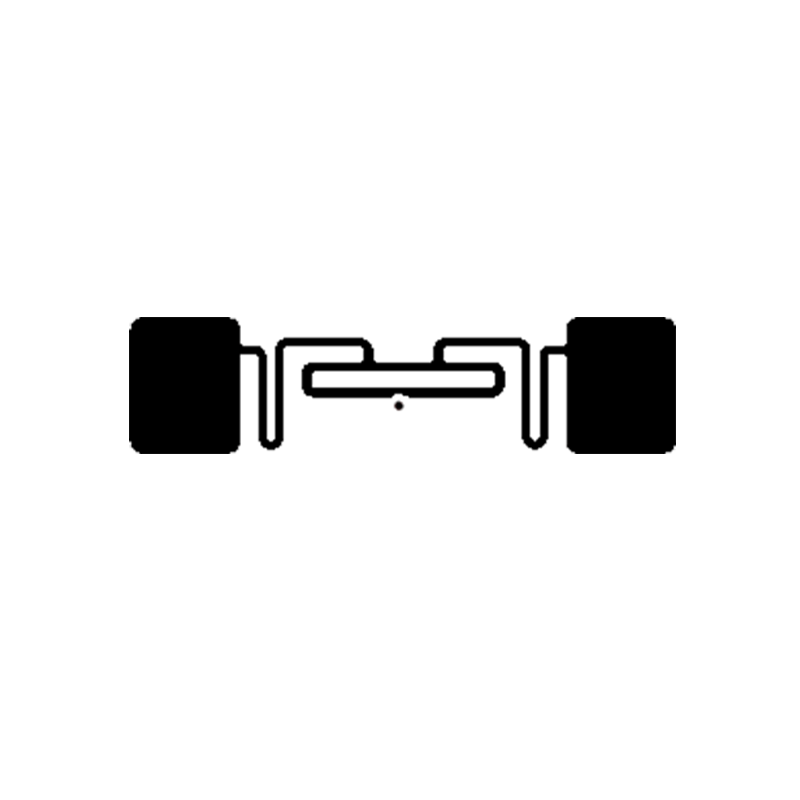
ALN-9962 Short Higgs 9 Clear Wet Inlay
5.2 Healthcare and Medical Asset Tracking
Recommended types: Active RFID, HF RFID, BAP RFID
Hospitals use active RFID for real-time location of infusion pumps, wheelchairs, and ventilators. BAP RFID with temperature sensors monitors blood bags and vaccine vials in cold storage. HF RFID is used for patient wristbands to ensure medication safety and infant abduction prevention.
5.3 Logistics and Supply Chain
Recommended types: UHF Passive RFID, Active RFID for containers
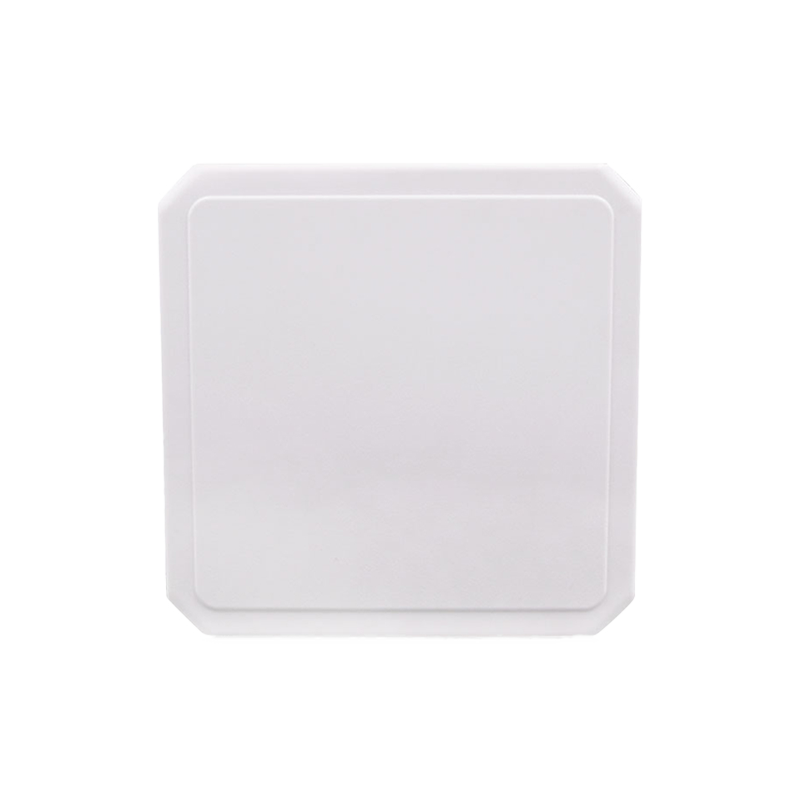
For pallet and case tracking in warehouses, UHF passive RFID provides long read range and high speed. For intermodal shipping containers traveling across ports and rail yards, active RFID with GPS and battery power enables global tracking without fixed readers.
5.4 Access Control and Security
Recommended types: LF RFID, HF RFID (NFC)
Office buildings use LF RFID (125 kHz) for employee badge access because of its short range and resistance to metal interference. Modern smartphones use HF NFC for office door unlocking and secure printing.

Ntag213 sticker
5.5 Livestock and Pet Identification
Recommended types: LF RFID, Read-Only tags
Farmers inject LF RFID glass-encapsulated tags into animals for lifetime identification. Pet microchips (134.2 kHz LF) are read-only and store a unique number registered to the owner’s contact information.
5.6 Race Timing and Event Management
Recommended types: UHF Passive RFID, Active RFID
Marathons use UHF passive RFID tags attached to runners’ shoelaces or bibs. Mats placed at start/finish lines read thousands of tags per minute. For long-distance triathlons, active RFID on ankle straps ensures detection even when athletes are spread over kilometers.
5.7 Cold Chain and Food Safety
Recommended types: BAP RFID with sensors
Perishable goods such as seafood, dairy, and pharmaceuticals require continuous temperature monitoring. BAP RFID tags record temperature data throughout transit. If a temperature threshold is exceeded, the tag flags the item, preventing spoiled goods from reaching consumers.
5.8 Aviation and Baggage Handling
Recommended types: UHF Passive RFID, WORM tags
Major airlines (e.g., Delta, Lufthansa) embed UHF passive RFID tags in baggage labels. These tags are WORM – written once at check-in with flight and destination data. Automated conveyor systems read tags, reducing lost luggage by over 25%.
6.How to Choose the Right Type of RFID
Selecting the correct RFID type requires evaluating several factors:
| Requirement | Recommended RFID Type |
|---|---|
| Very low cost per tag (<$0.10) | UHF Passive |
| Extremely short range (<10 cm), high security | LF Passive |
| Smartphone compatibility | HF / NFC |
| Long range (>10 meters) | Active RFID |
| Metal or liquid environment | LF or specialized UHF on-metal tags |
| Sensor data (temperature, humidity) | BAP RFID |
| Reusable containers | Read-Write HF or UHF |
| Permanent identification | Read-Only or WORM |
7.Future Trends in RFID Types
The RFID industry continues to evolve. Emerging types include:
- Printable RFID tags using conductive ink for ultra-low-cost disposable tags.
- Chipless RFID using materials that reflect unique frequency signatures without a silicon chip, potentially costing fractions of a cent.
- RFID with integrated sensors for humidity, shock, and even gas detection.
- Hybrid RFID + BLE (Bluetooth Low Energy) tags that combine long-range BLE with passive RFID for retail and logistics.
8.Conclusion
Understanding the types of RFID – by frequency (LF, HF, UHF), power source (passive, active, BAP), and memory (read-only, WORM, read-write) – is essential for designing efficient tracking and identification systems. From animal farming to global supply chains, access control to cold chain monitoring, the right RFID type delivers automation, accuracy, and real-time visibility. As costs continue to fall and capabilities expand, RFID will only become more deeply embedded in everyday business and life.