

Did you know that the management costs and infection risks associated with hospital linens—sheets, pillowcases, surgical gowns—far exceed expectations? Inaccurate inventory, chaotic circulation, and unclear losses… these “invisible costs” are quietly eroding hospital efficiency and safety. It’s time to illuminate the entire fabric management process with a pair of “intelligent eyes.”Within the meticulously operated organism that is a hospital, every link in the chain concerns life and health. We focus on cutting-edge equipment and medication safety, yet often overlook a quiet yet indispensable player—medical textiles.
The quality of managing these fabrics, which come into close daily contact with patients and healthcare workers, directly impacts:
- Infection control: A primary source of cross-infection risk.
- Cost control: Significant expenses in procurement, laundering, and replacement.
- Operational Efficiency: Time costs incurred by clinical departments waiting for clean linens.
- Asset Management: The “muddled accounts” of substantial current assets.
The key to resolving all these pain points lies in “end-to-end traceability.”
Today, we introduce the “dynamic duo” enabling smart traceability: RFID tags and iron-on labels.
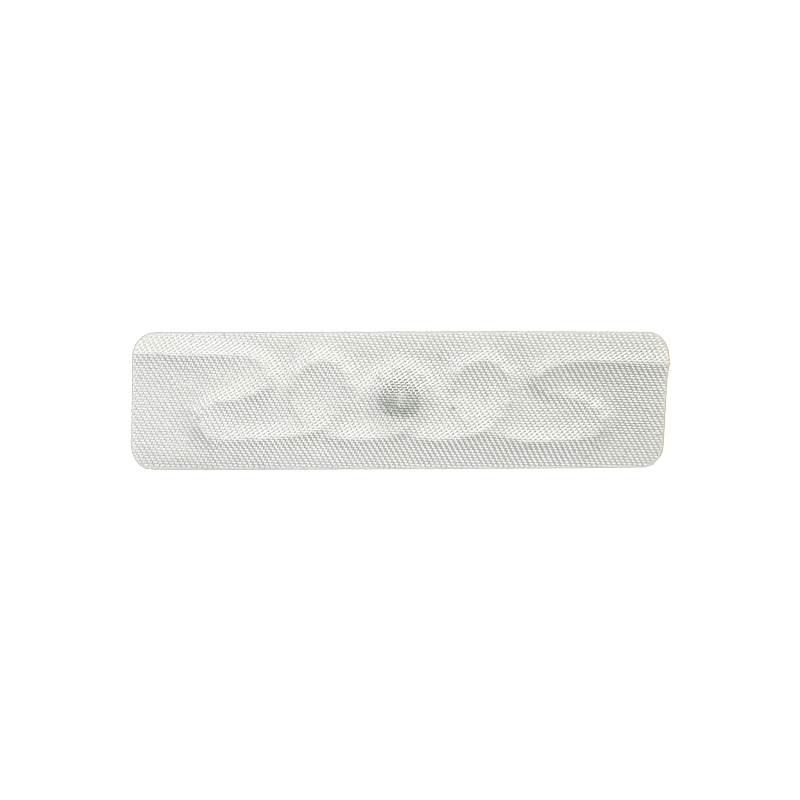
Laundry RFID Tag
1.RFID Tags
The “Electronic ID” for Textiles, Making Management Crystal Clear
Imagine every sheet, work uniform, scrub top… possessing a unique “electronic ID.” No need to open packages—simply scan with a handheld device, and all information is at your fingertips. This is the transformation brought by RFID technology.
2.Core Value Delivered by RFID Tags
2.1 Inventory Completed in Seconds, Efficiency Soars
Goodbye: Manual item-by-item counting, time-consuming and error-prone.
Welcome: Instant reading of entire packages or vehicles, automatic data upload, inventory efficiency improved by over 90%.
2.2 Full-chain visibility with item-level accountability
Closed-loop tracking from department → transport → laundry center → warehouse → department. Any bottlenecks or losses are immediately visible, providing precise data support for infection control traceability.
2.3Lifecycle Management for Controlled Costs
The system automatically tracks the number of washes for each textile. This eliminates infection control risks from “overdue service” and prevents asset waste from “premature disposal.”
2.4 Intelligent Inventory Alerts for Uninterrupted Supply
Real-time monitoring of textile stock levels across departments alerts administrators to replenish inventory below safety thresholds, ensuring clinical needs are never disrupted.
3.Iron-on Labels
Creating “Visual, Breathable” Identity Markers for Medical Uniforms
In smart hospital textile management, iron-on labels leverage their unique advantages to excel in applications requiring frequent identification, close-fitting wear, and stringent management of medical uniforms. They not only convey information but also integrate comfort, safety, and professional appearance into one solution, becoming a standard feature in modern hospitals’ refined management systems.

RFID Tag For Laundry
4. Core Advantages of Iron-On Labels
4.4 Clear and intuitive information for “one-second identification”
Key details like name, department, position, and employee ID can be ironed on, enabling visual identification of personnel.
Laundry rooms can also quickly sort items based on label information, accurately returning them to the corresponding department or individual, enhancing workflow efficiency.
4.2 Soft and smooth against the skin, redefining the “wear experience”
Labels seamlessly integrate with fabrics, eliminating discomfort like friction and itching caused by traditional sewn-on tags.
Ideal for healthcare workers in prolonged wear, demonstrating the hospital’s thoughtful care for staff through details.
4.3 Withstands Rigorous Washing and Disinfection for “Long-Lasting Durability”
Specifically engineered for medical environments, it endures repeated high-temperature washing and exposure to potent disinfectants.
Text and graphics remain permanently clear, resistant to peeling and wear, ensuring information integrity throughout the entire lifecycle.
4.4 Seamless Surface Meets Infection Control Standards
The entirely flat, gap-free design prevents dirt and bacterial buildup, complying with hospital infection control protocols.
Compared to stitched labels, it facilitates easier cleaning and disinfection, reducing cross-infection risks.
4.5 Unified Professional Image Conveys Brand Culture
A consistent labeling system reinforces the hospital’s professional image and management standards, conveying its culture through meticulous details.
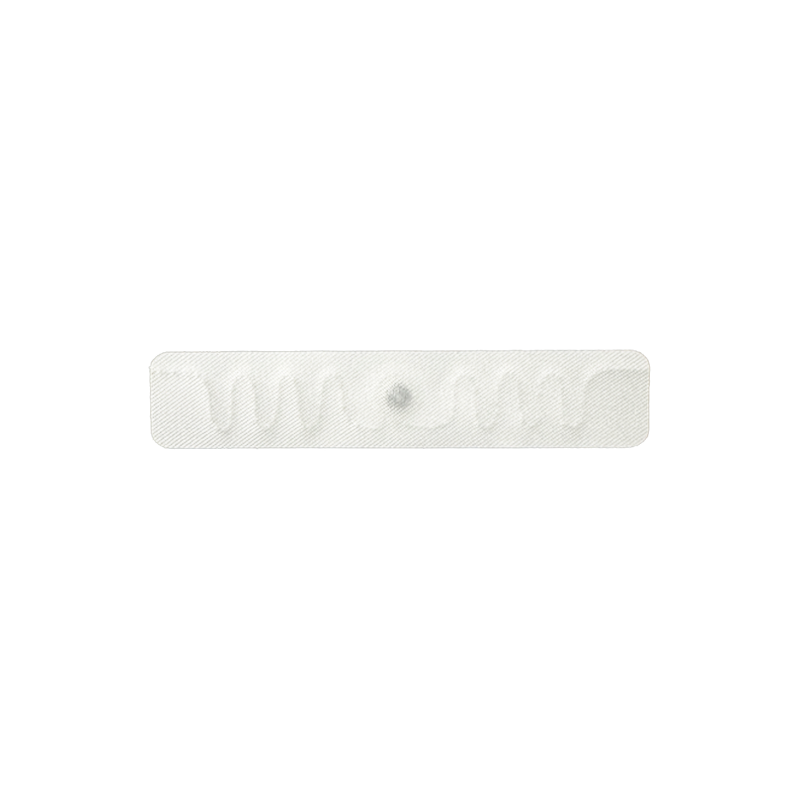
Textile RFID Laundry Tag
5. Dual-Label Integration
Building a New Ecosystem for Intelligent Fabric Management
RFID tags and iron-on labels are not substitutes but complementary “golden partners.”
Best Practice Model:
On Medical Uniforms:
- Embed a concealed RFID tag (e.g., sewn inside the hem) for comprehensive asset tracking and lifecycle management. Simultaneously, iron-on labels displaying personalized information are applied to designated areas like the inner collar for daily identification and sorting.
On Patient Linens:
- Embed RFID tags for end-to-end traceability.
Ultimately, this system delivers:
- For administrators: Complete visibility into all textiles, reducing costs and boosting efficiency.
- For infection control departments: Fully traceable workflow, reinforcing safety barriers.
- For clinical staff: Comfortable, professional attire with fast, accurate retrieval.