

Ultra high frequency RFID (Radio Frequency Identification) technology, as an advanced automatic identification technology, has been widely used in multiple fields. As an important component of RFID systems, the ultra-high frequency RFID reader antenna not only affects the reading distance, reading speed, and accuracy of the system, but also determines the adaptability and flexibility of the RFID system. This article will provide a detailed introduction to the classification and applicable scenarios of ultra-high frequency RFID reader antennas.
1. Classification of UHF RFID reader antennas
UHF RFID reader antennas can be classified into various types based on their design characteristics and application scenarios. Here are several common types of antennas:
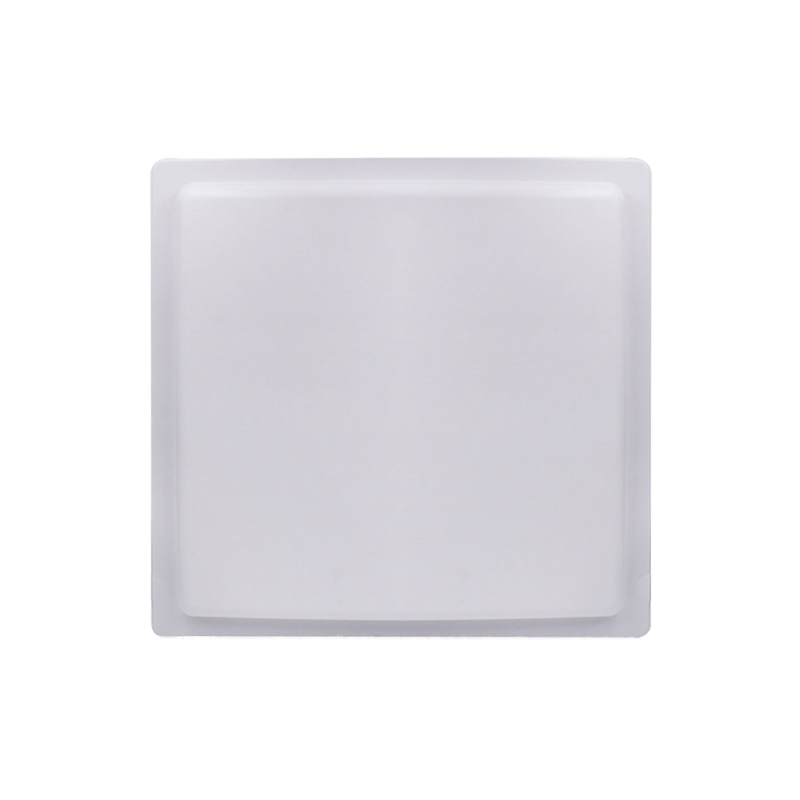
12dBi Circular Linear RFD UHF Reader Antenna
1.1 Linear Polarized Antenna
Linear polarized antennas emit linearly polarized electromagnetic waves, suitable for applications where the direction of the tag is consistent. This type of antenna typically has a long reading distance, making it widely used in fields such as industrial automation and warehousing logistics. In these scenarios, tags are usually fixed on goods or equipment with relatively fixed directions, so linearly polarized antennas can provide stable and efficient reading performance.
1.2 Circular Polarized Antenna
Circular polarized antennas emit circularly polarized electromagnetic waves, suitable for applications where the direction of the tag is uncertain. Due to its ability to receive signals from any direction, circularly polarized antennas perform well in retail, anti-theft systems, and supply chain management scenarios. In these applications, the direction of labels is often uncertain, for example, on the shelves of retail stores, the direction of goods and labels may change with the placement and movement of goods.
1.3 Directional Antenna
Directional antennas are typically used in application scenarios that require directional reading, such as vehicle recognition, highway toll collection, etc. Directional antennas can concentrate energy in specific directions, improving reading distance and accuracy. For example, in intelligent transportation systems, by deploying directional antennas in highway toll stations and parking lot management systems, fast and seamless payment and vehicle recognition can be achieved, improving traffic efficiency and management level.
1.4 Near field antenna
Near field antenna is a special type of antenna in RFID systems. Its main feature is that energy radiation is concentrated and constrained in a relatively close range directly above the antenna, ensuring close range reading effect without misreading or serial reading of surrounding electronic tags. This type of antenna is commonly used in applications that require close range and large-scale identification of RFID electronic tags, such as jewelry management, asset tool management, unmanned supermarket checkout counters, and medical device management.
In jewelry management, different types of jewelry are placed in each shelf area, and the jewelry cannot be read after leaving the area, let alone read from the labels in the adjacent display cabinets. At this point, the near-field antenna came in handy. The electromagnetic field of the near-field antenna is only distributed on the front surface of the antenna, effectively preventing the problem of tag string reading. In addition, near-field antennas have played an important role in the rapid development of unmanned retail, and the increasing demand for RFID related devices has driven the research and development of near-field antennas.

1.5 Far field antenna
The working characteristics of far-field antennas are large energy radiation angles and long distances, but there are many blind spots, especially in areas close to the antenna where recognition blind spots are easily formed. This type of antenna is commonly used in RFID systems in the ultra-high frequency and microwave bands. The reader antenna needs to provide energy to the tag or wake up the active tag, and has a long working distance, usually located in the far field of the reader antenna.
Far field antennas have a wide range of applications in logistics, warehousing, and intelligent manufacturing. For example, in logistics centers, goods need to frequently move between different warehouses and transport vehicles, and far-field antennas are needed to achieve long-distance RFID tag reading. Far field antennas can ensure accurate reading of tag information over long distances, improve logistics efficiency, and reduce operating costs.

UHF Handheld Reader
2.Application scenarios of ultra-high frequency RFID reader antenna
The application scenarios of ultra-high frequency RFID reader antennas vary in different fields, but they all have the characteristics of high efficiency, accuracy, and automation. Here are several typical application scenarios:
2.1 Logistics and Supply Chain Management
In the field of logistics and supply chain management, ultra-high frequency RFID reader antennas are widely used in warehouse management, cargo tracking, and transportation monitoring. By attaching RFID tags to the goods, the reader can quickly read the tag information, achieving automatic identification, counting, sorting, and outbound operations of the goods. This greatly improves logistics efficiency and accuracy, and reduces labor and time costs.
2.2 Manufacturing Industry
In the manufacturing industry, ultra-high frequency RFID reader antennas assist in achieving intelligent management of production lines. By deploying reader/writer antennas on the production line, real-time monitoring of the flow of raw materials, semi-finished products, and finished products can be achieved to ensure smooth production processes. At the same time, the reader antenna can seamlessly integrate with the enterprise management system to achieve real-time data updates and sharing, providing strong support for production decisions.
2.3 New Retail
The new retail industry also relies on the support of ultra-high frequency RFID reader antennas. On smart shelves, the reader antenna can quickly read RFID tag information on products, achieving intelligent display and data processing of products. In unmanned retail scenarios, by setting up reader/writer antennas at checkout counters or exits, products can be identified in batches and automatically settled, improving the convenience and efficiency of the shopping experience.
2.4 Medical and Health Care
In the field of healthcare, ultra-high frequency RFID reader antennas also play an important role. By attaching RFID tags to medical devices, drugs, or medical records, healthcare workers can use reader antennas to quickly search and verify information, improving the accuracy and efficiency of medical work. At the same time, this also provides strong support for the tracking and management of medical devices and drugs, ensuring medical safety and quality.
2.5 Aviation Industry
In the aviation industry, ultra-high frequency RFID reader antennas are widely used in baggage tracking systems. By attaching RFID tags to luggage and deploying reader antennas at various stages of the airport, airlines can accurately track the location of luggage and reduce the risk of luggage loss. This not only improves passenger satisfaction and trust, but also reduces the operating costs and management difficulties of airlines.
The ultra-high frequency RFID reader antenna, as an important component of RFID systems, has shown broad application prospects in multiple fields. Different types of antennas have different characteristics and application scenarios, which can meet the needs of different fields. With the continuous development of the Internet of Things and automation technology, ultra-high frequency RFID technology will be widely applied and developed, bringing more convenient and efficient solutions to enterprises and society. In the future, with the continuous advancement of technology and the expansion of application scenarios, ultra-high frequency RFID reader antennas will demonstrate their unique value and advantages in more fields.