

A UHF RFID Shipping Label gives a carton, case, pallet, or parcel a machine-readable identity that can be captured without optical line of sight. When the label is selected, encoded, applied, and read correctly, logistics teams can verify outgoing loads, identify exceptions before dispatch, and create more reliable shipping and receiving events.
The label is only one component of the solution. Reliable outbound automation also depends on unique identifiers, validated master data, RFID printers, controlled reader zones, middleware, and clear warehouse procedures. A poorly encoded label or an uncontrolled dock-door reader can create confident-looking but incorrect data, so buyers should evaluate the complete workflow rather than a tag specification in isolation.
This practical guide explains how passive UHF smart labels work in shipping operations, where they add business value, what to test before deployment, and how to connect physical reads with warehouse, transport, ERP, and supply chain visibility systems.
What Is a UHF RFID Shipping Label?
A UHF RFID shipping label is a printable pressure-sensitive label containing a passive UHF inlay. The inlay combines a microchip and antenna between the face stock and adhesive layers. An RFID-enabled printer can print visible shipment information and encode an electronic identifier in the same production step. Fixed or handheld readers can then capture that identifier from suitable distances without aiming at each label individually.
Passive labels do not contain batteries. The reader transmits radio energy, the antenna collects part of that energy, and the chip responds with stored data. Most supply chain UHF systems use the EPC Class 1 Gen 2 air interface, standardized as ISO/IEC 18000-63. The GS1 UHF air-interface protocol overview is a useful reference for interoperability between compliant tags and readers.
The electronic identity should point to trusted business data rather than trying to store an entire shipping document on the tag. The warehouse application can associate the encoded identifier with a purchase order, shipment, destination, product, batch, carton contents, or logistics-unit record. This separation keeps the radio transaction short while allowing authorized systems to retrieve richer information.
Why Shipping Operations Use UHF RFID
Barcode scanning remains dependable and inexpensive, but each code generally needs to be visible and deliberately presented to the scanner. At a busy packing line or dock, that can require repeated manual actions. UHF RFID can capture multiple compatible labels within a defined read zone, including labels that are not facing the antenna. This makes it useful for automated verification where cartons, totes, or pallets already move through a consistent physical checkpoint.
- Outbound verification: Compare observed identifiers with the shipment manifest before goods leave the facility.
- Missing and unexpected item detection: Alert operators when a case is absent, duplicated, or assigned to another order.
- Faster receiving: Allow a destination to reconcile tagged logistics units against an advance shipping notice.
- Aggregation visibility: Associate item or case identifiers with a carton, tote, or pallet parent identifier.
- Automated event capture: Create reliable packing, staging, loading, shipping, and receiving observations.
- Traceability: Preserve a history of which identified logistics unit was observed, when, where, and in what business context.
RFID does not prove that an unread item is absent, and a read does not prove that the item belongs in the load. The software must compare captured identifiers with expected data and present exceptions to an operator. The real benefit is faster, more consistent validation, not the raw number of radio responses.
How the Label Fits into the Shipping Workflow
1. Print, Encode, and Verify
At commissioning, an RFID printer produces the visible label and writes the intended identifier to the chip. The printer should immediately verify the encoding and reject or mark a failed inlay. Software should prevent duplicate identifiers, maintain the relationship between printed data and encoded data, and record who or which process created the identity.
Businesses can print labels on demand at packing, pre-encode them in a controlled label room, or receive source-tagged cartons from suppliers. Each approach changes ownership of data quality. If suppliers commission labels, trading partners need shared identifier rules, validation procedures, and a method for correcting damaged or duplicated tags.
2. Apply the Label to the Correct Package
The label can be applied manually, through a print-and-apply station, or as part of an automated conveyor process. Placement should be consistent and should avoid folds, corners, metal strapping, foil, dense liquid products, and other conditions that detune the antenna. The printed identifier and the package record must remain synchronized even when a carton is reworked.
3. Pack and Aggregate
When identified products or cases are packed into a higher-level logistics unit, the system can record a parent-child relationship. For example, case identifiers can be associated with a pallet identifier. This aggregation allows a downstream system to read the pallet and infer its expected contents, provided that packing, disaggregation, and exception events are governed correctly.
The GS1 EPCIS and CBV implementation guideline explains how visibility events can represent packing, shipping, receiving, and unpacking. EPCIS can describe what was observed, when, where, and why, while an AggregationEvent can describe cases added to or removed from a pallet or another parent object.
4. Stage and Verify the Load
A conveyor tunnel, packing-station antenna, dock-door portal, or handheld reader can compare tagged goods with the order before loading. The read zone should identify the intended lane or door and ignore nearby staging areas. When an exception occurs, the operator needs a clear instruction: remove an unexpected carton, locate a missing case, confirm a substitution, or route the shipment for manual review.
5. Ship and Receive
Once the load is accepted, software can create a shipping event and update the warehouse or transport system. At the destination, another controlled read can verify receipt. Differences between the despatch record and observed identifiers should become managed exceptions rather than silent inventory adjustments. Timestamps, location identifiers, device health, and user actions should remain auditable.
RFID Shipping Labels and Traditional Logistics Labels
A smart label can carry printed text, a GS1-128 or 2D barcode, and a UHF RFID inlay on one physical label. These data carriers serve different operational needs. Printed information supports people and carrier processes, barcodes provide precise optical identification, and RFID supports non-line-of-sight and multi-label capture. A resilient design often uses all three rather than removing the visible fallback.
| Capability | Printed or Barcode Label | Passive UHF RFID Label |
|---|---|---|
| Human readability | Yes | Only when visible data is also printed |
| Line of sight | Normally required for scanning | Not optically required |
| Multiple labels per read | Usually one deliberate scan | Possible within a controlled read zone |
| Exception fallback | Strong visual fallback | Requires a defined damaged-tag process |
| Infrastructure | Printer and optical scanner | RFID printer, reader, antennas, software, and testing |
The GS1 Logistic Label Guideline focuses on physical identification using GS1 barcodes and explicitly does not provide guidance for EPC/RFID. It is therefore important not to claim that an RFID implementation is automatically compliant with every rule for a GS1 Logistic Label. Companies should design the visible label and RFID data according to the standards and partner requirements that apply to each carrier and supply chain.
Identifiers, EPC Encoding, and Data Governance
A UHF RFID Shipping Label should carry a unique identifier with a documented meaning. Depending on the level being identified, a business may use a serialized trade-item identifier for an individual case or an SSCC for a logistics unit. The GS1 EPC Tag Data Standard defines Electronic Product Code encoding schemes and specifies the memory contents of Gen 2 RFID tags, including schemes for identifiers such as SSCC.
Do not encode an order number into every label simply because it is convenient for one application. Identifiers should remain unique, stable for the intended lifecycle, and interpretable by authorized systems. Keep customer addresses, phone numbers, and other sensitive shipment details in protected business systems unless there is a justified, governed reason to place data on the tag. Access passwords and memory locking can support specific controls, but they do not replace application security and data minimization.
How to Select the Right Printable RFID Label
Label selection should start with the package, read process, and printer. The correct inlay for a dry corrugated carton may perform poorly on a metal drum, liquid-filled case, insulated liner, or small curved parcel. Sample labels should be tested on production packaging at realistic speeds and orientations, including mixed loads and worst-case contents.
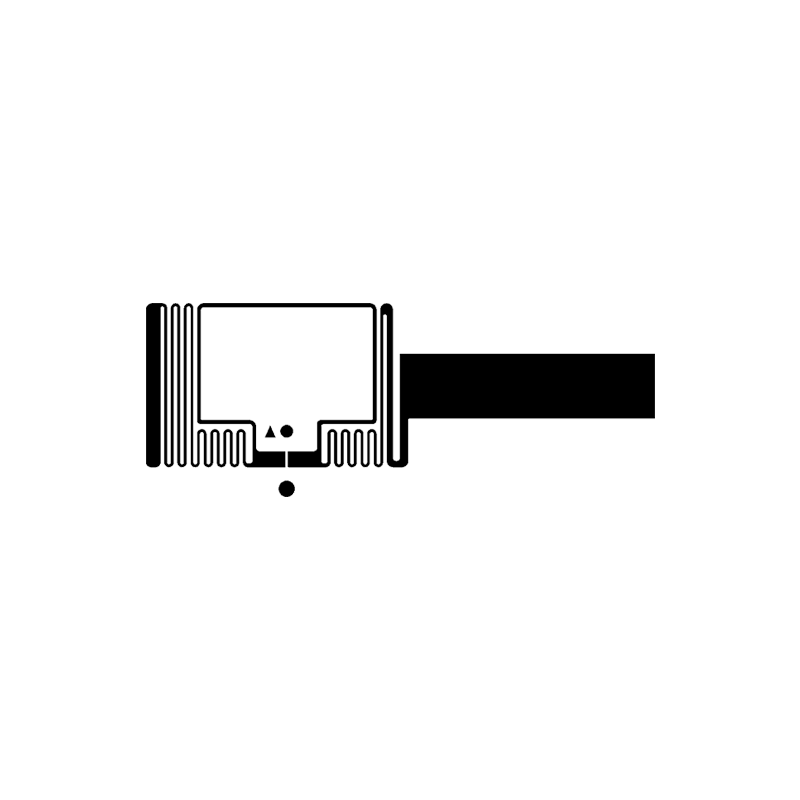
Printing RFID Labels are designed for on-demand visible printing and RFID encoding, allowing businesses to align human-readable, barcode, and electronic data in one workflow. Buyers should still confirm inlay dimensions, chip memory, regional frequency performance, face stock, adhesive, roll construction, printer settings, and expected read-zone conditions for their application.
Printing RFID Labels
- Inlay geometry: Match antenna size and design to the package footprint, contents, orientation, and required reading method.
- Chip and memory: Confirm EPC capacity, TID needs, user memory if required, access controls, and compatibility with the encoding plan.
- Face stock: Choose paper, polypropylene, PET, or another material according to print method, abrasion, moisture, and handling.
- Adhesive: Test tack, dwell time, corrugated surface variation, recycled fibers, cold conditions, dust, and removal requirements.
- Printer compatibility: Validate label pitch, width, liner, roll direction, core, ribbon, calibration, RFID antenna position, and verification behavior.
- Environmental durability: Consider humidity, condensation, temperature, sunlight, chemicals, abrasion, and the shipment lifecycle.
- Quality controls: Define acceptable inlay yield, rejected-tag marking, encode verification, and traceability by label batch.
Label Placement and Packaging Challenges
Place labels on a flat area with full adhesive contact and enough distance from package edges. Keep the antenna away from metal staples, foil tape, metallic product surfaces, and concentrated liquids unless the selected design has been validated for those conditions. On cases containing cans, bottles, or foil pouches, a label may need a specific face or air gap to perform consistently.
Orientation also matters. A fixed reader antenna may couple better with one label orientation than another, and palletized cases can create a mix of angles. Test labels on interior and exterior cases, at different pallet heights, and behind stretch wrap. A laboratory read-range number cannot predict every loaded pallet because products, spacing, reader power, antenna polarization, and local radio conditions all interact.
Design a Controlled Shipping Read Zone
The best portal is not the one that reads farthest. It is the one that captures the intended shipment while rejecting adjacent inventory. Use antenna placement, shielding, trigger sensors, adjustable power, direction logic, time windows, and middleware filters to create a bounded event. At neighboring dock doors, excessive power can assign cartons to the wrong truck and reduce business accuracy even when tag read rate appears excellent.
Test full, partial, and mixed pallets; stopped and moving loads; different forklift paths; crowded staging; multiple shipments passing close together; tag collisions; and operator workarounds. Define acceptance at the transaction level. The system should identify a complete correct load, flag a complete incorrect load, and provide a safe manual path when hardware or connectivity is unavailable.
Software Integration and EPCIS Visibility
Raw reader observations contain repeated tag responses and limited business context. RFID middleware filters duplicates, associates reads with a device and zone, applies shipment rules, and creates a meaningful event. The warehouse management system may own picking and packing status, the ERP may own orders and customers, and a transport platform may own dispatch and carrier milestones. Define which system is authoritative for each field before connecting them.
EPCIS can provide a common framework for sharing visibility events within or between enterprises. A shipping observation can include the object identifier, event time, read location, business step, disposition, and links to business transactions. It does not automatically correct bad master data or replace a despatch advice. Transaction data expresses intent, while RFID observations provide evidence about physical movement; applications need both perspectives.
Pilot Plan for an RFID Shipping Label Program
- Define one measurable problem. Choose an outbound verification gap, receiving delay, misroute risk, or manual scan bottleneck.
- Map the current process. Document label creation, packing, staging, loading, system updates, and exception ownership.
- Create an identifier policy. Define number sources, serialization, duplicate prevention, rework, replacement, and retirement.
- Screen candidate labels. Test real packages and contents, not empty demonstration cartons.
- Validate printing and encoding. Measure encode success, visible print quality, rejection handling, and label-to-record alignment.
- Build a limited read zone. Tune antennas, power, triggers, filtering, and lane logic under normal operations.
- Integrate exceptions first. Make missing, unexpected, duplicate, and unreadable-tag outcomes clear to operators.
- Run representative loads. Include mixed SKUs, dense pallets, partial shipments, difficult products, and peak throughput.
- Review business outcomes. Expand only after the pilot meets agreed transaction accuracy, time, reliability, and usability criteria.
KPIs and Business Case
Useful measures include print-and-encode success, first-pass label verification, shipment verification time, wrong-item exceptions, missing-case detection, rework, loading accuracy, receiving reconciliation time, claims, device uptime, and manual fallback frequency. Capture a baseline before the pilot and separate tag read rate from complete shipment accuracy.
The cost model should include smart labels, ribbons and consumables, RFID printers, applicators, readers, antennas, sensors, installation, site survey, software, integration, network changes, training, spares, and support. Benefits may come from reduced scan labor, fewer shipment errors, faster receiving, better traceability, and more reliable customer commitments. Use measured results from representative operations rather than universal ROI claims.
Common Implementation Mistakes
- Selecting by open-air range: Test the label on actual packed goods and through the intended read zone.
- Confusing a read with a shipment: Apply order, lane, time, and expected-content logic before posting a business event.
- Ignoring duplicate identifiers: Control number issuance and verify every encoding operation.
- Printing and encoding separate identities: Ensure the visible code, barcode, and RFID value remain synchronized.
- Using excessive reader power: Prevent cross-reads from nearby lanes, staging areas, and returns.
- Skipping damaged-label procedures: Define reprint, replacement, cancellation, and audit rules.
- Assuming RFID replaces all carrier labels: Preserve required visible and barcode information for partners and fallback operations.
- Scaling before exception testing: Prove normal and failure paths at one representative process first.
Conclusion
A UHF RFID Shipping Label can make outbound verification faster and supply chain events more dependable, but only when physical labels, identifiers, readers, software, and operations are designed as one system. Start with real packaging and a measurable shipping problem. Validate printing, encoding, placement, controlled reads, aggregation, and exception handling before expanding. The result should be trusted shipment evidence, not merely more tag data.
Frequently Asked Questions
What information is stored on a UHF RFID shipping label?
Most implementations encode a unique identifier in EPC memory and keep detailed shipment information in an authorized business system. Additional memory may be available, but data design should follow standards, partner requirements, security policy, and the intended label lifecycle.
Can an RFID shipping label also contain a barcode?
Yes. A printable smart label can include human-readable data and a barcode while also containing a passive UHF inlay. The printed and electronic identifiers must be generated and verified as one controlled record so they do not point to different logistics units.
Can UHF RFID labels be read through a sealed carton?
Often they can, because optical visibility is not required. Performance depends on carton contents, label placement, orientation, distance, reader setup, and nearby materials. Metal and liquid-rich products can reduce or redirect UHF energy, so representative package testing is essential.
Does a passive RFID shipping label need a battery?
No. A passive UHF label is energized by the reader field and responds with its encoded data. This supports thin, disposable label constructions, although the full solution still requires powered readers and software infrastructure.
Can one reader identify every carton on a pallet?
It may be possible, but there is no universal guarantee. Product materials, case density, tag orientation, pallet geometry, antenna placement, power, and movement all affect performance. Test full representative pallets and define transaction-level acceptance criteria.
How should a company pilot a UHF RFID Shipping Label?
Choose one shipping process, document the baseline, define identifiers, test candidate labels on real packages, verify print and encoding quality, build a controlled read zone, integrate exception handling, and run representative loads. Scale only when accuracy, time, reliability, and operator usability meet agreed targets.