

A uhf rfid sport tag is one of the clearest examples of how RFID turns fast-moving physical activity into usable digital data. In a marathon, cycling race, triathlon, stadium event, or training program, a small RFID tag can identify a participant as they cross timing points, pass checkpoints, enter zones, or return equipment. The same technology principle is used far beyond sports. RFID tags are now common in inventory control, logistics, access management, asset tracking, healthcare, laundry, retail, manufacturing, and vehicle identification.
For B2B buyers, the useful question is not only what RFID is, but where RFID tags create measurable business value. A race organizer needs accurate timing. A warehouse needs faster inventory. A hospital needs equipment visibility. A laundry needs garment lifecycle records. A retailer needs item-level stock accuracy. A factory needs production traceability. These use cases look different, but they all depend on the same foundation: a tag carries a unique identity, a reader captures it, and software turns that read into an operational event.
How RFID Tags Work in Practical Applications
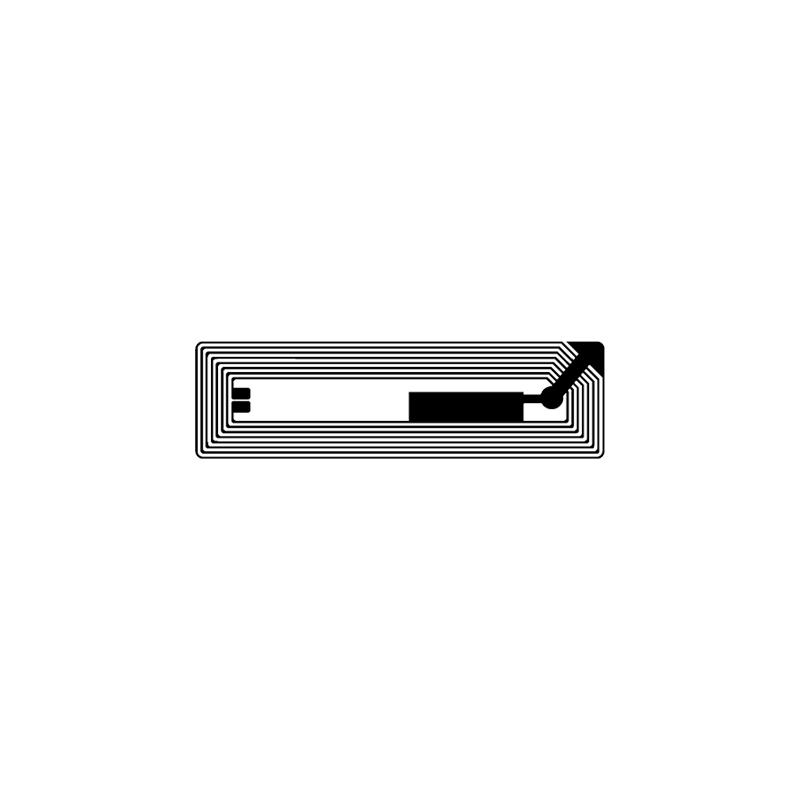
An RFID tag includes a chip and antenna. The chip stores a unique identifier and sometimes additional memory or security functions. The antenna allows the tag to communicate with an RFID reader. In passive UHF systems, the tag has no battery. It receives energy from the reader signal, wakes up, and sends back its encoded identity. The reader sends that identity to software, where it is linked to a person, item, asset, order, vehicle, garment, tool, or container.
UHF RFID is especially useful when a business needs longer read range or fast reading of many tags. That is why UHF is used in race timing, apparel inventory, warehouse portals, pallet tracking, vehicle access, and many industrial applications. Other RFID frequencies, such as HF/NFC or LF, are used when close-range reading, smartphone interaction, access cards, or animal identification are more appropriate.
The tag format changes by application. A sport tag may be attached to a bib, shoe, wristband, helmet, or race asset. A retail tag may be a hang tag or adhesive label. A laundry tag may be sewn into fabric. A vehicle tag may be placed on a windshield. An industrial tag may be mounted on metal or embedded in a rugged housing. Good RFID design starts with the use case, then chooses the tag, reader, and software workflow.
1. Sports Timing and Event Management
Sports timing is a natural use case for RFID because athletes move quickly and organizers need accurate, automated identification. A UHF RFID sport tag can be attached to a race bib, shoe, ankle strap, bike plate, helmet, wristband, or equipment item. Fixed readers and antennas placed at the start, finish, and checkpoint zones capture tag reads as participants pass through.
For race organizers, RFID can reduce manual timing errors, support large participant volumes, improve split-time visibility, and speed up result processing. For endurance events, RFID also helps verify route completion and checkpoint passage. For stadiums, gyms, and training facilities, RFID can support access control, attendance, equipment checkout, and athlete movement analytics.
The key design factors include tag placement, read distance, antenna coverage, participant speed, body interference, environmental conditions, and data filtering. A sport tag must be readable while the athlete is moving, sweating, turning, and crossing near other participants. That is why testing in real event conditions is important.
2. Retail Inventory and Apparel Tracking
Retail is one of the most visible RFID growth areas. RFID tags help retailers count inventory faster, improve stock accuracy, locate missing items, support replenishment, and enable omnichannel fulfillment. Apparel, footwear, cosmetics, accessories, electronics, and specialty goods can all benefit from item-level RFID when inventory accuracy affects sales and customer experience.
In apparel, RFID hang tags or care labels allow store teams to scan racks, stockrooms, and displays quickly. Instead of scanning each barcode line by line, associates can count many items with a handheld reader. Better stock accuracy supports buy-online-pick-up-in-store, ship-from-store, returns processing, and faster customer service.
For retailers, the main value comes from connecting RFID reads to POS, ERP, WMS, and order management systems. The tag itself is only the identity layer. The business impact appears when the system uses that identity to improve replenishment, fulfillment, loss visibility, and store execution.
3. Warehouse and Logistics Operations
RFID tags are widely used in warehouses, distribution centers, and logistics networks. Tagged cartons, pallets, totes, cages, returnable transport items, and containers can be read at receiving docks, shipping lanes, conveyor points, or storage zones. Fixed RFID portals can verify movements automatically, while handheld readers support cycle counts and exception handling.
Compared with manual barcode scanning, RFID can reduce handling time and improve visibility when items move in volume. A dock door reader can confirm whether the right cartons entered or left a facility. A conveyor reader can support sortation and order verification. A pallet tag can help track reusable transport assets across customers, carriers, and return loops.
Logistics projects should focus on read-zone control. The system must read the intended items without accidentally capturing tags from nearby pallets or adjacent lanes. Antenna placement, reader power, shielding, and software filtering all matter.
4. Manufacturing and Work-in-Process Tracking
Factories use RFID to track components, work orders, tools, molds, fixtures, carriers, bins, and finished goods. RFID can help identify which item is at which workstation and when it moved to the next process step. This supports production visibility, quality control, process automation, and traceability.
In work-in-process tracking, a tag may be attached to a carrier, tray, container, or product. Fixed readers installed at workstations update the manufacturing system automatically. This reduces manual data entry and helps supervisors understand production status. For high-value tools or molds, RFID can also support maintenance schedules and location tracking.
Manufacturing environments often include metal, heat, vibration, dust, and moving equipment, so tag durability is important. Rugged UHF hard tags, on-metal tags, high-temperature tags, and screw-mounted tags may be required depending on the process.
5. Access Control and Attendance
RFID is also common in access control. Cards, key fobs, wristbands, tickets, and badges can identify employees, visitors, members, students, patients, contractors, or event participants. HF, NFC, LF, and UHF can all be used depending on the required read range and system design.
For events and sports facilities, RFID wristbands or cards can manage entry, VIP zones, locker access, cashless payments, or equipment checkout. For companies, RFID badges can support secure entry and attendance records. For campuses and hospitals, RFID can help manage controlled areas and visitor movement.
Security requirements should guide tag selection. Some access applications need encryption, authentication, or close-range reading. Others need longer-range vehicle or gate access. The correct RFID tag depends on the risk level, user experience, and infrastructure.
6. Asset Tracking and Maintenance
RFID tags are used to track tools, IT equipment, medical devices, industrial assets, safety equipment, rental items, containers, and field assets. Asset tracking is valuable when items are expensive, mobile, shared, regulated, or difficult to locate manually. RFID can reduce search time, improve utilization, and support audit accuracy.
Maintenance teams can link a tag to inspection history, calibration records, repair status, ownership, location, and lifecycle data. A technician can scan an asset and update the record directly. In cabinets or controlled rooms, fixed readers can show which assets are present or missing.
For metal equipment, ordinary labels may fail, so on-metal RFID tags are often required. For outdoor or industrial assets, rugged tags must resist impact, chemicals, UV exposure, temperature changes, and cleaning processes.
7. Healthcare and Medical Operations
Healthcare organizations use RFID for equipment tracking, linen management, patient workflow, medication logistics, surgical instrument containers, lab samples, and access control. The goal is usually to improve visibility, reduce search time, support safety, and maintain reliable records.
Hospitals often have many mobile assets: infusion pumps, wheelchairs, beds, monitors, trays, carts, and emergency equipment. RFID can help staff locate assets faster and reduce unnecessary purchases caused by missing equipment. In laundry and linen workflows, RFID can track wash cycles, returns, and inventory levels.
Healthcare applications must consider privacy, cleaning, sterilization, materials, and system integration. Tag selection should match the medical environment and data governance requirements.
8. Laundry, Textiles, and Uniform Management
Commercial laundries and uniform providers use RFID tags to track garments, linens, towels, mats, workwear, and reusable textiles. A laundry-grade RFID tag can be sewn or heat-sealed into fabric and read through bags, bins, conveyors, and sorting points.
RFID supports wash cycle tracking, customer sorting, garment issue and return, loss control, replacement planning, and billing evidence. For hospitals, hotels, food processing plants, and industrial workwear programs, item-level textile visibility can reduce disputes and improve service reliability.
The tag must survive water, heat, chemicals, pressure, folding, and repeated handling. This is a specialized RFID application where durability matters as much as read distance.
9. Vehicle Identification and Parking
UHF RFID windshield tags and vehicle tags are used for parking access, fleet yards, tolling support, vehicle logistics, security gates, and campus access control. A reader identifies the vehicle as it approaches a gate or checkpoint, and software checks whether access should be allowed.
Vehicle RFID can reduce manual checks and improve traffic flow. It is useful for hospitals, factories, campuses, gated communities, logistics yards, and fleet operators. Tag placement, windshield material, lane design, and antenna tuning are important for reliable performance.
Choosing RFID Tags for Different Applications
Application selection should begin with the read scenario. Does the tag need to be read from centimeters or meters away? Will many tags be read at once? Is the object moving? Will the tag be near the body, metal, liquid, rubber, fabric, or harsh chemicals? Will the reader be handheld, fixed, mobile, or smartphone-based?
For sports timing, UHF tags and fixed timing antennas are often suitable because participants move quickly and many tags may pass a checkpoint. For close-range interaction, NFC may be better. For industrial assets, rugged UHF tags may be required. For textile laundry, washable RFID tags are necessary. For retail, printable UHF labels or hang tags are common.
For buyers comparing general-purpose UHF options, the UHF Tags product page is a relevant internal reference because UHF RFID is used across sports timing, inventory, logistics, asset tracking, and many industrial applications.
Implementation Best Practices
Start with one measurable workflow. A race organizer may begin with finish-line timing. A warehouse may begin with receiving verification. A hospital may begin with equipment tracking. A retailer may begin with inventory accuracy. Defining the first use case helps teams choose the right tag, reader, software, and success metrics.
Next, test in real conditions. For a sport tag, test running speed, body placement, sweat, weather, crowd density, and antenna coverage. For inventory, test cartons, racks, pallets, and read zones. For laundry, test wash cycles. For vehicles, test windshields and lane geometry. RFID performance is practical, not theoretical.
Finally, connect tag reads to business software. The value of RFID appears when a read updates timing results, stock status, asset location, access permission, wash history, maintenance record, or shipment verification. A tag read should become an action or reliable record.
FAQ
What is a UHF RFID sport tag?
A UHF RFID sport tag is a passive RFID tag used to identify participants, equipment, or checkpoints in sports events. It is commonly used for race timing, split tracking, access control, and event operations.
What are the common applications of RFID tags?
Common applications include sports timing, retail inventory, warehouse logistics, manufacturing traceability, access control, asset tracking, healthcare, laundry, vehicle identification, and supply chain visibility.
Why is UHF RFID used in sports timing?
UHF RFID supports longer read ranges and fast tag capture, which makes it useful when many participants pass timing points quickly. Proper antenna design and tag placement are essential for reliable reads.
Can the same RFID tag be used for every application?
No. RFID tag selection depends on frequency, read range, material, environment, durability, attachment method, and software workflow. A sport tag, laundry tag, metal asset tag, and retail label are designed differently.
How should B2B buyers choose an RFID tag?
Buyers should define the use case, test tags in real conditions, select suitable readers, plan software integration, and measure read accuracy, labor savings, error reduction, and workflow value before scaling.
As industries continue to embrace smart manufacturing and connected operations, RFID technology is becoming a critical foundation for digital transformation. SEIKO RFID TECHNOLOGY LTD. remains committed to advancing RFID innovation, expanding manufacturing capabilities, and developing industry-specific solutions that address evolving business challenges. By combining high-performance RFID tags, intelligent reader systems, and extensive application expertise, we help organizations build smarter factories, more efficient supply chains, and data-driven operations. Together with our global customers and partners, SEIKO RFID TECHNOLOGY LTD. will continue shaping the future of intelligent identification and creating greater value through RFID technology worldwide.