

In today’s fast-paced business environment, companies are under increasing pressure to improve inventory accuracy, reduce operational costs, and gain real-time visibility into their supply chains. One technology that has transformed inventory management across industries is RFID.
But many business owners still ask: What Are RFID Tags And How Are They Used? More importantly, how do RFID tags support modern inventory management systems?
This guide explains RFID technology, how RFID inventory management works, and why businesses worldwide are adopting RFID solutions to streamline operations and improve profitability.
1.What Are RFID Tags?
RFID (Radio Frequency Identification) tags are small electronic devices that use radio waves to store and transmit data to RFID readers. Unlike traditional barcodes, RFID tags do not require direct line-of-sight scanning and can be read automatically from a distance.
A standard RFID tag consists of three components:
- A microchip that stores data
- An antenna that transmits and receives signals
- A protective substrate or housing
Each RFID tag contains a unique identifier that allows businesses to track specific items throughout their lifecycle.
Types of RFID Tags
Passive RFID Tags
Passive RFID tags have no internal power source. They receive energy from the RFID reader’s signal.
Benefits include:
- Lower cost
- Smaller size
- Long lifespan
- Ideal for inventory tracking
Active RFID Tags
Active RFID tags contain a battery and can transmit signals over longer distances.
Benefits include:
- Extended read range
- Real-time asset tracking
- Suitable for high-value assets
Semi-Passive RFID Tags
These tags use a battery to power the chip while relying on the reader for communication.
They offer a balance between passive and active RFID technologies.

ALN-9654 UHF Windshield RFID Tag For Reliable Vehicle Access & Fleet Management
2.How Do RFID Tags Work?
Understanding What Are RFID Tags And How Are They Used starts with knowing how RFID systems operate.
An RFID system typically includes:
- RFID tags attached to products or assets
- RFID readers installed at key locations
- RFID antennas for signal transmission
- Inventory management software
The process works as follows:
- An RFID reader emits radio waves.
- RFID tags within range receive the signal.
- The tag responds with its stored information.
- The reader captures the data.
- Software updates inventory records automatically.
This process occurs within milliseconds, enabling businesses to track thousands of items simultaneously.
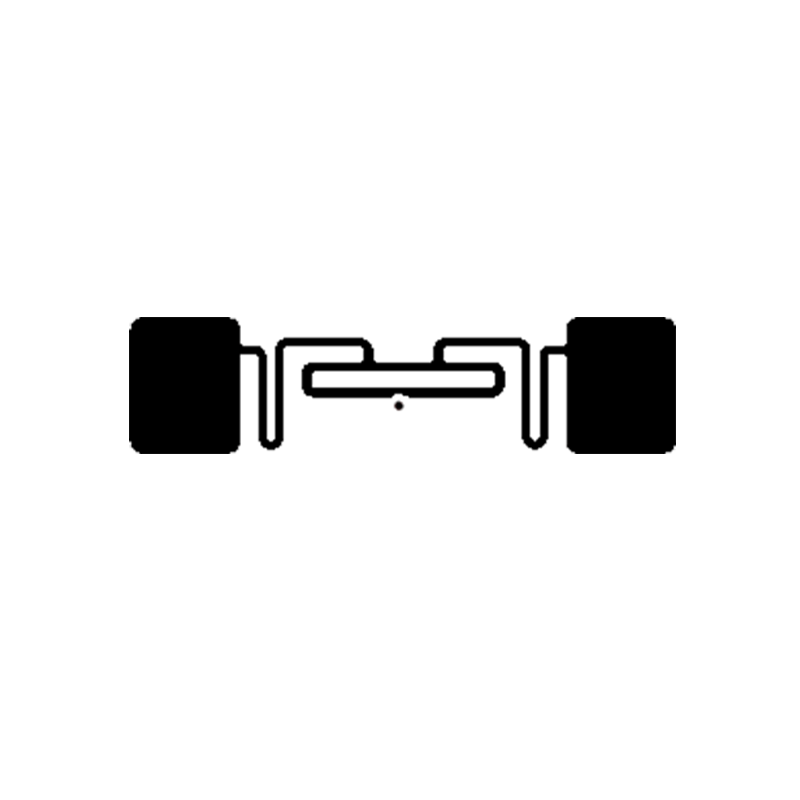
ALN-9962 Short Higgs 9 Clear Wet Inlay
3.What Is RFID Inventory Management?
RFID Inventory Management is the use of RFID technology to automatically identify, track, and manage inventory throughout the supply chain.
Instead of manually counting stock or scanning individual barcodes, RFID systems continuously collect inventory data in real time.
This allows organizations to:
- Improve inventory visibility
- Reduce stock discrepancies
- Automate inventory counts
- Prevent stockouts
- Enhance warehouse efficiency
RFID inventory management has become a critical component of digital transformation initiatives in manufacturing, retail, logistics, healthcare, and distribution sectors.
4.How Are RFID Tags Used in Inventory Management?
Real-Time Inventory Tracking
RFID tags allow businesses to track inventory locations instantly.
As products move through warehouses, production lines, or retail stores, RFID readers automatically record their movements.
Benefits include:
- Accurate stock visibility
- Faster inventory updates
- Reduced manual labor
Automated Stock Counting
Traditional inventory counts can take days or weeks.
With RFID inventory management, employees can conduct inventory audits in minutes using handheld RFID readers.
Companies often achieve inventory accuracy rates exceeding 99%.
Warehouse Management
RFID helps warehouse operators:
- Locate products quickly
- Monitor inventory movements
- Optimize storage space
- Reduce picking errors
The result is improved operational efficiency and faster order fulfillment.
Receiving and Shipping Verification
RFID systems automatically verify incoming and outgoing shipments.
This helps businesses:
- Eliminate shipping errors
- Speed up receiving processes
- Improve customer satisfaction
Loss Prevention
Inventory shrinkage caused by theft, misplacement, or administrative errors can significantly impact profitability.
RFID enables continuous monitoring of assets and inventory, helping businesses quickly identify missing items.
5.Benefits of RFID Inventory Management
Improved Inventory Accuracy
Manual inventory systems often contain errors due to human mistakes.
RFID provides automated data capture, significantly increasing inventory accuracy.
Increased Operational Efficiency
RFID eliminates many labor-intensive tasks, including:
- Manual stock counts
- Barcode scanning
- Inventory reconciliation
Employees can focus on higher-value activities.
Faster Inventory Audits
A warehouse containing thousands of items can be counted in a fraction of the time required by traditional methods.
Better Supply Chain Visibility
RFID provides real-time insights into inventory movements across the entire supply chain.
Managers gain better decision-making capabilities through accurate data.
Reduced Labor Costs
Automated inventory tracking reduces the need for manual inventory management activities.
Businesses can lower operational expenses while improving productivity.
Enhanced Customer Satisfaction
Accurate inventory data helps ensure products are available when customers need them.
This leads to:
- Faster deliveries
- Fewer stockouts
- Improved order accuracy
Industries Using RFID Inventory Management
Retail
Retailers use RFID to:
- Track merchandise
- Improve inventory accuracy
- Enable omnichannel fulfillment
Manufacturing
Manufacturers use RFID for:
- Work-in-progress tracking
- Raw material management
- Production monitoring
Logistics and Supply Chain
RFID helps logistics providers:
- Track shipments
- Monitor containers
- Improve distribution efficiency
Healthcare
Hospitals use RFID to track:
- Medical equipment
- Pharmaceuticals
- Surgical instruments
Automotive
Automotive manufacturers utilize RFID to manage:
- Components
- Production processes
- Finished vehicles
6.RFID vs Barcode Inventory Management
| Feature | RFID | Barcode |
| Line-of-sight required | No | Yes |
| Multiple item scanning | Yes | No |
| Read speed | Very fast | Slower |
| Data capacity | High | Limited |
| Automation | High | Moderate |
| Inventory accuracy | Excellent | Good |
While barcodes remain useful for many applications, RFID inventory management offers superior efficiency and scalability for growing businesses.
Choosing the Right RFID Tags for Inventory Management
When selecting RFID tags, businesses should consider:
Environment
Will tags be exposed to:
- Heat
- Moisture
- Chemicals
- Metal surfaces
Read Range Requirements
Different applications require different reading distances.
Tag Size
The tag must fit the product without affecting functionality.
Industry Standards
Ensure compatibility with EPC Gen2 and other relevant RFID standards.
Cost Considerations
Balance tag performance with budget requirements.
A trusted RFID supplier can help determine the most suitable tag for your specific inventory management needs.
The Future of RFID Inventory Management
RFID technology continues to evolve with advancements in:
- IoT integration
- Cloud-based inventory systems
- Artificial intelligence
- Predictive analytics
As businesses pursue greater automation and digital transformation, RFID inventory management will play an increasingly important role in delivering operational visibility and efficiency.
7.Conclusion
So, What Are RFID Tags And How Are They Used? RFID tags are intelligent identification devices that enable businesses to track products, assets, and inventory automatically using radio frequency technology.
When integrated into an RFID inventory management system, these tags provide real-time visibility, improved inventory accuracy, reduced labor costs, and enhanced supply chain performance.
For organizations looking to modernize inventory operations and gain a competitive advantage, RFID inventory management represents one of the most effective technologies available today.
8.Frequently Asked Questions (FAQ)
What are RFID tags and how are they used?
RFID tags are electronic devices that store and transmit data via radio waves. They are used for inventory tracking, asset management, supply chain monitoring, access control, and product identification.
What is RFID inventory management?
RFID inventory management is the use of RFID technology to automatically track, identify, and manage inventory in real time without requiring manual barcode scanning.
Are RFID tags better than barcodes?
RFID tags offer several advantages over barcodes, including faster scanning, non-line-of-sight reading, simultaneous item detection, and higher inventory accuracy.
Can RFID tags track inventory in real time?
Yes. RFID systems provide real-time visibility into inventory locations and movements throughout warehouses, stores, and supply chains.
Which industries benefit most from RFID inventory management?
Retail, manufacturing, healthcare, logistics, automotive, and warehousing industries are among the largest adopters of RFID inventory management solutions.