

What are RFID tags used for? In short, RFID tags are used to automatically identify and track almost any object – from the non-contact payment card in your pocket, the microchip in your pet’s body, to the clothes on the Wal Mart shelf, the ventilator tracked in the hospital, and even the car shuttling through the toll station every day. This technology is silently working behind the scenes, making countless processes faster and smarter.
1. What is RFID?
RFID stands for Radio Frequency Identification, which is a technology that uses radio waves to achieve non-contact automatic identification. It is similar to barcodes, but the biggest difference is that RFID does not require “line of sight scanning” – tags can be hidden inside packaging boxes, embedded in objects, or even covered with dirt and stains, and can still be quickly read.
A basic RFID system typically consists of three main parts:
- RFID tag (or responder): an intelligent device attached to an object to store data.
- RFID reader: a device that emits radio signals and receives tag feedback information.
- Antenna: a bridge connecting tags and readers, responsible for sending and receiving signals.
In addition, the backend software/database is responsible for processing all collected information and transforming it into usable business insights
2.What is the working principle of RFID tags?
The core structure of RFID tags is extremely sophisticated: it consists of a chip (integrated circuit) and an antenna, wrapped in a protective substrate (such as plastic, paper, or epoxy resin). According to different power sources, the working mode of RFID tags can be divided into three typical forms:
2.1 Passive tags
This is the most common and cost-effective type. It has no built-in battery and relies entirely on the electromagnetic waves emitted by the reader/writer to ‘wake up’ itself. When the tag enters the magnetic field range of the reader/writer, the antenna receives electromagnetic waves, generates induced current, and activates the chip; The chip then “reflects” the stored information back to the reader/writer through the antenna. This type of label has an extremely long lifespan (up to 20 years), small size, and low price, and is widely used in retail inventory, logistics tracking, and access cards.
2.2 Active tags
The active tag comes with a battery and transmitter, which can actively broadcast signals to the outside without waiting for the reader to activate. Its reading distance is extremely long, up to 100 meters or even 300 meters. However, due to its high cost, large size, and limited battery life (usually 3-5 years), it is often used in high-value scenarios such as real-time location systems (RTLS), large port container tracking, and military assets.
2.3 Semi passive (battery assisted) label
This is a “hybrid” of the first two: the battery only supplies power to the chip to enhance sensitivity and data processing capabilities, but data transmission still relies on the energy of the reader/writer. It strikes a balance between reading distance and power consumption, making it suitable for industrial scenarios that require sensor functionality but are cost sensitive.
3.What Are RFID Tags Used For
The use of RFID tags is far more extensive than most people imagine. It is not a future technology, but an infrastructure that is currently operating.
3.1 Retail and Inventory Management
This is the most visible and successful battlefield for RFID. Clothing retailers (such as Zara, Uniqlo and Decathlon) embed UHF passive tags on each product to achieve single grade tracking. Employees do not need to scan barcodes one by one. They can push carts through the access control to read hundreds of items of clothing in one second, and the inventory accuracy has jumped from 70% to over 95%. Customers can also quickly find their desired size and color through the smart fitting room.
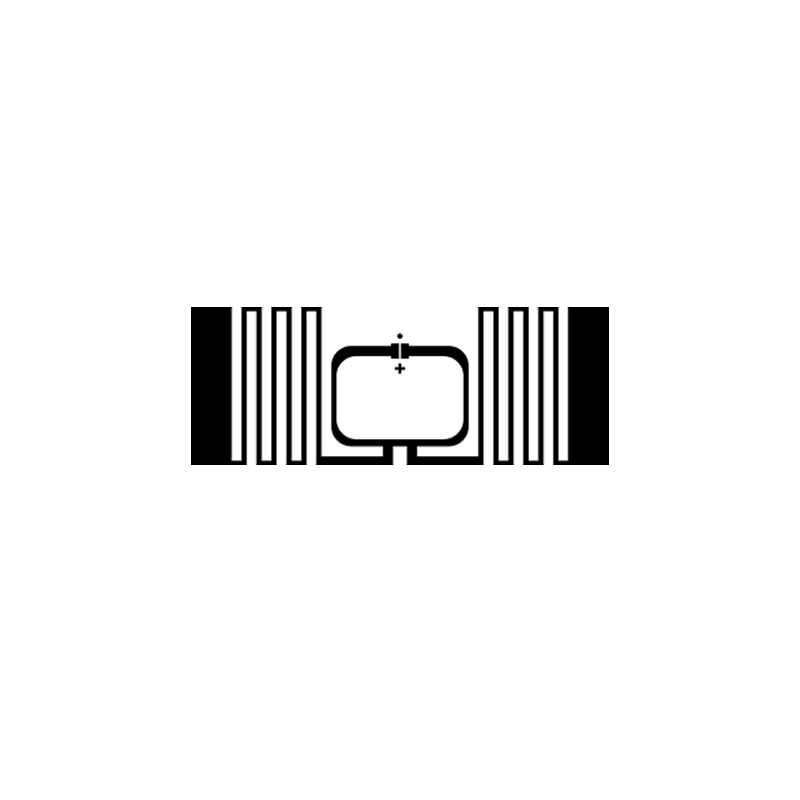
China RFID UHF UCODE 9 Label Manufactuer
3.2 Logistics and Supply Chain
RFID makes the entire supply chain “transparent” from pallets, turnover boxes to packages. When the labeled goods pass through the warehouse gate or loading/unloading port, the fixed reader/writer automatically records the in/out information without the need for manual verification. This not only significantly improves sorting efficiency, but also achieves end-to-end traceability throughout the entire process.
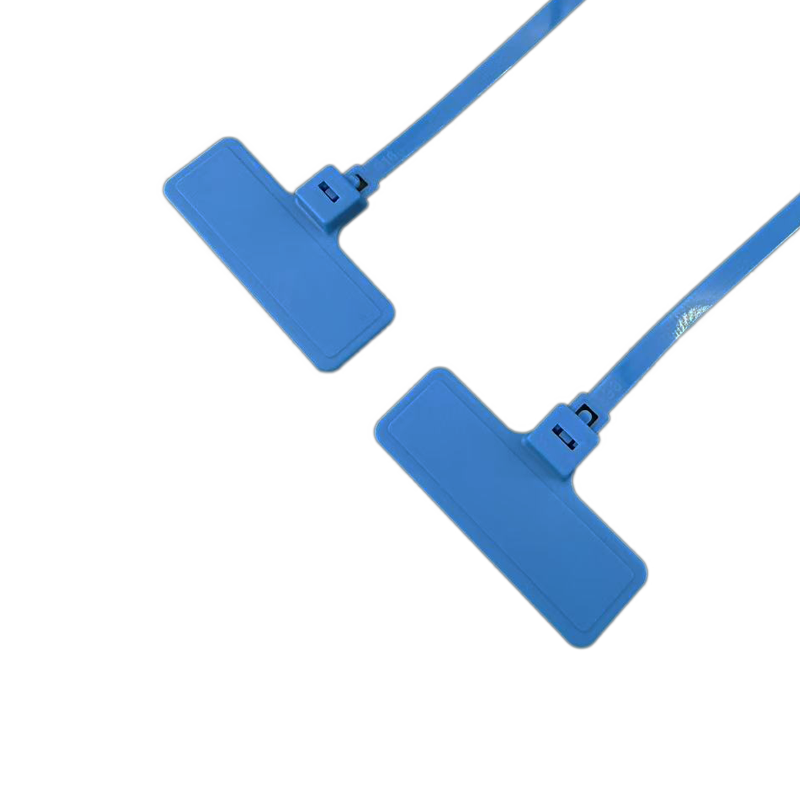
Reusable ABS Cable Tie Tag
3.3 Healthcare
In the hospital, RFID is saving lives. The patient’s wristband is equipped with high-frequency tags, allowing nurses to scan the code to confirm their identity, medication list, and surgical site, eliminating medical accidents of “mistaking people”. After attaching RFID to expensive mobile devices such as infusion pumps, wheelchairs, and ventilators, medical staff no longer need to spend half an hour searching for things.
3.4 Access control security and identity recognition
The access card, second-generation ID card, and electronic passport in your hand are all embedded with RFID chips. Low frequency or high-frequency tags play the role of an “electronic key” here, ensuring that only authorized personnel can enter sensitive areas. Some high-end tags also support encrypted authentication to prevent forgery.
3.5 Contactless Payment and Transportation
The beep of the subway gate, the automatic deduction of ETC fees on highways, and Starbucks’ sensor payment – all of these are RFID (especially high-frequency NFC technology) working behind the scenes. It not only shortens trading time to less than 0.3 seconds, but also significantly reduces physical contact.
3.6 Animal Tracking and Agriculture
RFID is the “official language” for animal identity management, from rice sized chips implanted in pets’ necks to low-frequency ear tags on cattle and sheep ears. In modern farms, RFID automatic feeding systems can accurately dispense feed based on each cow’s identification number; In the laboratory, the diameter of the miniature glass tube labels used to track experimental mice is only 1-2 millimeters.
3.7 Manufacturing and Asset Management
On the automobile production line, RFID tags are attached to the body of the vehicle to command robots to install corresponding colored doors and seats. In the tool library, workers only need to walk through the sensing channel to borrow and return wrenches and drills, and the system will automatically register them, completely bidding farewell to paper ledgers.

Chip Transponder
4. Summary
What are RFID tags used for? The answer is: RFID is almost capable of identifying and tracking any place that requires it. It has gradually penetrated from early military and animal tracking to retail, logistics, healthcare, finance, and even daily life. Compared to barcodes, the greatest value of RFID lies in automation, batch processing, and non line of sight reading – making it an essential core technology for data collection in the era of the Internet of Things.
As chip costs continue to decrease and standards become increasingly unified, the application boundaries of RFID will continue to expand. It is no longer just a ‘label’, but a bridge between the physical world and the digital world.