

In today’s world of intelligent logistics, smart retail, and industrial automation, Radio Frequency Identification (RFID) technology plays a crucial role. At the heart of every RFID system lies a key component that acts as the bridge for wireless communication—the RFID antenna. This article will take you on a deep dive into the world of RFID antennas, explaining their principles, materials, working mechanisms, selection criteria, and wide-ranging applications, helping you fully understand this invisible yet powerful “wireless messenger.”
1.What Is RFID?
RFID is a wireless communication technology that uses radio frequency signals to automatically identify and track specific targets. An RFID system typically consists of three core components: an RFID tag (attached to the object), an RFID reader (used to read and write tag data), and an RFID antenna (responsible for transmitting and receiving radio frequency signals). Compared to traditional barcodes, RFID offers advantages such as non-contact reading, long-distance identification, batch processing, and strong environmental adaptability, making it widely applicable across various industries.
2.What Is an RFID Antenna?
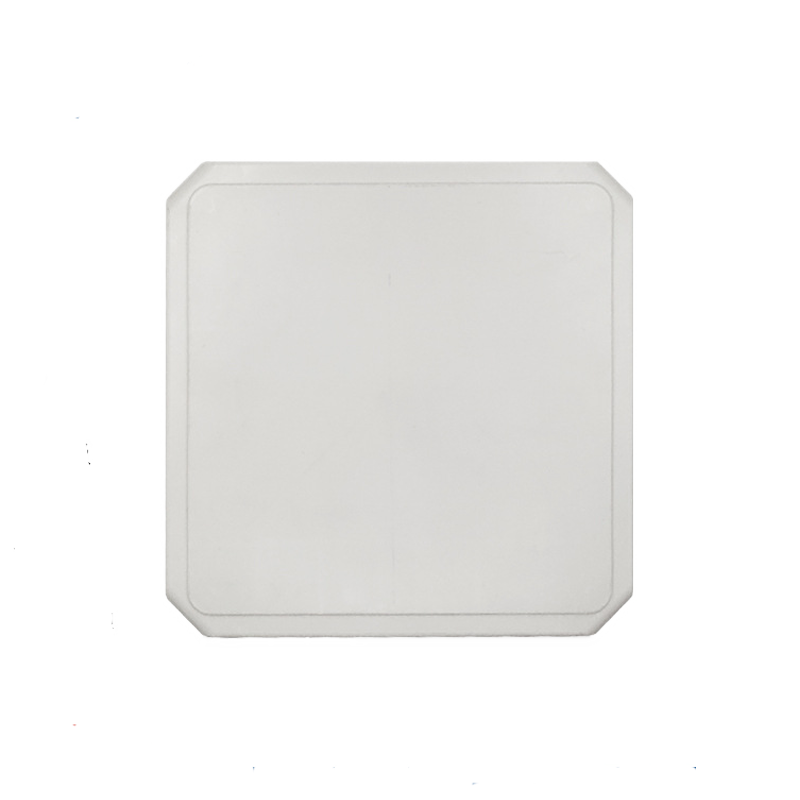
An RFID antenna is a transducer that converts electrical signals into electromagnetic waves (or vice versa). It serves as the “mouth and ears” of the RFID system, primarily responsible for:
Transmitting the radio frequency signals generated by the reader to activate and communicate with the RFID tag.
Receiving the weak signals reflected or sent back by the tag and transmitting them to the reader for decoding.
Simply put, without an antenna, the reader cannot communicate wirelessly with the tag, rendering the entire RFID system ineffective.
3.Common Materials for RFID Antennas
The performance and cost of an RFID antenna are closely related to its materials. Common materials include:
Copper: Offers excellent conductivity and oxidation resistance, making it suitable for high-performance, durable applications. However, it is relatively expensive.
Aluminum: A cost-effective alternative to copper with good conductivity, often used in large-scale commercial applications.
Silver Paste: Used in printed antennas, it is suitable for flexible or curved surfaces but is less durable.
Copper-Clad Laminate (CCL): Commonly used in PCB-based antennas, it provides stable performance and is easy to mass-produce.
4.How Does an RFID Antenna Work?
The working process of an RFID antenna involves the following steps:
4.1 Signal Transmission
The reader sends an electrical signal to the antenna, which converts it into electromagnetic waves and radiates them into space.
4.2 Tag Activation
When an RFID tag enters the antenna’s coverage area, its internal antenna receives the electromagnetic waves, generating induced current to power the chip.
4.3 Data Feedback
The tag chip modulates the stored information (e.g., ID, data) and sends it back via its antenna.
4.4 Signal Reception
The reader’s antenna captures the weak signal returned by the tag, converts it into an electrical signal, and sends it to the reader for processing.
This entire process is typically completed within milliseconds, enabling fast and efficient identification.
5.What Is the Difference Between an RFID Antenna and a Reader?
While closely related, the RFID antenna and reader serve distinct functions:
RFID Reader: Acts as the “brain” of the system, responsible for controlling signal transmission, decoding tag data, and communicating with upper-level software. It typically includes components like a control module, RF module, and interface circuit.
RFID Antenna: Serves as the “bridge” for signals, dedicated to emitting and receiving electromagnetic waves. It does not process data; its performance directly affects the read range and stability of the system.
In simple terms, the reader handles data processing, while the antenna handles signal transmission.
6.RFID Antenna Frequency Ranges
RFID antennas operate in different frequency bands, each with its characteristics:
Low Frequency (LF, 125 kHz–134 kHz): Short read range (a few centimeters), strong penetration, suitable for access control, animal tracking, etc.
High Frequency (HF, 13.56 MHz): Medium read range (about 1 meter), used in library management, NFC payments, etc.
Ultra-High Frequency (UHF, 860 MHz–960 MHz): Long read range (several meters to over 10 meters), fast reading speed, ideal for logistics, retail, and warehouse management.
Microwave Frequency (2.4 GHz–5.8 GHz): Used in specific long-distance or high-speed scenarios, such as vehicle identification.
7.Applications of RFID Antennas
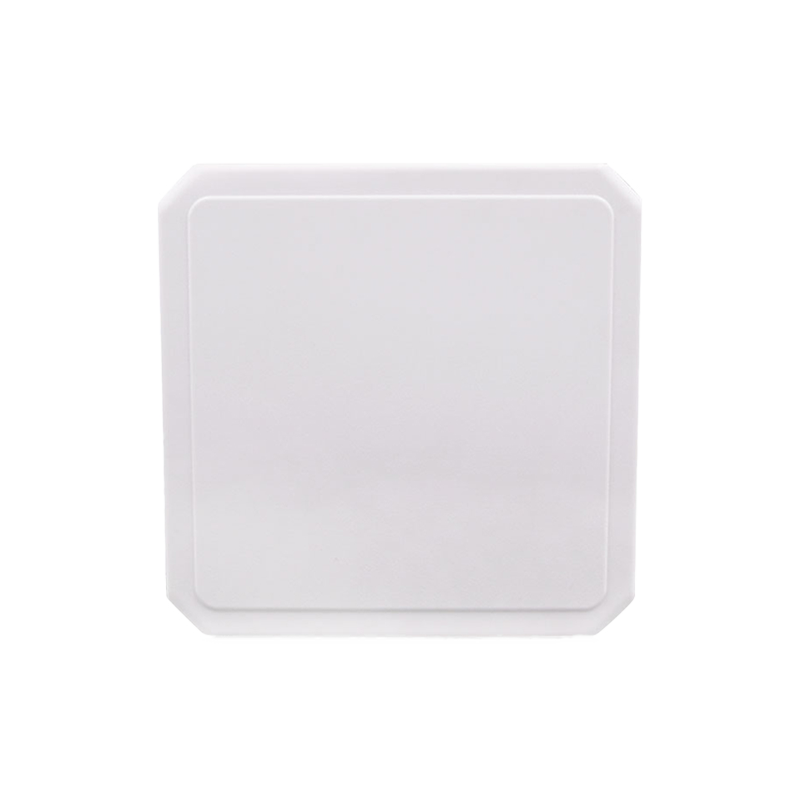
RFID antennas are widely used across various fields:
Logistics & Warehousing: For tracking goods in and out, inventory management, and automated sorting.
Retail: Enables smart shelves, anti-theft systems, and fast self-checkout.
Manufacturing: Used in production line tracking, tool management, and quality control.
Healthcare: Applied to medical device tracking, patient identification, and medication management.
Transportation: Includes electronic toll collection, vehicle identification, and luggage tracking.
Agriculture: For animal tracking and agricultural product溯源.
8.How to Choose an RFID Antenna?
Selecting the right RFID antenna requires consideration of the following factors:
8.1 Frequency Compatibility
Ensure the antenna’s frequency matches the reader and tags.
8.2 Polarization Method
Choose linear polarization for fixed tag orientations or circular polarization for dynamic environments.
8.3 Gain and Beamwidth
Higher gain suits long-distance applications, while wider beamwidth is better for broad coverage.
8.4 Environmental Adaptability
Consider factors like temperature, humidity, and interference (e.g., metal, liquids), and select antennas with appropriate protection ratings.
8.5 Installation Method
Choose between built-in, external, or handheld antennas based on the scenario.
8.6 Cost-Effectiveness
Balance performance requirements with budget constraints.
9. Conclusion
As a critical component of RFID systems, the antenna’s performance directly impacts the efficiency and stability of the entire system. With the rapid development of the Internet of Things, RFID antennas are evolving toward miniaturization, intelligence, and multi-band integration. Understanding their working principles and selection criteria will help you better apply this technology, driving innovation in digital transformation across industries.