

In today’s highly competitive global marketplace, supply chain efficiency has become a critical factor for business success. Manufacturers, distributors, retailers, and logistics providers are under constant pressure to improve visibility, reduce costs, minimize errors, and accelerate delivery times.
One technology that has transformed modern supply chain operations is RFID. Many business leaders and procurement managers frequently ask: What RFID is and how RFID is used in supply chain management?
RFID technology enables companies to automatically identify, track, and manage products throughout the entire supply chain without requiring direct line-of-sight scanning. From raw material sourcing to warehouse operations and final product delivery, RFID provides real-time data that improves decision-making and operational performance.
This article explores what RFID is, how it works, and how businesses use RFID in supply chain management to achieve greater efficiency, accuracy, and profitability.
1.What RFID?
RFID stands for Radio Frequency Identification, a wireless technology that uses radio waves to identify and track objects automatically.
A typical RFID system consists of three main components:
- RFID Tags
RFID tags are attached to products, pallets, containers, assets, or packages. Each tag contains a unique identifier and stored data.
RFID tags are generally categorized as:
- Passive RFID tags
- Active RFID tags
- Semi-passive RFID tags
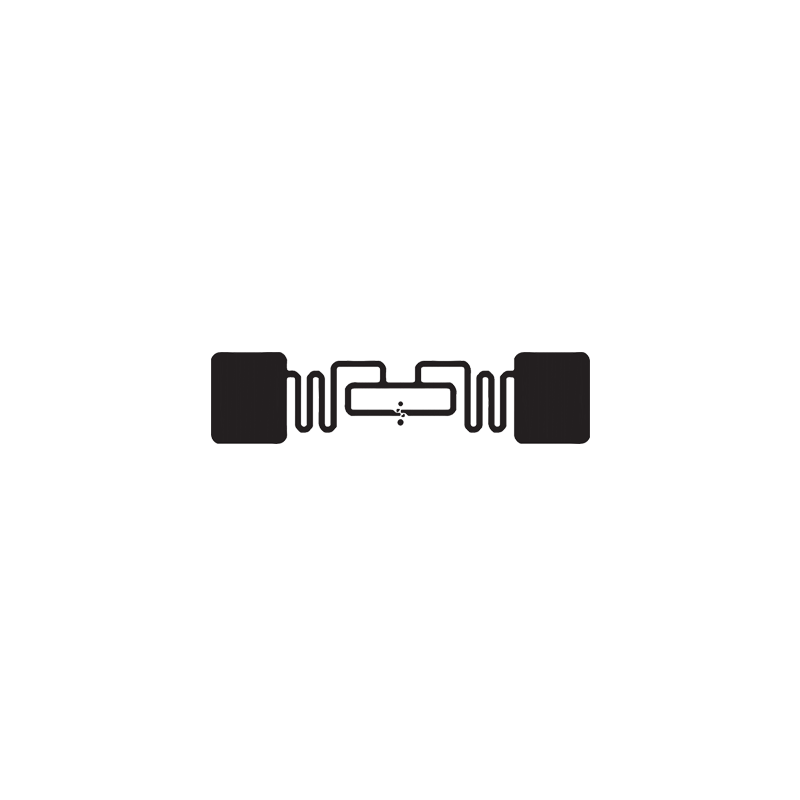
Alien ALN-9662 Short RFID White WET Inlay – High-Performance UHF RFID for Asset Tracking
- RFID Readers
Readers transmit radio signals and receive information from RFID tags.
Readers can be:
- Fixed readers
- Handheld readers
- Integrated portal readers

Passive RFID Tag Reader for Inventory Tracking
- RFID Software
The software collects and processes data captured by readers and integrates it into existing systems such as:
- ERP systems
- WMS platforms
- Inventory management software
- Transportation management systems
Together, these components create a real-time tracking ecosystem that significantly improves supply chain visibility.
2.Why RFID Matters in Modern Supply Chains
Supply chains are becoming increasingly complex. Businesses often face challenges such as:
- Inventory inaccuracies
- Lost shipments
- Counterfeit products
- Manual data entry errors
- Delayed deliveries
- Limited asset visibility
Traditional barcode systems require workers to scan items individually and maintain line-of-sight access.
RFID eliminates many of these limitations by enabling:
- Bulk scanning
- Automated data capture
- Real-time inventory visibility
- Faster processing
- Improved accuracy
As a result, RFID has become a key technology for digital supply chain transformation.

RFID in Transportation and Logistics
3.How RFID Is Used in Supply Chain Management
RFID supports nearly every stage of the supply chain lifecycle.
- Raw Material Tracking
Manufacturers need visibility into incoming raw materials to avoid production delays.
RFID tags can be attached to:
- Raw materials
- Components
- Containers
- Reusable transport items
When materials arrive at the facility, RFID readers automatically record:
- Arrival time
- Supplier information
- Batch numbers
- Storage location
Benefits include:
- Faster receiving processes
- Better supplier performance monitoring
- Reduced manual record keeping
- Improved inventory accuracy
- Warehouse Inventory Management
Warehouse operations represent one of the most common RFID applications.
Traditional inventory counting often requires:
- Manual barcode scanning
- Labor-intensive audits
- Significant downtime
RFID automates inventory management by allowing multiple items to be scanned simultaneously.
Warehouse teams can quickly identify:
- Stock quantities
- Product locations
- Missing inventory
- Overstock situations
Benefits include:
Improved Inventory Accuracy
Many organizations achieve inventory accuracy rates exceeding 99%.
Faster Inventory Counts
Inventory audits that previously took days can often be completed within hours.
Reduced Labor Costs
Automation minimizes manual counting requirements.
Better Space Utilization
Real-time visibility enables more efficient warehouse organization.
- Product Tracking During Manufacturing
Manufacturers use RFID to track products throughout production processes.
Each RFID tag can store information such as:
- Product specifications
- Production stage
- Quality control status
- Work order details
As products move between workstations, RFID readers automatically update production records.
Benefits include:
- Improved traceability
- Reduced production errors
- Faster quality inspections
- Enhanced compliance reporting
This is particularly important in industries such as:
- Automotive
- Electronics
- Medical devices
- Aerospace
- Shipment Verification and Distribution
Shipping errors can be costly and damaging to customer relationships.
RFID helps verify shipments automatically before products leave the warehouse.
When pallets pass through RFID portals, the system can instantly confirm:
- Correct items
- Correct quantities
- Correct destination
This reduces:
- Shipping mistakes
- Order fulfillment errors
- Customer complaints
Distribution centers can process outbound shipments significantly faster while maintaining higher accuracy.
- Transportation and Logistics Tracking
Once products leave the warehouse, RFID continues providing visibility throughout transportation.
RFID can track:
- Cargo containers
- Trucks
- Pallets
- Returnable transport items
Logistics managers gain access to real-time information regarding:
- Shipment locations
- Transit status
- Delivery timelines
- Asset utilization
Benefits include:
- Better route planning
- Improved customer communication
- Reduced shipment loss
- Enhanced supply chain visibility
- Retail Supply Chain Management
Retailers have been among the largest adopters of RFID technology.
RFID helps retailers track products from distribution centers to store shelves.
Applications include:
- Inventory replenishment
- Shelf availability monitoring
- Theft prevention
- Omnichannel fulfillment
Major retailers use RFID to improve inventory accuracy and enhance customer experiences.
Benefits include:
- Reduced stockouts
- Faster order fulfillment
- Improved inventory visibility
- Increased sales opportunities
- Asset Tracking and Returnable Equipment Management
Many supply chains rely on reusable assets such as:
- Containers
- Pallets
- Totes
- Racks
- Transport equipment
Without proper tracking, these assets can be lost or underutilized.
RFID enables companies to monitor:
- Asset location
- Asset condition
- Utilization rates
- Maintenance schedules
Benefits include:
- Reduced asset loss
- Improved asset utilization
- Lower replacement costs
- Better operational efficiency
4.Benefits of RFID in Supply Chain Management
Organizations implementing RFID often experience significant operational improvements.
Enhanced Visibility
RFID provides real-time tracking across the supply chain.
Decision-makers gain immediate access to accurate inventory and shipment data.
Increased Efficiency
Automated scanning eliminates many manual processes.
Employees spend less time:
- Counting inventory
- Entering data
- Searching for products
This allows teams to focus on higher-value activities.
Improved Accuracy
Human errors are reduced through automated data collection.
RFID helps eliminate:
- Incorrect shipments
- Inventory discrepancies
- Duplicate records
Reduced Costs
Although RFID requires an initial investment, companies often realize substantial savings through:
- Lower labor expenses
- Reduced inventory carrying costs
- Fewer shipping errors
- Decreased asset losses
Better Customer Satisfaction
Accurate inventory data and faster order fulfillment lead to:
- Improved delivery performance
- Better product availability
- Higher customer trust
5.Industries Benefiting from RFID Supply Chain Solutions
RFID is widely used across various industries.
Manufacturing
Manufacturers use RFID for:
- Work-in-progress tracking
- Quality control
- Production automation
Retail
Retailers use RFID for:
- Inventory management
- Omnichannel fulfillment
- Loss prevention
Healthcare
Hospitals track:
- Medical equipment
- Pharmaceuticals
- Laboratory samples
Logistics
Logistics providers monitor:
- Shipments
- Containers
- Fleet assets
Automotive
Automotive companies use RFID for:
- Parts tracking
- Assembly line automation
- Supply chain visibility
Challenges of RFID Implementation
While RFID offers numerous advantages, organizations should also consider implementation challenges.
Initial Investment
Costs may include:
- RFID tags
- Readers
- Software
- Infrastructure
However, ROI is often achieved through operational improvements.
System Integration
RFID systems must integrate with existing:
- ERP platforms
- WMS solutions
- Supply chain software
Proper planning is essential for successful deployment.
Environmental Factors
Metal surfaces and liquids can affect RFID performance.
Specialized RFID tags are often required for challenging environments.
6.Future Trends of RFID in Supply Chain Management
RFID technology continues to evolve.
Emerging trends include:
IoT Integration
RFID combined with IoT sensors enables smarter supply chains.
Artificial Intelligence
AI can analyze RFID-generated data to optimize operations.
Predictive Analytics
Businesses can forecast inventory demand more accurately.
Digital Twins
RFID data supports digital representations of supply chain assets and processes.
As technology advances, RFID will play an even larger role in intelligent supply chain ecosystems.
7.Conclusion
For organizations seeking greater efficiency, visibility, and operational control, RFID has become a strategic supply chain technology.
When businesses ask What RFID is, the answer extends far beyond simple identification. RFID enables real-time tracking, automated data collection, inventory accuracy, asset visibility, and end-to-end supply chain transparency.
From manufacturing facilities and warehouses to transportation networks and retail stores, RFID helps companies streamline operations, reduce costs, and improve customer satisfaction.
As global supply chains become increasingly complex, RFID will remain one of the most powerful tools for achieving digital transformation and maintaining a competitive advantage.
8.FAQ About RFID in Supply Chain Management
What RFID stands for?
RFID stands for Radio Frequency Identification, a technology that uses radio waves to identify and track objects automatically.
How does RFID improve supply chain management?
RFID improves supply chain management by providing real-time visibility, automated inventory tracking, shipment verification, and asset management while reducing manual labor and human error.
Is RFID better than barcodes?
RFID offers several advantages over barcodes, including faster scanning, bulk reading capability, no line-of-sight requirement, and improved automation. However, the best solution depends on the specific application and budget.
What industries use RFID in supply chains?
Industries commonly using RFID include manufacturing, retail, healthcare, automotive, logistics, aerospace, and pharmaceuticals.
What is the biggest benefit of RFID in inventory management?
The biggest benefit is inventory accuracy. RFID can provide real-time inventory visibility and significantly reduce counting errors compared to manual methods.
Can RFID track products in real time?
Yes. RFID systems can provide near real-time tracking and visibility of products, assets, and shipments throughout the supply chain.